
NEWS
Dangote’s $36.5bn Fortune Now Surpasses Economies of 33 African Nations as Refinery Value Soars

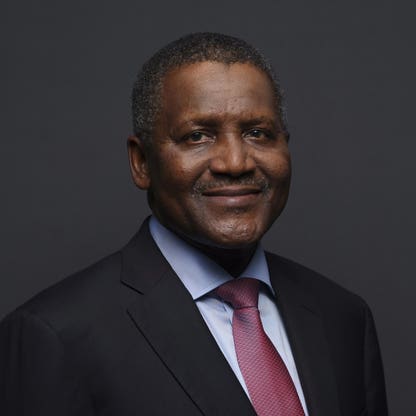
Aliko Dangote’s wealth has surged to an estimated $36.5 billion, a figure that now places the African industrialist ahead of the projected annual economic output of 33 African countries combined, according to estimates drawn from the Bloomberg Billionaires Index and IMF 2026 nominal GDP projections.
The development highlights the extraordinary scale of wealth accumulation tied to Africa’s largest privately owned industrial empire, with Dangote’s net worth now exceeding the projected GDP of several nations, including Mali, Botswana, Gabon, Rwanda and Mauritius.
At the heart of this surge is the rapidly appreciating value of the Dangote Petroleum Refinery, now estimated at about $39.1 billion. The facility has become the dominant driver of the group’s valuation, reshaping both the structure of Dangote’s business empire and his global financial standing.
IMF projections for 2026 place Mali’s economy at about $33.85 billion, meaning it falls just below Dangote’s estimated net worth. Every African economy projected below that figure is also smaller than the billionaire’s fortune, including Burkina Faso at $32.51 billion, Guinea at $29.93 billion, Benin at $27.79 billion, Chad at $25.63 billion, Niger at $24.81 billion, Gabon at $23.36 billion, Mozambique at $23.27 billion, Botswana at $21.94 billion, and Madagascar at $21.18 billion.
Smaller economies such as Seychelles, Cabo Verde, Comoros, São Tomé and Príncipe, Djibouti, Lesotho, The Gambia, Liberia and the Central African Republic also fall within the same category, further underscoring the scale of the comparison.
Even among more established African economies, Dangote’s fortune remains larger. Resource-rich and regionally influential countries such as Gabon, Botswana, Niger, Mali, Burkina Faso, Benin and Mozambique all rank below his estimated wealth when measured against projected output.
The dramatic rise in Dangote’s valuation is closely tied to the performance and reassessment of the Dangote Petroleum Refinery, which has rapidly become one of the most valuable industrial assets on the continent.
Built with a nameplate capacity of 650,000 barrels per day, the Lagos-based facility is Africa’s largest refinery and among the biggest single-train refineries in the world. Recent performance tests reportedly pushed output to around 700,000 barrels per day, exceeding its installed capacity and signalling ongoing operational improvements.
The refinery has already begun reshaping fuel trade flows across Africa, supplying diesel, aviation fuel, naphtha and petrol to both domestic and export markets, reducing dependence on imported refined products and altering long-standing trade patterns.
Its rising strategic importance has been reflected in its valuation, with the refinery reportedly seeking to raise about $1 billion through a private placement ahead of a planned stock market listing. The transaction places its worth at approximately $39.1 billion, with investor demand said to have exceeded the amount being raised.
Nigeria’s pension regulator has also granted approval for pension fund managers to participate in the planned initial public offering, marking a rare exception to standard restrictions that typically apply to companies without a long profitability record.
Beyond the headline figures, the comparison between Dangote’s fortune and the GDP of dozens of African countries underscores a broader shift in the continent’s economic landscape.
For decades, Nigeria exported crude oil while importing refined petroleum products. The Dangote refinery is now reversing that pattern, boosting domestic supply and creating new export capacity that could reshape regional energy markets.
His estimated fortune, equivalent to nearly 10 percent of Nigeria’s projected 2026 GDP of $377.37 billion, also exceeds the annual output of more than half of African economies.
The development reflects the growing influence of large-scale private industrial investments in Africa, particularly in sectors where public infrastructure has historically struggled to keep pace with demand.
It also highlights how concentrated industrial assets, especially in energy and manufacturing, can rapidly shift global perceptions of wealth and economic influence when scaled to continental proportions.
Dangote’s latest valuation ultimately tells a dual story: one of extraordinary personal wealth driven by industrial expansion, and another of a private enterprise whose scale now rivals the economic output of sovereign states across Africa.