
NEWS
EQUATORIAL GUINEA GOVERNMENT RESIGNS EN MASSE AS PRESIDENT CRITICIZES POOR PERFORMANCE, CORRUPTION

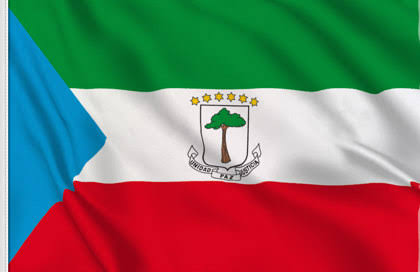
In a dramatic political development, the government of Equatorial Guinea has resigned after failing to meet key performance targets set by the country’s leadership, according to Vice-President Teodoro Nguema Obiang Mangue.
The vice-president, who is also the son of President Teodoro Obiang Nguema Mbasogo, announced that the prime minister had formally submitted the resignation of all cabinet members following an assessment that revealed the government had achieved less than 10 percent of its objectives.
The announcement signals a major shake-up in the administration of the oil-rich Central African nation, where President Obiang has maintained a firm grip on power since taking office in 1979, making him one of the world’s longest-serving heads of state.
Although specific targets were not disclosed, officials from the ruling Democratic Party of Equatorial Guinea (PDGE) revealed that the president had expressed deep dissatisfaction with the outgoing government’s performance.
According to the party, concerns ranged from poor implementation of development projects to persistent corruption and a lack of meaningful economic diversification.
The government that has now stepped down was appointed in 2024, with Manuel Osa Nsue Nsua serving as prime minister. Its resignation paves the way for the appointment of a new cabinet expected to be tasked with accelerating reforms and improving governance.
Explaining the decision, Vice-President Obiang stated that accountability in public service must be tied to measurable results, stressing that the administration had fallen significantly short of the expectations placed upon it.
The ruling party further disclosed that the president was troubled by what he described as the misuse of public resources for personal interests, as well as the slow pace of execution of strategic development initiatives intended to improve the lives of citizens.
A major point of concern was the government’s inability to reduce the country’s dependence on oil revenues. President Obiang reportedly criticized the administration for failing to implement policies that would strengthen sectors such as agriculture and boost local production, thereby reducing the nation’s heavy reliance on imported goods that could otherwise be produced domestically.
Despite possessing vast petroleum reserves and generating significant income from oil and gas exports, Equatorial Guinea has struggled to translate its natural resource wealth into broad-based economic prosperity. The energy sector continues to account for the overwhelming majority of government revenue and export earnings, leaving the economy vulnerable to fluctuations in global oil markets.
Over the years, declining oil production and weakening demand have placed increasing pressure on the country’s economy. At the same time, poverty remains widespread among much of the nation’s estimated 1.8 million citizens, fueling concerns about inequality and the distribution of national wealth.
With the resignation of the entire cabinet now confirmed, attention is turning to President Obiang’s next move as he prepares to form a new government amid mounting calls for stronger economic management, greater accountability, and accelerated development across the country.