
NEWS
US Denies Israel Access to Iran Deal Text as Trump-Netanyahu Rift Deepens Ahead of Geneva Signing

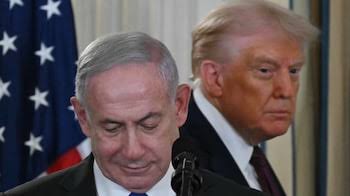
A fresh diplomatic controversy has erupted between the United States and Israel after Washington reportedly refused Israel’s request to review the contents of a newly negotiated Memorandum of Understanding (MoU) between the United States and Iran before its formal signing in Geneva, Switzerland.
The development marks another significant twist in the increasingly strained relationship between US President Donald Trump and Israeli Prime Minister Benjamin Netanyahu, whose disagreements over Iran, Lebanon, and regional security have become more pronounced in recent weeks.
According to reports, Israel sought access to the Pakistan-mediated agreement, which is expected to be formally signed later this week.
However, Washington declined the request, an unusual move between two long-standing strategic allies.
“The United States denied Israel’s request to view the newly agreed-upon Memorandum of Understanding before the signing ceremony, expected to be held in Switzerland later this week,“ The Jerusalem Post reported on Tuesday.
The report was further corroborated by Guy Azriel, diplomatic correspondent for Israeli broadcaster i24NEWS.
“I can now confirm that Israel formally requested access to the Iran MoU and was denied. A remarkable and highly unusual development between close allies on an issue of such critical national security importance,“ Azriel wrote on social media.
The memorandum, electronically signed by President Trump, Vice President JD Vance, and Iranian Parliament Speaker Mohammad Bagher Ghalibaf, reportedly paved the way for the lifting of the US naval blockade and restrictions affecting the Strait of Hormuz. In return, Iran pledged not to pursue nuclear weapons development.
The agreement also initiates a 60-day framework for negotiations focused on Iran’s nuclear programme, broader regional de-escalation efforts, and the possibility of sanctions relief.
Global markets reacted swiftly to the breakthrough, with oil prices falling below $78 per barrel amid expectations of improved energy flows. European leaders welcomed the agreement as a positive step toward stability, while Iran declared that the war was effectively over. Israel, however, expressed concern over its exclusion from the process and its inability to review the terms of the agreement.
Growing Tensions Between Trump and Netanyahu:
The controversy comes against the backdrop of mounting friction between President Trump and Prime Minister Netanyahu, particularly regarding Israel’s military operations against Hezbollah in Lebanon.
Reports indicate that the two leaders have engaged in several heated exchanges over Israel’s refusal to scale back military actions, a key issue in negotiations involving Iran.
At the beginning of the month, Trump reportedly expressed frustration during a tense phone conversation with Netanyahu, warning against strikes on Beirut while Washington was pursuing diplomatic efforts with Tehran.
According to Axios and other media outlets, the conversation became particularly heated after Israel intensified military operations in Lebanon around June 1 and 2.
“What the f—- are you doing?” Trump reportedly shouted during the call.
He was also reported to have accused Netanyahu of ingratitude, saying: “You’re fucking crazy. You’d be in prison if it weren’t for me. I’m saving your ass. Everybody hates you now. Everybody hates Israel because of this.“
While Trump later confirmed he was deeply dissatisfied with Israel’s actions, he maintained that he still had personal regard for the Israeli leader.
He stated that he was “perturbed” by Israel’s “constantly fighting with Lebanon” and had “let him know” of his displeasure.
Although Netanyahu reportedly suspended planned attacks following that conversation, Israel later struck Beirut’s southern suburbs again, triggering retaliatory Iranian missile attacks and drawing criticism from Washington.
Just hours before the United States and Iran announced their interim understanding on Monday, Israel carried out another strike on the Lebanese capital. Trump responded by dismissing Hezbollah’s retaliation as “small and meaningless” and questioned the necessity of further Israeli military action at such a sensitive diplomatic moment.
Netanyahu Admits Differences with Trump:
Speaking during a press conference in West Jerusalem on Monday, Netanyahu openly acknowledged that disagreements exist between the two leaders.
“He is the president of the United States, I am the prime minister of Israel.
“We many times see eye-to-eye and there are times when we see eye-to-eye less so. I am in charge of Israel’s security interests,”“ Netanyahu said.
Trump followed up with unusually blunt public comments during the G7 summit in France on Tuesday, signalling growing impatience with Israel’s handling of the conflict in Lebanon.
“I’ve had a great relationship with Bibi, but now Bibi has to be more responsible with respect to Lebanon.“
The US president continued:
“I’m not happy with the way Israel has handled themselves with Lebanon and with Hezbollah. They should have been able to do the job faster.”
Trump also criticized what he described as excessive use of force by Israel, arguing that civilian casualties were becoming increasingly difficult to justify.
“You don’t have to knock down an apartment house every time you’re looking for somebody because there’s a lot of people in those apartment houses and they’re not all Hezbollah.“
Israel Kept in the Dark Over Historic Agreement:
The emerging US-Iran understanding has generated significant concern within Israel, especially as the country was reportedly excluded from negotiations despite the direct implications for its national security.
Facing an election season and growing domestic political pressure, Netanyahu appears determined to maintain a hardline position on Lebanon, even as Washington pursues diplomacy.
The memorandum is expected to be formally signed on Friday in Switzerland. While the full details remain undisclosed, both Iran and mediator Pakistan have indicated that the agreement calls for a permanent cessation of hostilities across multiple fronts, including Lebanon.
Despite the diplomatic breakthrough, Netanyahu has continued to insist that Israel’s military operations in southern Lebanon will continue, a position analysts warn could undermine the broader US-Iran de-escalation effort.
Speaking on Monday, Netanyahu made it clear that Israel remains largely uninformed about the contents of the agreement.
Israel “does not know the terms” of the US-Iran deal, he said.
He further emphasized that he “does not yet know what is written in the deal,” stressing that Israel was excluded from the negotiations, is not a signatory to the agreement, and therefore is not bound by its provisions.
As the Geneva signing approaches, the refusal to share the text of the memorandum with Israel has intensified speculation about the future of US-Israel relations and raised fresh questions about how far Washington is willing to go in pursuing a diplomatic settlement with Iran, even at the risk of alienating one of its closest allies in the Middle East.