
NEWS
Senate Set To Probe ₦1.3bn PFIPC Budget Scandal As Fresh Details Emerge On Alleged Forged Appointment Letter

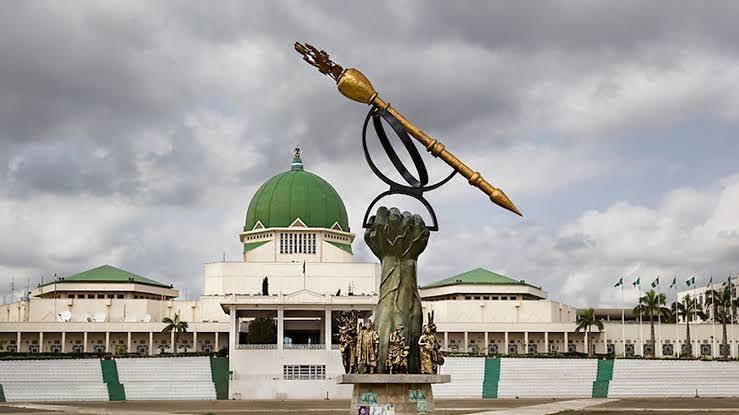
The Nigerian Senate is expected to address the growing controversy surrounding the ₦1.3 billion allocation to the controversial Presidential Foreign Intervention Promotion Council (PFIPC) in the 2026 Appropriation Act when lawmakers resume plenary on Tuesday.
The development follows revelations that a forged appointment letter allegedly bearing the falsified signature of the President’s Chief of Staff, Femi Gbajabiamila, enabled Prince Adeniyi Adeyemi Mathew to secure office space at the Federal Secretariat Complex in Abuja and operate the controversial council with the appearance of official government backing for more than a year.
Sources within the Presidency and the civil service, who spoke anonymously because investigations are ongoing, alleged that the fraud succeeded due to lapses within the Budget Office, the House of Representatives and the Civil Service Headquarters. They maintained that proper scrutiny of the appointment documents could have prevented the controversy.
According to sources familiar with the matter, the Senate leadership is expected to deliberate on the controversy when plenary resumes, amid mounting public concerns over how the council secured a ₦1.3 billion allocation in the national budget.
The sources disclosed that despite receiving the allocation, neither Adeyemi nor any official of the PFIPC appeared before the Senate Committee on Establishment and Public Service to defend the proposed budget.
One National Assembly source alleged that the allocation was inserted through an unusual process.
“It was not brought in as a stand-alone item. It was done collectively with others that came in directly from the Presidency. So there was no defence or oversight.“
The source added:
“But I understand the Senate leadership will address the controversy on Tuesday to douse the growing tension and alleged complicity by any of its presiding officers.“
Presidency officials insisted that the controversy originated from an invalid appointment letter allegedly forged in the name of the Chief of Staff.
One official explained that appointments into agencies under the Presidency are constitutionally approved by the President, while appointment letters are issued by the Secretary to the Government of the Federation (SGF).
“The mistake came from several areas, the House of Representatives, the Head of Service, the Budget Office. Most of them did not do due diligence. But you see where you can’t readily blame all of them is what we call grundnorm. There is a foundation. The appointment letter was fake. It was invalid.“
The source further stated:
“In government, the way it runs is that it is the President, not the Chief of Staff, who appoints. The letter of appointment is then issued by the SGF.“
The official stressed that every appointment under President Bola Tinubu follows a clearly established constitutional process.
“Everyone who has ever been appointed by this President passed through a specific process. If your parastatal is directly under the Presidency, the SGF makes a memo to the President and the President approves the memo.
“The SGF then issues you a letter of appointment. For those in ministries, he minutes it to the relevant minister, who minutes it to the Permanent Secretary, who then gives it to the appointee. With that letter, you can enter the government payroll.
“The Chief of Staff has never appointed anyone at that level. All DGs and Permanent Secretaries, their appointments are from the President.“
A senior civil servant familiar with the investigation alleged that Adeyemi exploited weaknesses in the verification system by presenting a forged appointment letter.
“Where Adeniyi scammed everyone was that he forged a letter with the signature of the Chief of Staff, which was not even his signature because it was forged. It was not Gbajabiamila’s signature. The Chief of Staff cannot make such an appointment“
The source continued:
“Adeniyi took that fake letter, falsely signed by Gbajabiamila, to the civil service headquarters and said ‘please refer to my appointment letter attached.’ He arranged his terms of reference where he stated that he needed an office.“
The official explained that the verification loophole arose because officials relied solely on the appointment letter.
“The problem is, the President’s letter to the SGF or minister is not usually attached to such documentation, you are just expected to attach the appointment letter. But they were supposed to know that the Chief of Staff doesn’t appoint anyone. That was the loophole.“
The source noted that securing office accommodation at the Federal Secretariat significantly boosted the council’s credibility.
“Once you have an office there, it confers a very high level of legitimacy on you. You can meet big guests there. He had a letterhead and even a website. Once he established that office at the Federal Secretariat, every other thing followed. Nobody tried to do the needful anymore until someone raised the alarm.“
Although the office was later sealed following Adeyemi’s arrest, the source claimed he allegedly continued operating from another location.
“The man was still running the scam after he left the secretariat, but he doesn’t use that place anymore.“
Another Presidency official disclosed that the alleged fraud first came to light after officials of the Nigerian Investment Promotion Commission (NIPC) observed that the council was performing functions similar to those of the commission.
According to the source:
“The issue first came up from the NIPC in October last year. It started like inter-agency rivalry. That was how they saw it at the time because this fake agency was now overlapping into the mandate of the NIPC.“
The official added:
“The following day, it was taken to the Chief of Staff, who said he doesn’t know the person, and then he was the one who alerted the DSS.“
The source further revealed that Gbajabiamila repeatedly denied knowing Adeyemi.
“At one of the meetings about this issue, the Chief of Staff swore that he has never met the man and doesn’t even know him. And that his conscience is clear. The Chief of Staff didn’t take it lightly. He followed up until Adeniyi was arraigned in court and put on bail.“
The official, however, lamented the slow pace of prosecution.
“You know, when no one follows the case bumper to bumper, it can become very slow at the police. It was since October last year and when it resurfaced in June, I was surprised, because I believed it had been dealt with.“
Another Presidency source suggested that inadequate scrutiny within the National Assembly may have enabled the council to secure a budget allocation.
The official alleged:
“He probably knows someone in the National Assembly and told them ‘please allocate something to us too.’ So it appeared like a government organisation that had a letterhead, an office and other things.“
The source added:
“All of these things, especially the fake appointment letter, conferred legitimacy on him. The whole problem stemmed from that oversight. People have been asking how he found his way into the budget.“
The official also claimed that Adeyemi had violated his bail conditions.
“The police is supposed to pick him up again. He ran foul of his bail conditions. He was actually arraigned in court. There is a big document on him from the police.“
The controversy has continued to attract reactions from civil society organisations and political stakeholders.
The Socio-Economic Rights and Accountability Project (SERAP), in a Freedom of Information request dated July 4, 2026, asked Senate President Godswill Akpabio and Speaker Tajudeen Abbas to release certified copies of documents relating to the approval of the ₦1,302,978,784 allocation.
The organisation also requested records identifying lawmakers who handled the appropriation, officials who defended it, and whether the allocation originated from the executive or was inserted by lawmakers.
“Nigerians have a right to know whether public funds were appropriated for an entity that was not lawfully established and, if so, how this occurred. Nobody has a more sacred obligation to obey the law than those who make the law.“
SERAP warned that it would institute legal action if the documents were not released within seven days.
Similarly, the Human and Environmental Development Agenda (HEDA) called for a public inquiry.
Its Chairman, Olanrewaju Suraju, said:
“If the Presidency maintains that the PFIPC does not exist, Nigerians deserve to know how an allocation for the council found its way into the 2026 Appropriation Act. The public has a right to know who proposed the allocation, the government institutions that processed and approved it, and whether any public funds have been released or committed.“
Former Vice President Atiku Abubakar described the controversy as another example of systemic governance failures.
“There is an old African saying that when a man’s roof leaks every rainy season, neighbours stop blaming the clouds and begin to question the strength of the house itself. Nigeria has sadly arrived at that point.“
He continued:
“The issue is no longer one scandal or another. The issue is the pattern. And when scandals become a pattern of governance, the inevitable conclusion is this: you are no longer managing scandals; you have become the scandal itself.“
Atiku urged President Bola Tinubu to order an independent investigation.
“The countdown has already begun. Nigerians expect answers, not evasions. The presidency still has five days left to tell Nigerians who created this phantom organisation, who authorised its activities, and who must be held responsible. Silence cannot become the official response to a scandal of this magnitude.“
The Tanimu Turaki-led faction of the Peoples Democratic Party (PDP) described the incident as evidence of institutional failure, while the Committee for the Defence of Human Rights urged Gbajabiamila to step aside pending an independent investigation.
According to the group:
“The allegations on both sides are grave. While the Federal Government alleges forgery, impersonation, fraudulent operation of bank accounts and misrepresentation, the defendant has levelled equally weighty allegations of bribery and abuse of office against one of the country’s highest-ranking public officials. If either set of allegations is proven, it represents a serious assault on the integrity of public institutions.“
The Kwankwasiyya Movement also demanded answers over how the council secured a budgetary allocation.
However, House of Representatives Deputy Spokesman Philip Agbese urged Nigerians to allow the judicial process to take its course.
“The issue is being handled legally and I think we should all be patient. Nigerians will get to know in detail what transpired, and anything short of that at this material time will not help us.“
Senior Advocate of Nigeria, Bankole Akomolafe, cautioned against prosecuting Gbajabiamila without concrete evidence.
“The issue of joining a person in a criminal matter, in the instant case, is not done on sentiments or emotions.“
Another Senior Advocate of Nigeria, Sampson Erugo, argued that investigators should widen the probe beyond Adeyemi.
“I wonder why the hurry in the trial of one person in this scandal. For there to be a budget, there is an office for the agency, and so many issues, meaning that so many people are involved. They have an office at the National Secretariat, they have accounts with the CBN. Why should they rush to charge one man? A lot of people should answer for their roles in the scam.“
Adeyemi is expected to appear before the Federal High Court in Abuja on July 27, 2026, alongside two alleged accomplices identified only as Femi and Anu, who remain at large.