
NEWS
Senate Demands End to Rehabilitation of Repentant Terrorists, Seeks Tougher Action Against Insecurity

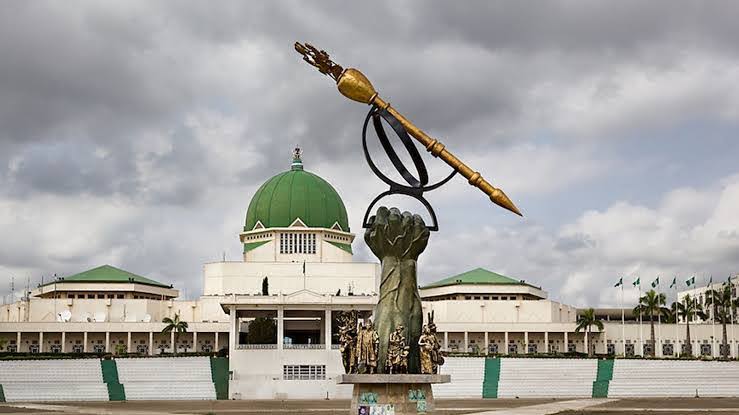
The Senate has called on the Federal Government to immediately discontinue the rehabilitation programme for repentant terrorists and other violent criminals, insisting that individuals found guilty of terrorism and related offences should be prosecuted without delay and made to face the full weight of the law.
The resolution formed part of key decisions reached by the upper legislative chamber during plenary on Tuesday while considering a motion on the rising attacks, abductions and killings of serving and retired military personnel across Nigeria.
The motion, titled Escalating Attacks, Abductions and Killings of Serving and Retired Military Personnel: A Growing Threat to National Security and State Authority in Nigeria, was sponsored by Senator Abdulaziz Musa Yar’Adua, Chairman of the Senate Committee on Nigerian Army.
Expressing deep concern over the worsening security situation, lawmakers argued that the continued rehabilitation of repentant terrorists sends the wrong signal at a time when the country is battling persistent terrorism, banditry, kidnapping and violent crimes. They maintained that justice must be served through prompt prosecution of offenders in accordance with the law to restore public confidence in Nigeria’s criminal justice system and reinforce the rule of law.
The additional resolution followed a prayer moved by Senator Joseph Ikpea and seconded by Senator Adams Oshiomhole, with the Senate unanimously adopting the call for a more decisive approach to tackling terrorism and organised crime.
As part of its resolutions, the Senate also agreed to seek an audience with President Bola Ahmed Tinubu to formally present its concerns over the deteriorating security situation and relay the growing fears of Nigerians over the sustained wave of killings, kidnappings and violent attacks across the country.
The motion was triggered by the tragic abduction and death of retired Major General Rabe Abubakar, a former Director of Defence Information, who was kidnapped alongside his wife in Katsina State before eventually dying in captivity.
While presenting the motion, Senator Abdulaziz Musa Yar’Adua warned that the increasing targeting of serving and retired military personnel represents a dangerous threat to national security and weakens the authority of the Nigerian state.
He recalled several high-profile attacks on military officers, including the January 2023 abduction of retired Colonel Rabiu Garba Yandoto and his two children along the Gusau–Tsafe Road in Zamfara State, where they were eventually released after negotiations.
The Senate also revisited the September 2023 kidnapping of retired Major General Richard Chukwudi Duru in Owerri, Imo State, who was killed by his abductors despite the payment of a $50,000 ransom by his family.
Lawmakers further highlighted the June 2024 killing of retired Brigadier General Uwem Harold Udokwere, who was murdered by armed attackers that invaded his residence in Abuja, as well as the February 2025 abduction of former Director-General of the National Youth Service Corps, retired Brigadier General Maharazu Tsiga, who regained freedom after spending 56 days in captivity.
The chamber also referenced the abduction of retired Major Joe Ajayi in Kogi State in May 2025, where he later died in captivity despite efforts to secure his release, and the January 2026 kidnapping of retired Colonel Joseph Ajanaku in Plateau State before he was rescued during a security operation.
Lawmakers described the abduction and subsequent death of Major General Rabe Abubakar in May 2026 as the latest and most disturbing indication of the growing threat posed by criminal groups targeting former military commanders.
The prayers seeking an audience with the President and the immediate prosecution of convicted terrorists were moved by Senator Osita Izunaso and Senate Minority Leader Senator Abba Moro respectively.
During deliberations, senators commended the Armed Forces, intelligence agencies and other security personnel for their resilience and sacrifices in the face of enormous operational challenges. However, they expressed concern that insecurity continues to spread despite significant government investments in the security sector.
The Senate consequently called for a comprehensive investigation into the utilisation of funds appropriated for military equipment procurement, security operations and the welfare of personnel to ensure accountability and improved operational effectiveness.
In his contribution, Senator Abdul Ningi urged the National Assembly to move beyond routine debates and embrace more decisive measures capable of addressing the country’s worsening security crisis. He argued that many security agencies remain inadequately equipped despite huge budgetary allocations, stressing that Nigeria’s security architecture requires urgent strengthening.
The Senate observed a minute of silence in honour of the late Major General Rabe Abubakar and all victims of terrorism, banditry, kidnapping and violent crimes across the country.
It also resolved to constitute a delegation to visit the family of the late military officer, the Katsina State Government and the Nigerian Army to formally convey the condolences of the Senate.
To strengthen the fight against insecurity, lawmakers further urged security and intelligence agencies to intensify intelligence gathering, surveillance, threat assessment and early warning mechanisms, while deepening collaboration with local communities, traditional rulers and religious leaders.
They also called for the accelerated deployment of modern security technologies, including unmanned aerial systems, geospatial intelligence capabilities, integrated command and control platforms and advanced communications systems to enhance Nigeria’s counter-terrorism operations and overall national security.