
NEWS
“After His Second Term, I Believe in Rotation, and It Will Go to the North” — Former Senate President, Sen. Anyim Pius Anyim Declares

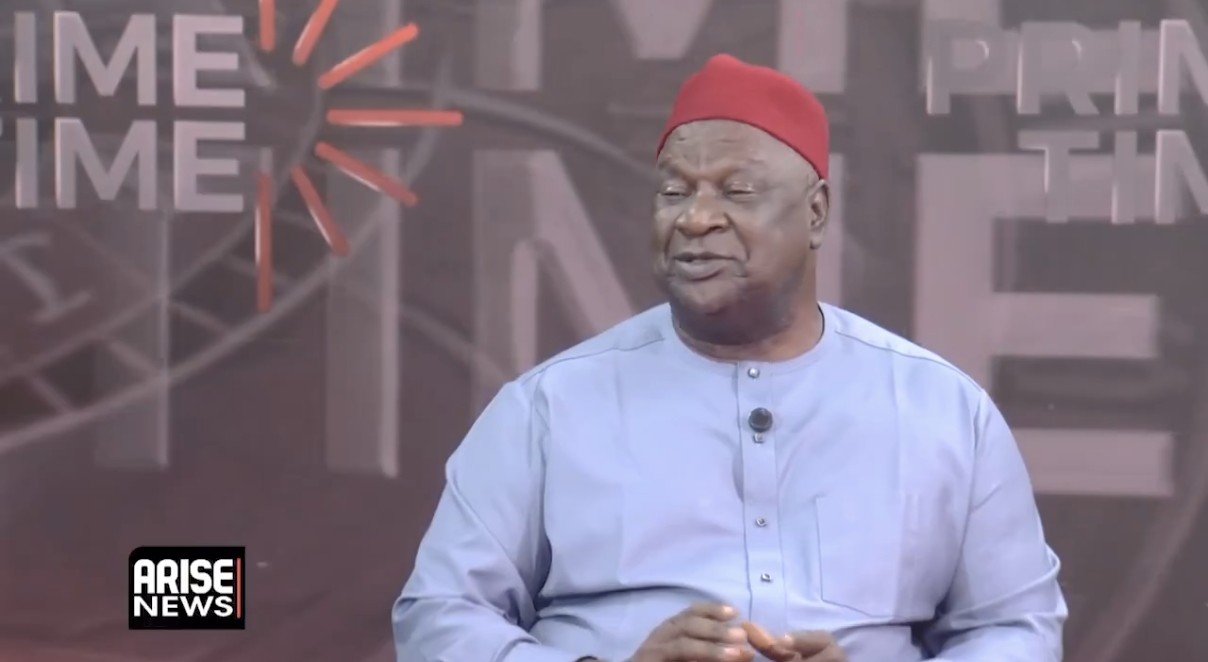
Former Senate President and ex-Secretary to the Government of the Federation, Senator Anyim Pius Anyim, has called for a rotational arrangement in Nigeria’s presidency, arguing that the office should move to the North after President Bola Ahmed Tinubu completes a second term and subsequently return to the South-East.
Anyim made the position known during an interview with Arise News while discussing Nigeria’s political future, the principle of rotational presidency and the strategy he believes political leaders in the South-East should adopt ahead of the 2027 general elections.
The former Senate President, who has remained active in discussions around national politics and the future of the South-East, said the region’s presidential ambition should be approached with a long-term political strategy rather than through short-term calculations.
According to Anyim, President Tinubu, whose political base is in the South-West, should be allowed to complete a second term in office before the presidency shifts to the North.
“Certainly, the President has taken it from the Southwest and is entitled to a second term. After his second term, I believe in rotation, and it will go to the North. After the North, it will come down to the East after eight years,” Anyim said.
His position effectively places the question of the South-East’s presidential ambition within a longer political cycle, with Anyim arguing that leaders from the region would need to establish strategic relationships with other parts of the country to improve their chances of eventually producing the President.
He stressed that political cooperation should be reciprocal, insisting that the South-East must also be prepared to support political interests outside the region if it expects support when its own turn comes.
“You need to support others so that they can support you,” he said.
Anyim also called for a broader understanding of political parties, arguing that parties should function around shared interests, objectives and a common political vision rather than merely serving as vehicles for individual ambitions.
“Political parties should be like a family with a common understanding and objective,” he added.
The former Senate President said political leaders in the South-East should look beyond immediate electoral gains and develop a sustained strategy capable of securing the region’s interests over several election cycles.
He maintained that the region could not achieve its ultimate political objectives in isolation, making alliances with other regions an important component of the political calculation.
“I have given you one reason from the beginning: you need to align with another region in order to get your ultimate goal.
“This is political arithmetic, not about what he has done for that region or for Nigeria,” Anyim said.
Beyond the question of presidential rotation, Anyim said Nigeria’s democratic development should be driven by fundamental principles and strong institutions.
He listed justice, inclusivity, citizens’ rights, individual liberty, institutional development and the rule of law among the principles that should guide democratic governance and nation-building.
“When you talk about democracy and nation-building, you should be talking about principles, institutions, fundamental objectives, liberty of the individual, rights of citizens, justice, inclusivity, and the rule of law,” he said.
The former Senate President further explained that his interest in the political future of the South-East was not primarily about personal political advancement but about ensuring that younger generations in the region eventually enjoy a stronger sense of inclusion in Nigeria’s political system.
“My concern is not what I become. God has been so kind, but in my lifetime, I should be able to be sure that one day my children, my children’s children, and the younger generation in the Southeast will have that sense of inclusion and belonging,” he said.
On former Anambra State Governor and 2023 presidential candidate, Mr. Peter Obi, Anyim described him as a friend and brother whom he respects, while explaining that he did not support Obi’s 2023 presidential campaign because they belonged to different political parties and political camps.
“Peter is my friend and my brother, and I respect him.
“But I belong to a separate party from where he is, so I did not endorse him.
“Peter is my friend, but we are not in the same political family. We are in different political camps,” he said.
Anyim also addressed the political strength of the All Progressives Congress in the South-East, saying the party had the opportunity to deepen its presence and influence in the region despite Obi’s strong political following there.
“As far as I’m concerned, APC as a party has every reason and ground to make its own impact in the Southeast, and I can assure you that APC will greatly impact the Southeast,” he said.
His comments come as political calculations surrounding the 2027 general elections continue to intensify, particularly over presidential succession, regional alliances and the competing interests of political parties across Nigeria’s geopolitical zones.