
NEWS
Alleged Coup Plot: Falana Declares Court-Martial Inappropriate Under Democracy, Insists Suspect Soldiers Must Face Civilian Courts

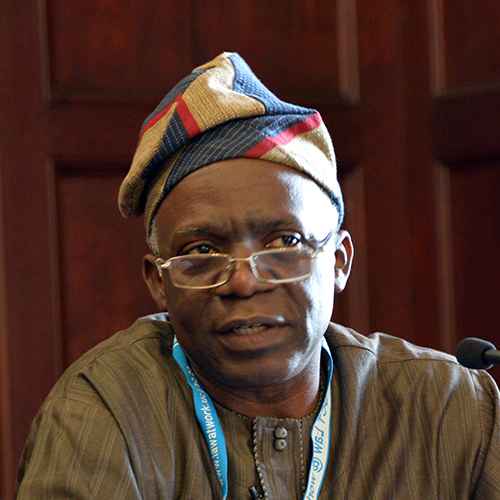
Senior Advocate of Nigeria (SAN) and prominent human rights lawyer, Femi Falana, has firmly stated that military officers accused of plotting a coup against the administration of President Bola Ahmed Tinubu cannot be subjected to court-martial proceedings under Nigeria’s current democratic system.
Speaking against the backdrop of intense national debate over the proper legal framework for handling alleged coup attempts, Falana emphasized that Nigeria’s constitutional order does not permit the trial of such suspects by military tribunals. Instead, he maintained that the law mandates their prosecution in regular civilian courts.
Falana made this clarification during an interview on national television, where he addressed widespread public concern regarding the appropriate judicial process for officers allegedly involved in actions aimed at destabilizing a democratically elected government.
According to the senior lawyer, Nigeria has long exited the era of military dictatorship, and the constitution provides clear guidance on how serious offenses such as treason and attempts to overthrow an elected government should be treated.
“We are under a democratic government, and as far as the constitution is concerned, we have to take them to a high court,” Falana said.
He further stressed that the nature of the alleged offense determines the appropriate legal forum, noting that coup plotting in a democracy goes far beyond internal military discipline.
“The soldiers cannot be court-martialed, they are not trying to remove a military dictator. It’s an attempt to remove an elected government, a constitutional government, to disrupt the constitutional arrangement,” he stated.
Falana explained that court-martial proceedings are traditionally meant to address infractions related strictly to military conduct, chain of command, and internal disciplinary matters.
However, once an alleged offense rises to the level of treason or an attempt to overthrow a constitutional government, it becomes a grave crime against the state, not merely a breach of military regulations.
The human rights lawyer added that “court-martial proceedings are designed primarily for breaches of military discipline and offenses committed strictly within the military hierarchy.
“However, when the alleged offense amounts to treason or an attempt to overthrow a democratically elected government, the matter transcends internal military discipline and becomes a constitutional crime against the state.”
He warned that trying such cases before military tribunals would contradict democratic norms and could weaken the authority of the constitution, which remains the supreme law of the land.
Falana concluded by reiterating that Nigeria’s legal framework is explicit on where such matters belong.
“Treason and treasonable felony are offenses clearly defined under Nigerian law and fall squarely within the jurisdiction of civilian courts,” he maintained.
His intervention adds a significant legal perspective to the ongoing national discourse, reinforcing the principle that even members of the armed forces must be subjected to civilian judicial processes when accused of crimes that threaten Nigeria’s constitutional democracy.