
NEWS
Beyond Social Media Noise: Why Prince Okey Kanu’s Calm Leadership Is Frustrating Political Propagandists

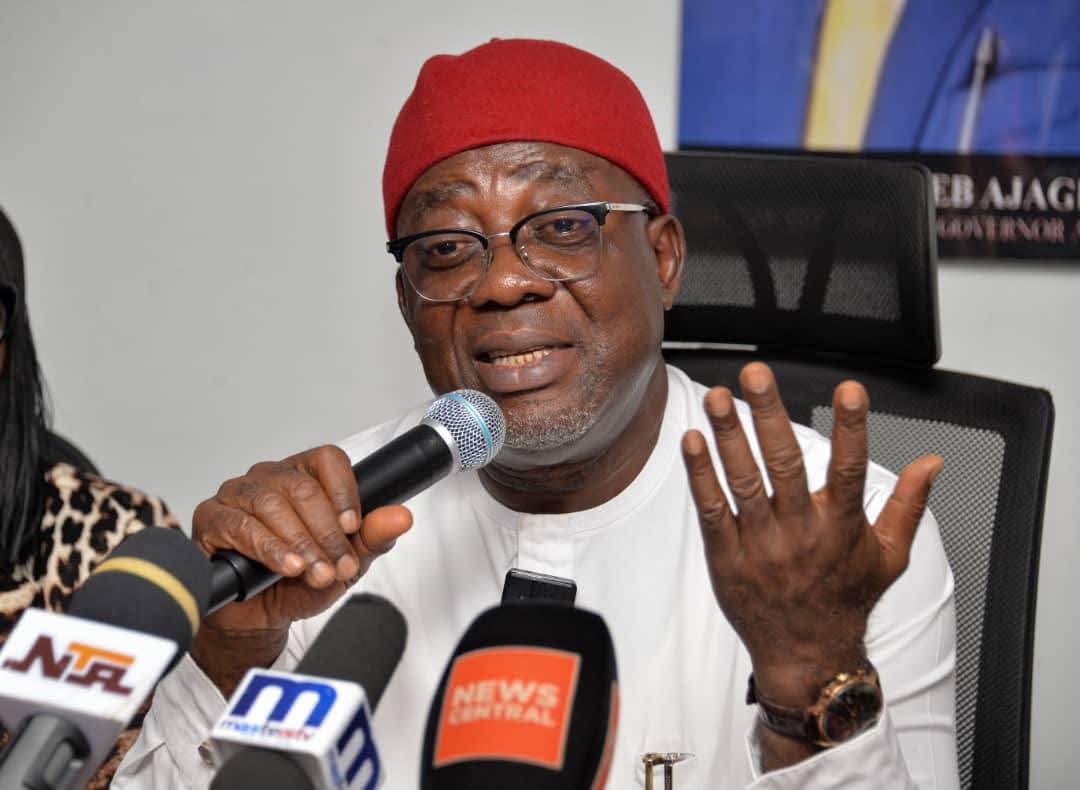
Fresh reactions have continued to trail recent attacks targeted at the Abia State Commissioner for Information, Prince Okey Kanu, with government insiders and political observers describing the criticism against him as emotionally driven, politically motivated, and lacking factual depth.
In a strongly worded response issued on Monday, the Head of Department, Information, Government House Umuahia, Divine Nwankwo, dismissed the criticisms against the Commissioner as “social media noise” orchestrated by individuals who allegedly understand little about governance and strategic government communication.
According to the statement, one of the major flaws in the attack against Prince Okey Kanu was the writer’s inability to correctly identify the office he occupies, wrongly referring to him as “Commissioner for Information and Culture” instead of Commissioner for Information.
The government official argued that such an elementary error immediately weakened the credibility of the criticism and exposed what he described as the shallow understanding of governance processes by some online commentators.
The statement further maintained that governance, especially government communication, goes far beyond emotional social media commentary and requires discipline, coordination, institutional maturity, and strategic timing.
Defending the Commissioner’s performance under the administration of Governor Alex Otti, the statement described Prince Okey Kanu as a seasoned communicator who has consistently managed government information flow with professionalism, restraint, and administrative focus despite repeated provocations from opposition critics and politically sponsored attackers.
It stressed that the Office of the Commissioner for Information is not designed for “social media entertainment” or unnecessary online confrontations, but rather to coordinate public communication, protect the integrity of government policies, bridge communication between government and citizens, and ensure accurate dissemination of information.
The statement also accused some critics of acting as “hired guns” whose objective is not constructive criticism but the deliberate distortion of facts in pursuit of partisan political interests.
According to the response, many of those attacking Prince Okey Kanu lack the intellectual depth and media experience required to objectively evaluate the operations of a strategic government communication office.
It further argued that the stability and media coordination witnessed under the current administration are evidence that the communication architecture of the government is functioning effectively.
The statement noted that even critics who admitted that bloggers and media platforms are amplifying the achievements of Governor Alex Otti indirectly confirmed the effectiveness of the Ministry of Information, since media visibility, according to the writer, depends heavily on structured dissemination of information, strategic coordination, and effective media relations management.
The government official also faulted attempts to blame the Commissioner for broader societal challenges such as youth unemployment and youth engagement, insisting that governance responsibilities are distributed across several ministries, departments, and agencies with distinct mandates.
Describing Prince Okey Kanu’s calm approach to governance as a mark of maturity rather than weakness, the statement said the Commissioner has deliberately avoided descending into “street-level propaganda battles” and unnecessary media wars that characterize many political engagements online.
It added that serious governance should not be mistaken for social media aggression, insisting that administrative discipline, message consistency, and institutional coordination remain more valuable than online validation from political commentators.
The statement concluded that the recent attacks against Prince Okey Kanu exposed more frustration on the part of the critics than any actual failure in his office, emphasizing that effective governance communication is measured by professionalism, coordination, and public information stability not by noise on social media platforms.
THE RELEASE:
BEYOND SOCIAL MEDIA NOISE: WHY PRINCE OKEY KANU’S MATURITY FRUSTRATES POLITICAL PROPAGANDISTS
The danger with social media critics who thrive on noise instead of knowledge is that they often expose their ignorance while trying to sound politically intelligent. The recent outburst attacking Prince Okey Kanu is one of those hollow attacks built more on bitterness, misinformation, and shallow understanding of governance than on facts.
First, let us set the record straight for those who rushed to type before thinking: Prince Okey Kanu is the Honourable Commissioner for Information, not “Commissioner for Information and Culture” as ignorantly claimed by the writer. That singular error alone completely exposes the weakness of the entire argument. How can someone attempt to assess a public official’s performance when he cannot even identify the exact ministry the man supervises? It is like criticizing a referee for not scoring goals for a football team. The foundation of the attack was already defective from the beginning.
This is exactly what happens when political bystanders think they understand governance better than those actively inside the administrative structure. A man standing outside the draught board often believes he sees the game more clearly than the players making the moves, but governance is not social media commentary.
Government communication is a strategic function that requires maturity, coordination, discipline, timing, and responsibility, especially in a politically charged environment like Abia State.
Sadly, many of these politically sponsored “hired guns” lack both the intellectual depth and the media expertise required to objectively assess the performance of a seasoned government communicator like Prince Okey Kanu. Their mission is rarely constructive criticism; it is often to manufacture outrage, distort facts, and push politically motivated narratives aimed at discrediting public officials for attention or partisan interests.
The office of a Commissioner for Information is not a carnival department for daily entertainment. The primary responsibility of that office is to manage government communication, shape public information flow, coordinate media engagements, protect the integrity of government policies, provide accurate information to citizens, and serve as the bridge between government and the people. By every honest assessment, Prince Okey Kanu has discharged those responsibilities with calmness, maturity, and unusual discipline.
Unlike many government spokespersons across the country who fuel unnecessary controversies with arrogance and emotional outbursts, Prince Okey Kanu has maintained composure even under intense provocation from opposition propagandists and politically sponsored attackers. His communication style has consistently reflected coordination, restraint, and institutional respect rather than the usual noisy media desperation many have become accustomed to.
The attempt to smear Prince Okey Kanu clearly appears politically motivated rather than driven by any sincere concern for governance or administrative performance. If the writer genuinely intended to offer informed criticism, the least expected would have been a basic understanding of the office he was attacking. Instead, what emerged was an emotionally charged rant filled with inaccuracies and weak assumptions.
What many critics fail to understand is that the success of a Commissioner for Information is not measured by how loud he shouts on Facebook or how often he trends because of insults. It is measured by how effectively government policies are communicated, how stable the information ecosystem remains, and how professionally the administration responds to public issues. On that score, the Alex Otti administration has remained one of the most organized governments in media coordination in recent Abia political history.
Ironically, the same writer admitted that bloggers are helping amplify Governor Alex Otti’s achievements. But what he failed to understand is that media visibility does not happen by magic. It requires coordination, access to information, structured dissemination, strategic communication, and media relationship management — responsibilities that fall directly under the Ministry of Information. The very visibility he tried to dismiss is indirectly a confirmation that the communication architecture is functioning.
The laughable attempt to blame Prince Okey Kanu for “lazy youths” also exposes the emotional emptiness of the attack. Governance is structured into ministries, departments, and agencies with distinct mandates. Youth empowerment, sports development, and youth-focused programs involve multiple ministries and agencies, not the office of the Commissioner for Information alone. This reckless habit of throwing every societal issue at one office simply because someone wants to score cheap political points is intellectually dishonest.
More importantly, critics should understand that maturity in governance is often mistaken for weakness by those addicted to drama.
Prince Okey Kanu has avoided unnecessary media wars, resisted political provocation, and maintained professionalism instead of descending into street-level propaganda battles. That restraint is not incompetence; it is administrative discipline.
Sadly, in today’s political climate, some people only recognize performance when they see aggression, insults, and media attacks. They mistake noise for effectiveness. But serious governance is not conducted through online tantrums. Real governance requires coordination, stability, and strategic communication.
The writer of that attack unknowingly exposed himself more than the man he tried to criticize. If someone cannot even identify the correct office held by a public official, how can such a person claim authority to evaluate the performance of that office? That is not analysis; that is political frustration dressed as commentary.
Prince Okey Kanu may not be the kind of commissioner that dances around social media seeking validation from every online critic, but he has demonstrated something far more important — maturity, discipline, message consistency, and administrative focus. And in government communication, those qualities matter far more than the noisy approval of politically motivated social media commentators.
E-signed
Divine Nwankwo
HOD (INFORMATION), GOVERNMENT HOUSE UMUAHIA
18 – 05 – 2026.