
NEWS
BLACKED OUT OVER DEBT: South African Authorities Disconnect Power to Nigerian High Commission in Tshwane as Unpaid Utility Bills Trigger #TshwaneYaTima Enforcement Drive

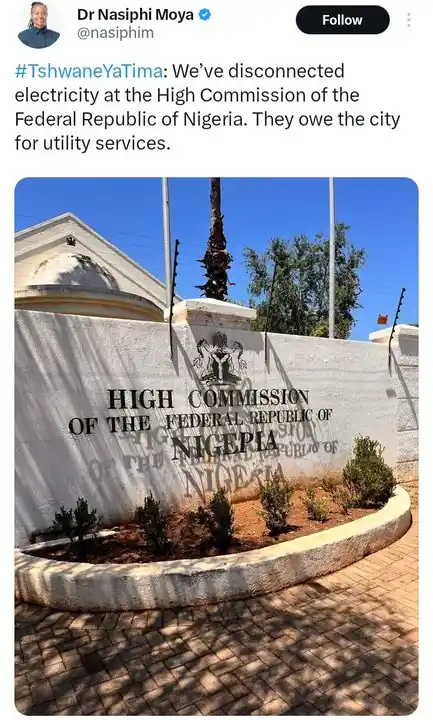
South African authorities have disconnected electricity supply to the Nigerian High Commission in Tshwane over unpaid utility services, in a move that underscores the city’s intensified crackdown on chronic defaulters of municipal bills.
The development was made public by Nasiphi Moya, the Mayor of Tshwane, through a post on X on Monday, where she confirmed that the Nigerian diplomatic mission had been affected by the city’s enforcement action.
The disconnection, according to the mayor, falls under the city’s ongoing #TshwaneYaTima campaign, an aggressive revenue-recovery initiative designed to cut off municipal services to individuals, businesses, and institutions with substantial outstanding debts.
“#TshwaneYaTima: We’ve disconnected electricity at the High Commission of the Federal Republic of Nigeria. They owe the city for utility services,” the tweet reads.
The incident has sparked widespread attention, particularly because it involves a foreign diplomatic mission, an institution traditionally expected to uphold financial and administrative compliance in host countries.
This, however, is not the first time the Nigerian High Commission in South Africa has been plunged into darkness due to unpaid electricity bills.
In 2023, City Power, the electricity distribution company in South Africa, disconnected power supply to the Nigerian consulate in Johannesburg over a debt of at least R600,000 (about $35,000), following prolonged non-payment.
Similarly, in September last year, reports indicated that the High Commission was again disconnected from public power supply over its inability to settle accumulated electricity charges.
The repeated occurrences have raised questions about financial management within the Nigerian diplomatic mission in South Africa and have drawn renewed scrutiny to how foreign missions handle utility obligations in their host countries.
While South African authorities insist that the #TshwaneYaTima campaign applies uniformly without exemptions, diplomatic observers note that such actions can strain bilateral perceptions if not swiftly addressed through diplomatic channels.
As of the time of this report, there has been no official response from the Nigerian High Commission or the Nigerian Ministry of Foreign Affairs regarding the latest disconnection.
The situation adds to growing public discourse on accountability, fiscal discipline, and the expectations placed on government institutions operating abroad, even as Tshwane city continues to expand its enforcement drive against defaulters across all sectors.