
NEWS
DRAMATIC ESCAPE TO FREEDOM: MARIA CORINA MACHADO RESURFACES IN OSLO AFTER A YEAR IN HIDING, SMUGGLED OUT OF VENEZUELA IN A HIGH-RISK OPERATION INVOLVING U.S. SUPPORT AND SECRET FLIGHT MANEUVERS

 …as Nobel Prize Winner Escapes Venezuela Disguised in Wig
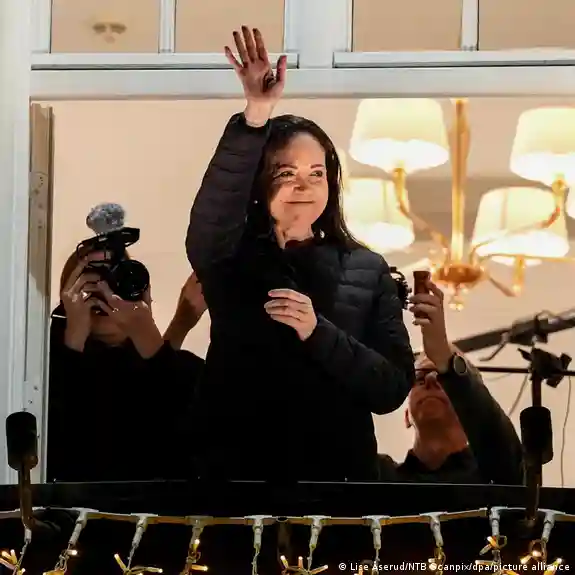
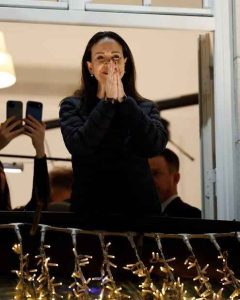
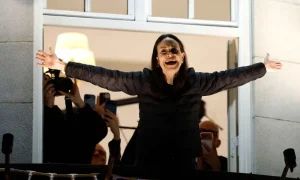
Maria Corina Machado, the prominent pro-democracy activist and one of Venezuela’s most persecuted opposition figures, made a dramatic public reappearance in the early hours of Thursday morning when she stepped onto the balcony of Oslo’s Grand Hotel shortly before 2.30am. Her emergence marked the end of more than a year spent in hiding in Caracas and the revelation of an extraordinary operation that smuggled her out of Venezuela under the nose of state authorities.
Machado, 58, had been living under a decade-long travel ban imposed by Venezuelan authorities.
According to multiple accounts, she was clandestinely extracted from the country with the help of the United States, defying the restrictions placed on her and evading an intense security dragnet. In a plot straight from a political thriller, the Wall Street Journal reported that Ms Machado wore a wig and full disguise, slipping past 10 military checkpoints before boarding a small fishing boat. The vessel carried her across the Caribbean to Curaçao in a grueling 10-hour operation conducted under extreme secrecy.
From Curaçao, she boarded a private aircraft bound for Norway, making a refueling stop in Bangor, Maine, according to a person familiar with the mission. Her escape, which had been meticulously coordinated over two months, involved direct communication with the White House to ensure that the boat carrying her was not mistakenly targeted by U.S. airstrikes. In recent months, 20 vessels leaving Venezuela had been struck, resulting in 80 fatalities, raising fears her boat could be caught in the crossfire.
“We co-ordinated that she was going to leave by a specific area so that they would not blow up the boat,” said a person close to the operation, underscoring the immense risks.
Flight-tracking data reportedly showed that as Ms Machado crossed toward Curaçao, two U.S. Navy F-18s entered the Gulf of Venezuela and circled tightly for 40 minutes near her route, the closest such incursion since tensions escalated in September. This unprecedented aerial presence coincided with her crossing, further highlighting the high-stakes nature of the mission and Washington’s apparent involvement.
Speaking in Oslo, Ms Machado expressed profound relief and gratitude as she reunited with her children who have been living in exile for the first time in two years.
“For over 16 months I haven’t been able to hug or touch anyone.
“Suddenly, in the matter of a few hours, I’ve been able to see the people I love the most, and touch them and cry and pray together,” She told the BBC.
Her escape had been kept so secretive that even the Nobel Institute “did not know where she was” when the Peace Prize ceremony began on Wednesday. As Ms Machado appeared on the hotel balcony, dozens of Venezuelans gathered below waved national flags, recorded the moment on their phones, and sang with her as she joined them in the national anthem.
Later, she climbed over barriers to embrace supporters despite the freezing temperatures. Diana Luna, a Mexican-German woman in the crowd, said: “After all these months hiding, with her life in danger, seeing her safe among the Venezuelan diaspora is both reassuring and energising. It is also a way for the Venezuelan cause to stay alive and to put more pressure on the regime.”
Although she reached Oslo after the Nobel Peace Prize ceremony ended, her daughter, Ana Corina Sosa Machado, accepted the award on her behalf. Reading from a speech written by her mother, she emphasized that democracies must not simply treasure freedom, they must defend it actively.
“It reminds the world that democracy is essential to peace. And more than anything, what we Venezuelans can offer the world is the lesson forged through this long and difficult journey: that to have a democracy, we must be willing to fight for freedom,” she read.
Inside Oslo City Hall, a large portrait of Ms Machado hung in her place. The audience erupted in applause when Jorgen Watne Frydnes of the Norwegian Nobel Committee announced that she would be arriving in the city. Evoking the legacies of Nelson Mandela and Lech Walesa, Frydnes reminded the world that defenders of democracy are often held to impossible moral standards not imposed on their oppressors.
“People living under the dictatorship often have to choose between the difficult and the impossible,” he said.
Despite the extreme danger she faces, Ms Machado declared her intention to return home.
“Of course I’m going back,” she told the BBC. Later, she added that she did not know when, but would return to “end with this tyranny very soon and have a free Venezuela.
“I came to receive the prize on behalf of the Venezuelan people and I will take it back to Venezuela at the correct moment,” she told reporters as she left the Norwegian parliament.
A source briefed by her team confirmed that her departure from Venezuela was organized by her personal security. Upon arriving in Curaçao at 3pm on Tuesday, she was received by a private contractor specializing in extractions, supplied by the Trump administration, according to the Wall Street Journal. The White House did not immediately respond to inquiries about her movement through Curaçao.
In 2024, Ms Machado was barred from contesting the presidential election despite winning the opposition primary by a landslide. She vanished from public view in August after the government intensified arrests of opposition members following a disputed vote. The electoral body and top court declared Nicolas Maduro the winner, but the opposition claims otherwise and published ballot-box-level results they say prove their victory.
Her prepared Nobel speech read: “Freedom is a choice that must be renewed each day, measured by our willingness and our courage to defend it. For this reason, the cause of Venezuela transcends our borders. A people who choose freedom contribute not only to themselves, but to humanity.”
Mr Maduro, who has been in power since 2013, has repeatedly accused Donald Trump of seeking to overthrow him to gain control of Venezuela’s vast oil reserves. The Trump administration has conducted more than 20 recent military strikes on alleged drug-trafficking vessels in the Caribbean and Pacific actions condemned by human rights groups, some Democrats, and several Latin American governments as extrajudicial killings of civilians.
When the Nobel announcement was made in October, Ms Machado dedicated the award partly to Mr Trump, who has publicly claimed he deserves the honor. She has aligned herself with hawkish Trump allies who insist that Mr Maduro maintains ties with criminal groups that threaten U.S. national security, despite skepticism from the U.S. intelligence community.
As she prepares to address the Norwegian parliament, Ms Machado stands as a symbol of resilience and democratic resistance, a woman once forced into hiding and hunted by her government, now stepping onto the world stage as a Nobel Peace Prize laureate. Her journey from a disguised fugitive on a fishing boat to being celebrated in Oslo underscores both the depth of Venezuela’s ongoing crisis and the enduring hope for a free and democratic future.