
NEWS
Dangote Refinery Raises Petrol Gantry Price to ₦995 per Litre, Marking ₦221 Surge in Four Days Amid Global Oil Market Volatility

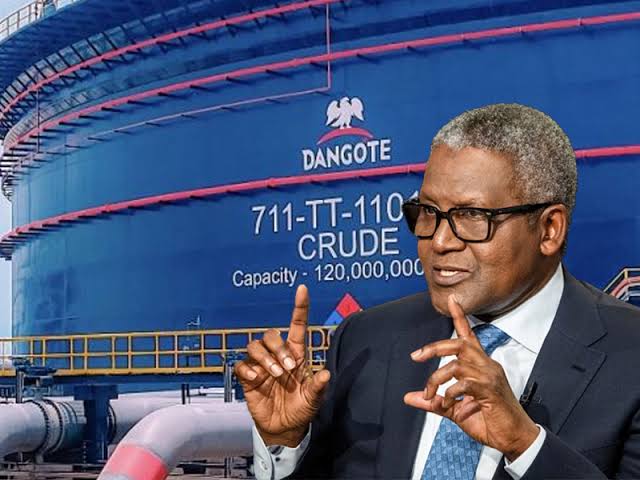
Nigeria’s domestic fuel market may be heading toward another round of pump price increases following a fresh adjustment by the Dangote Petroleum Refinery, which has raised its Premium Motor Spirit (PMS) gantry price to ₦995 per litre.
The latest price revision represents a sharp ₦221 increase within just four days, reflecting mounting pressure from fluctuations in global crude oil prices and rising shipping costs.
A senior official of the refinery confirmed the development on Friday, explaining that the new pricing reflects recent changes in global oil market fundamentals.
“Yes, the price has been reviewed. The new gantry price is now ₦995 per litre,” the official said.
The new gantry price marks a significant jump from the previous ₦874 per litre rate, which had itself been introduced earlier this week after the refinery raised its ex-depot price from ₦774 to ₦874 per litre.
With the most recent adjustment, the refinery’s petrol price has climbed from ₦774 to ₦995 per litre in less than four days. The development represents an increase of about ₦221, translating to roughly a 29 percent rise within the short period.
Industry monitoring platform petroleumprice.ng has already reflected the new price on its portal, confirming the update and signalling a potential shift in pricing benchmarks within Nigeria’s downstream petroleum sector.
Market analysts warn that the latest development could lead to another spike in retail pump prices across the country. With transportation costs and marketers’ margins factored in, petrol may soon sell above ₦1,050 per litre in several parts of Nigeria.
The price hike also came shortly after a temporary halt in petrol loading operations at the refinery, a move that had earlier triggered speculation among depot owners and marketers that another price increase was imminent.
Sources within the petroleum distribution network confirmed that truck-out operations for petrol were suspended at about 2:00 a.m. on Friday, leaving bulk marketers and depot operators uncertain about the refinery’s next pricing direction.
Industry participants noted that similar pauses in loading activities at the refinery have historically preceded adjustments in petrol prices.
Officials of the refinery have repeatedly defended their pricing framework, maintaining that petrol prices must reflect prevailing realities in the global energy market, including crude oil prices, logistics costs and operational expenses.
In a statement released on Thursday, the refinery reiterated that it does not arbitrarily set prices but rather adjusts them in response to international market movements and the cost of crude oil used in refining.
According to the company, the pricing strategy aligns with Nigeria’s transition to a fully deregulated downstream petroleum market, where petrol prices are now largely influenced by global crude oil trends, foreign exchange dynamics and supply conditions.
The refinery also assured Nigerians that it would continue prioritising domestic supply in order to cushion the country against global disruptions triggered by geopolitical tensions, particularly the ongoing US–Iran conflict escalation 2026.
“The Dangote Refinery will ensure that Nigeria is insulated from these supply shocks by prioritising supply to the domestic market. This is one of the many benefits of domestic refining.
“The conflict has driven global crude and freight prices sharply higher, with benchmark Brent prices rising by about 26 per cent within a short period to above $84.0 per barrel,” the statement read.
Despite the rising costs, the refinery said it has absorbed about 20 percent of the additional expenses in order to reduce pressure on the domestic market.
However, data released by the Major Energies Marketers Association of Nigeria (MEMAN) suggests that imported petrol currently remains slightly cheaper than fuel produced locally by the refinery.
According to MEMAN figures, Dangote’s petrol gantry price stood at ₦874 per litre as of Monday, while the landing cost of imported petrol was ₦809.37 per litre, indicating a price difference of about ₦64 between the two sources.
The association also reported similar trends in diesel pricing. Dangote’s diesel was priced at ₦1,169.42 per litre, compared to ₦1,125.70 per litre for imported diesel.
Energy analysts say the situation reflects the complex interplay between global oil prices, freight costs, exchange rate pressures and domestic refining economics, all of which continue to shape Nigeria’s evolving fuel market.