
NEWS
Dangote’s Next Industrial Gamble, Reviving Nigeria’s Long-Forgotten Auto Industry

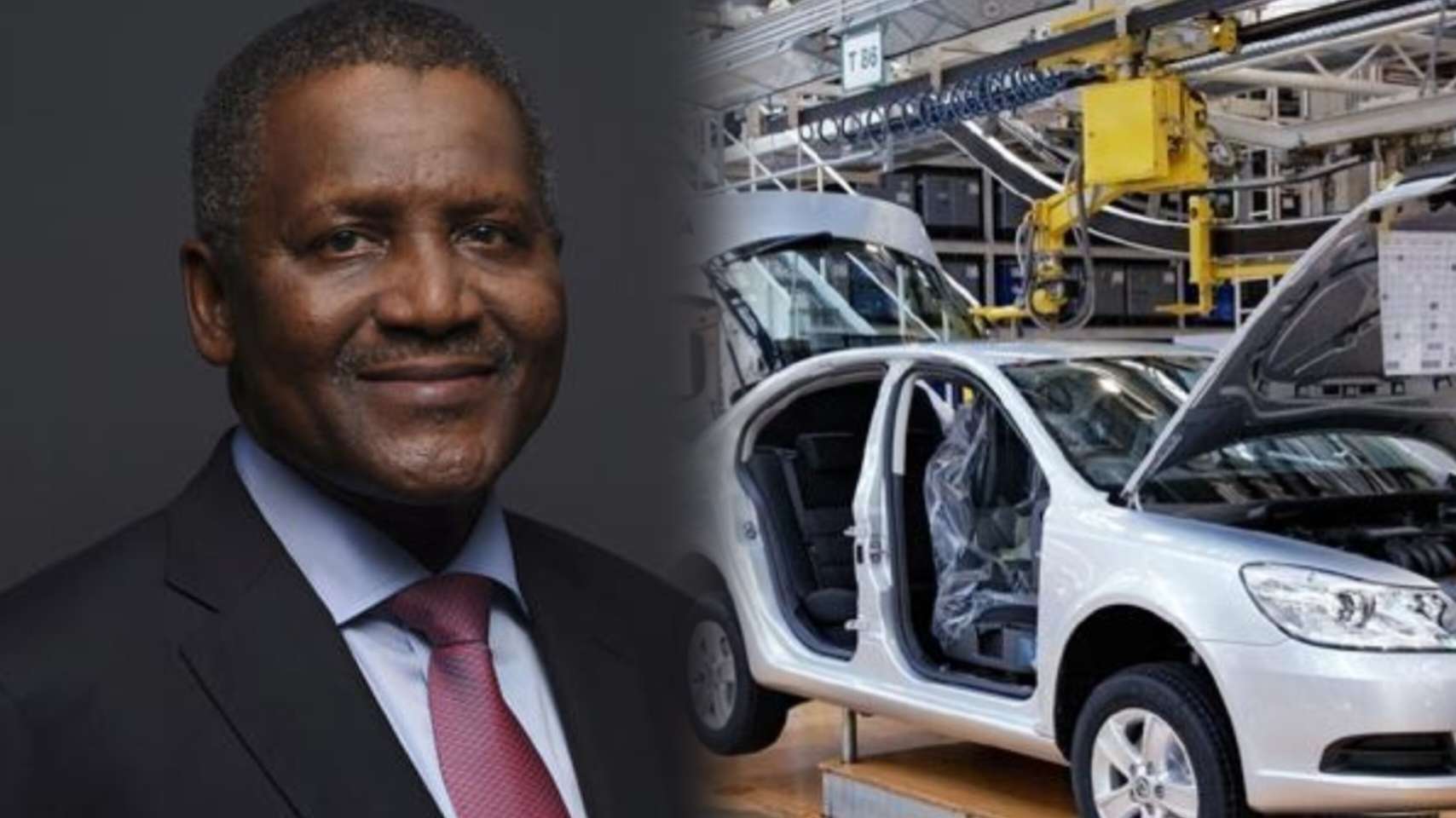
Africa’s richest businessman, Aliko Dangote, is expanding his industrial footprint once again, this time setting his sights on a sector many Nigerians had long written off: automobile manufacturing.
After reshaping key parts of Nigeria’s cement market and making bold entries into fertilizer production and oil refining, Dangote is now backing an effort to revive local vehicle assembly, signaling a renewed push for industrial self-reliance in Africa’s largest economy.
At the heart of this revival is the gradual return of Peugeot vehicle production in Nigeria, with assembly operations now active in Kaduna after more than a decade of decline in the country’s once-promising auto industry.
For decades, Peugeot dominated Nigerian roads, with models like the 404, 504, and 505 becoming everyday fixtures as government cars, taxis, and family vehicles. The brand was not just popular, it was practically part of Nigeria’s mobility identity.
That legacy began to unravel due to years of economic instability, inconsistent industrial policy, foreign exchange constraints, and a surge in imported used vehicles. These pressures pushed Peugeot Automobile Nigeria into financial distress, accumulating heavy debts before being taken over by the Asset Management Corporation of Nigeria.
The turning point came in 2016, when Dangote Industries joined a consortium that acquired a controlling stake in the struggling company, laying the foundation for a structured comeback.
The revival effort led to the creation of Dangote Peugeot Automobiles Nigeria (DPAN), operating under a partnership framework with Stellantis, the global automotive group that now oversees the Peugeot brand.
Today, the Kaduna-based assembly plant along the Abuja-Kaduna Expressway is back in operation, producing a range of modern Peugeot models including the 301, 3008, 5008, 508, and the Landtrek pickup truck. The facility represents one of the most visible attempts in years to rebuild Nigeria’s auto assembly capacity.
Industry watchers say the strategy mirrors Dangote’s wider industrial playbook: identify import-dependent sectors, invest in large-scale local production, and build domestic capacity capable of reducing reliance on foreign supply chains.
Despite the renewed activity, the sector still faces deep structural challenges. Nigeria continues to import a large share of its vehicles, while local assembly plants struggle with high production costs, weak consumer financing systems, foreign exchange volatility, and inadequate infrastructure.
Still, the Peugeot brand carries a powerful advantage, recognition. For many Nigerians, it represents a period when locally assembled vehicles were common on the roads and manufacturing held a stronger place in the national economy.
Whether this latest push will fully restore Nigeria’s auto industry remains uncertain. What is clear, however, is that the return of Peugeot assembly has reopened national conversations about industrial revival, economic sovereignty, and the long-term future of manufacturing in Nigeria.