
NEWS
EFCC May Shun Fresh Call to Reopen 2006 Financial Crimes Case Against Atiku

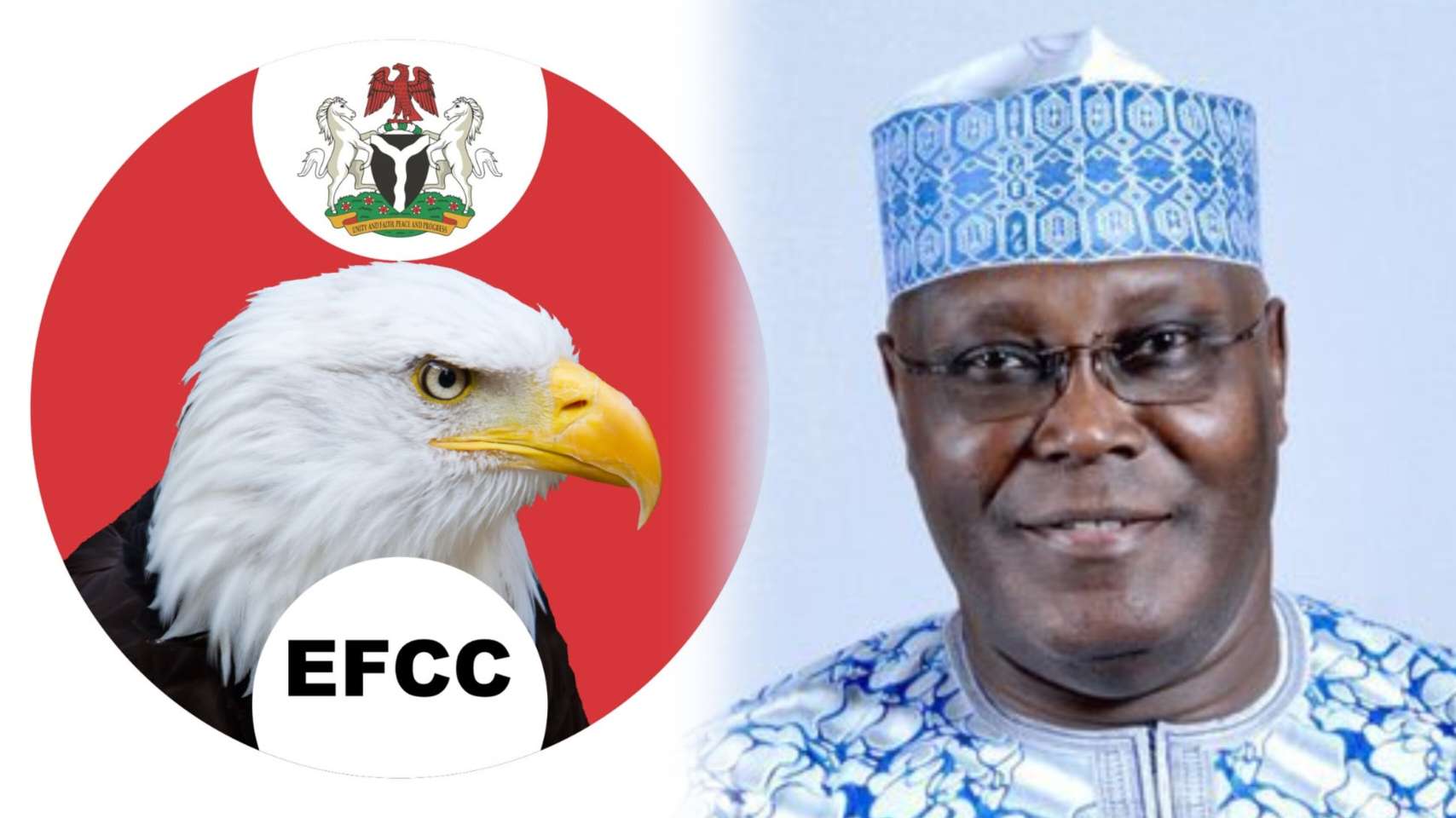
Indications have emerged that the Economic and Financial Crimes Commission (EFCC) may decline a fresh request to reopen and prosecute a 2006 alleged financial crimes case involving former Vice-President Atiku Abubakar, amid concerns that any such move could be interpreted as politically motivated ahead of the 2027 presidential election.
The development followed a petition by a former member of the House of Representatives and former member of the Code of Conduct Bureau, Hon. Ehiozuwa J. Agbonayinma, asking the anti-graft agency to revisit allegations linked to Atiku’s tenure as vice-president.
Atiku is the presidential candidate of the African Democratic Congress (ADC) for the January 15, 2027 presidential election, making the timing of the petition particularly sensitive in the increasingly heated political atmosphere ahead of the poll.
Agbonayinma’s petition, dated August 27, 2026, was filed through his legal representatives, Sagitarian Law Firm. The document, signed by the firm’s Principal Counsel, Hannibal Egbe Uwaifo, was received at the office of the EFCC Chairman on September 1, 2026.
The former lawmaker maintained that his action was not politically motivated but intended to draw the commission’s attention to an investigation it had previously conducted following a request from the United States to the administration of former President Olusegun Obasanjo.
However, Atiku has strongly rejected the renewed allegations, describing the development as an attempt by political opponents to recycle decades-old accusations in a bid to distract Nigerians from the country’s current economic challenges.
In a statement issued by his Senior Special Assistant on Public Communication, Phrank Shaibu, Atiku described the renewed allegations as the convulsion of political opponents cornered by their own failures, unable to defend the hardship Nigerians are enduring and now desperately searching for an Atiku controversy because they cannot survive scrutiny of their own economic record.
He argued that the return of allegations dating back to the political battles of the Obasanjo era was not evidence of political strength, but rather an indication that his opponents had run out of answers to issues including hunger, declining purchasing power and the rising cost of living.
Agbonayinma, however, rejected claims that the petition was designed to influence the 2027 election. He insisted that his request was strictly about accountability and the need for relevant authorities to revisit an investigation that had previously been undertaken.
Despite the controversy surrounding the petition, the EFCC has yet to publicly announce any decision to reopen the case.
Several messages and phone calls to officials of the commission reportedly went unanswered as of the time of filing the report.
A source within the EFCC, who spoke on condition of anonymity because he was not authorised to comment publicly on the matter, said the commission “is not likely to look into the petition because of its closeness to the 2027 election.”
According to the source, reopening the matter at this particular time could create the impression that the anti-graft agency was being used to target Atiku because of his position as the ADC’s presidential candidate.
Another source within the commission also declined to give details of any internal decision but said, “Let’s wait and see.
“But there is nothing indicating that the commission is looking into the case at the moment.”
The development has already triggered political reactions, with opposition figures accusing the ruling All Progressives Congress (APC) of attempting to use state institutions to weaken its major political opponents ahead of the 2027 presidential contest.
Their concerns were further linked to the EFCC’s recent controversial intervention in Osun State, where the commission, five days before the August 15 governorship election, froze state government accounts over alleged fraudulent activities involving about N₦11 billion.
The action generated widespread reactions before President Bola Tinubu directed the EFCC to vacate the court order and discontinue its action against the state government’s account.
Against that backdrop, ADC chairman for Tambuwal Local Government Area of Sokoto State, Bello Ibrahim Tambuwal, popularly known as Dan-Marafa, argued that any investigation of Atiku by the EFCC at this stage would be perceived as a politically motivated witch-hunt.
He claimed that Atiku’s growing political profile and his positions on issues such as fuel subsidies, border reopening, Hajj subsidies and insecurity had unsettled the Tinubu administration.
Tambuwal also questioned why, according to him, neither the EFCC nor the Independent Corrupt Practices and Other Related Offences Commission (ICPC) had initiated an investigation against Atiku in the 19 years since he left office as vice-president, only for the matter to resurface close to another presidential election.
He argued that such a development could be interpreted as an attempt to intimidate the opposition and weaken Atiku’s political campaign, although he maintained that such a strategy would ultimately prove ineffective.
According to him, the renewed controversy could even strengthen Atiku politically by drawing greater public attention to his campaign at a time when dissatisfaction with the current administration is becoming more pronounced.
Another ADC chieftain in Sokoto State, Hon. Attahiru Umar Danmadi, adopted a somewhat different position, arguing that Atiku should have no reason to fear a genuinely independent investigation.
Danmadi said that if the EFCC conducts a fair and transparent investigation, Atiku has nothing to fear because, according to him, the former vice-president has previously expressed his willingness to have relevant authorities investigate his activities.
He nevertheless alleged that the current attempt to revive the matter was primarily aimed at damaging Atiku’s reputation and weakening the opposition as the 2027 election approaches.
With the presidential contest already beginning to generate intense political manoeuvring, the EFCC’s handling of Agbonayinma’s petition is now being closely watched. Any decision to reopen the long-standing allegations could generate significant political repercussions, while a decision not to act could equally fuel further accusations from those demanding that the matter be investigated.
For now, the commission has not publicly confirmed that it has reopened the 2006 case, leaving the petition and its potential political consequences hanging over the early stages of the 2027 presidential race.