
COMMENTARY
Gumi Reacts to Peter Obi’s Defection to ADC, Says No Politician Can Hold Nigeria to Ransom Ahead of 2027

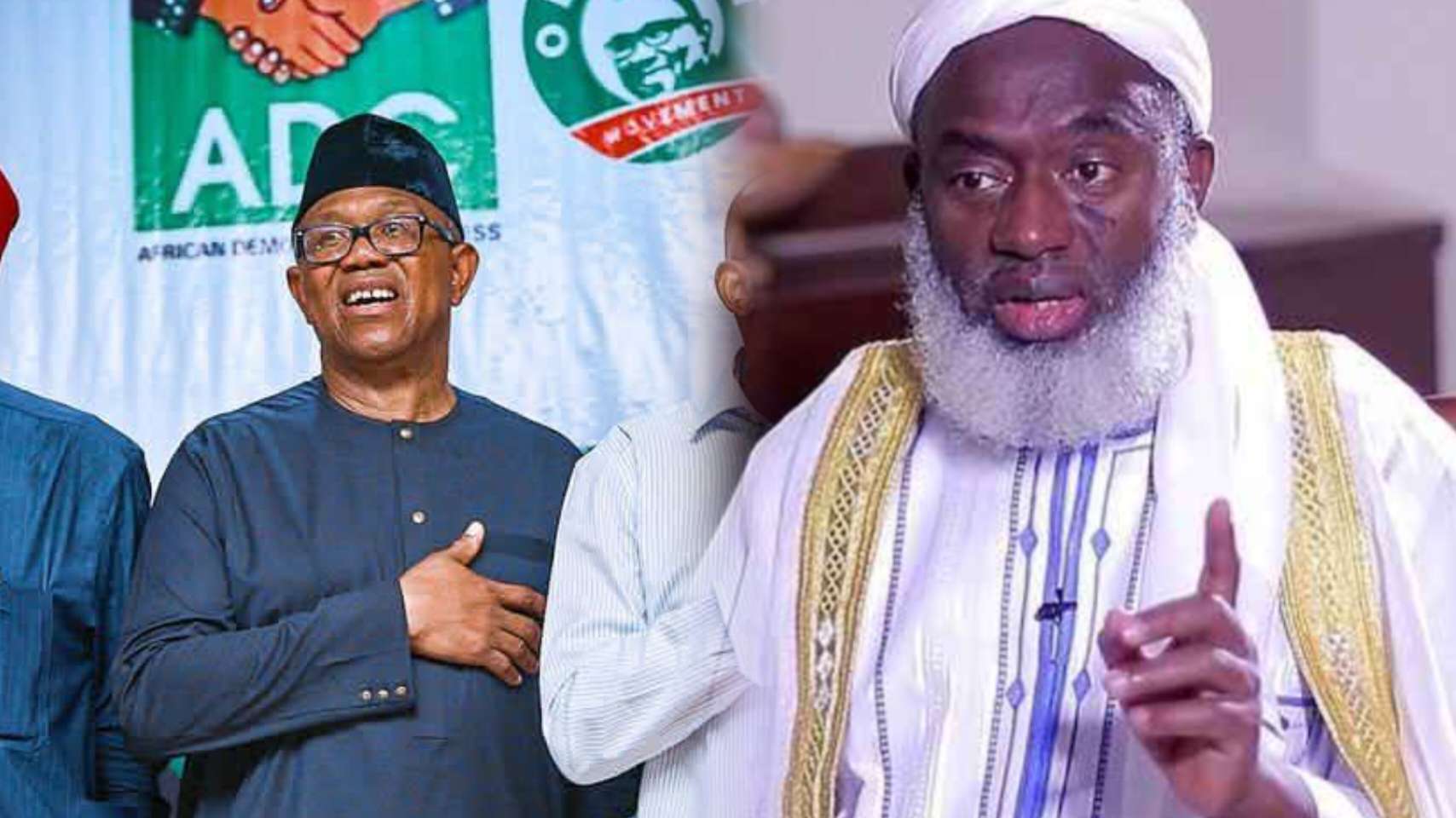
Controversial Islamic cleric, Sheikh Ahmad Gumi, has weighed in on the recent defection of former Labour Party (LP) presidential candidate, Mr Peter Obi, to the African Democratic Congress (ADC), describing the development as a reflection of Nigeria’s evolving democratic culture and a signal that no individual can dominate the political will of the people ahead of the 2027 general election.
Gumi’s reaction followed Obi’s official announcement of his move to the ADC on Wednesday in Enugu, a decision the former Anambra State governor said was motivated by his desire to reposition, transform, and rescue Nigeria from its current challenges as the nation looks toward the next electoral cycle.
Politics Nigeria had earlier reported that Obi’s defection marked a major political realignment, stirring widespread reactions across the country’s political landscape and reigniting conversations around party loyalty, ideology, and the future of opposition politics in Nigeria.
Reacting to the development, Sheikh Gumi took to his official Facebook page, where he shared a news report on Obi’s defection and offered his perspective on its broader implications for the country’s democracy. According to the cleric, the move underscores a growing political awareness among Nigerians and a shift away from personality-driven politics.
“Nigerian democracy is maturing,” Gumi wrote.
He further urged political leaders across party lines to pay closer attention to the yearnings of the populace, stressing that governance should be guided by the collective interest of the people rather than personal ambition or political calculations.
“Politicians should listen to the people’s cry and do the right thing. Time is fast approaching; no one can hold Nigerians to ransom.”
Gumi’s comments add to the swelling public discourse generated by Obi’s defection, as political stakeholders and observers continue to assess its possible impact on alliances, voter mobilisation, and the balance of power ahead of the 2027 general elections.