
NEWS
“Ideas, As A Wise Man Said, Are The True Capital, Everything Else Is Complementary” — Gov. Alex Otti Says, Champions Research-Driven Education Reform, Honours Fafunwa’s Legacy at Lagos Symposium


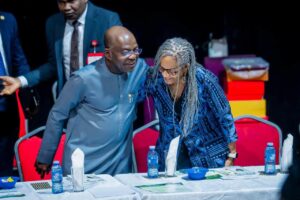
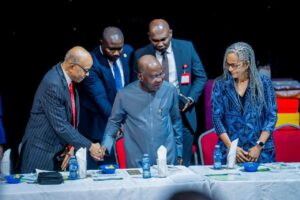
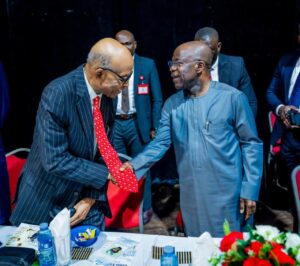
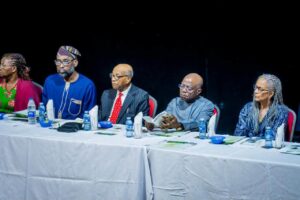
The Executive Governor of Abia State, Dr. Alex Chioma Otti, OFR, has emphasised the enduring power of ideas, research and intellectual investment in shaping societies, as he chaired the 24th Annual Lecture/Symposium of the Fafunwa Educational Foundation (FEF) and the 19th Post-Doctoral Awards in Education in Lagos.
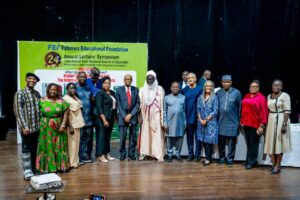
The event, held on Wednesday, September 23, 2026, at the AGIP Recital Hall, MUSON Centre, Onikan, Lagos, honoured the memory and enduring contributions of Nigeria’s first Professor of Education and former Minister of Education, the late Prof. Aliu Babatunde Fafunwa.
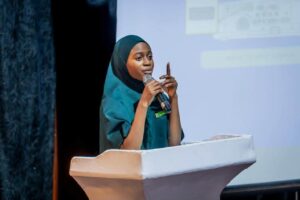
The symposium, themed “What Does the Research Say?: Mother Tongue Instruction and the Future of Early Education in Nigeria,” brought together leading scholars, educationists, policymakers and other stakeholders for an important conversation on the place of indigenous languages in Nigeria’s early education system.
In his address titled “Of Memories and Gratitude,” Governor Otti paid glowing tribute to Prof. Fafunwa, describing him as a man of ideas, a dreamer and a pathfinder who believed deeply in the transformative power of a trained mind.
“Ideas, as a wise man said, are the true capital, everything else is complementary.
“True greatness is measured not by material possessions but by the scope of our impact and the memories that outlive our mortal frames,” Governor Otti stated.
The Governor commended the Fafunwa family and the Fafunwa Educational Foundation for preserving the legacy of the renowned educationist through the annual lecture, symposium and post-doctoral awards.
Turning to the central issue of the symposium, Governor Otti called for a deeper and research-driven national conversation on the use of indigenous languages as mediums of instruction, particularly during the formative years of a child’s education.
While acknowledging challenges surrounding teacher capacity, instructional materials and the varying global relevance of local languages, he cautioned against rejecting research simply because its findings challenge established assumptions.
“If research establishes that children learn better when taught in indigenous languages, we should address the limitations rather than reject the findings,” Governor Otti argued.
Governor Otti cited China, India and South Korea as examples of countries where indigenous language, education and economic development have intersected positively, suggesting that Nigeria’s educational policies should be shaped by evidence and adapted to the country’s peculiar circumstances.
He also congratulated recipients of the 19th Post-Doctoral Awards, reminding them that academic achievement carries a corresponding responsibility to contribute to society and advance human development.
A major highlight of the event was the launch of “Babs Fafunwa: A Life of Firsts – A Mini-Biography for Youngsters,” written by Prof. Okey Ndibe and illustrated by Chibu Ndibe.
Governor Otti, who reviewed the book, described it as an important tool for introducing younger Nigerians to the life and legacy of Prof. Fafunwa. He pledged to ensure that children within his sphere have access to the publication, reinforcing the importance of exposing the younger generation to inspiring Nigerian intellectual and national figures.
Earlier, Prof. Ndibe, while introducing Governor Otti, spoke about their decades-long friendship, which dates back to Governor Otti’s days as a student and young banker. He described the Governor as a trailblazing leader who remained committed to his vision for Abia despite earlier political setbacks.
The keynote address was delivered by Prof. Francis Egbokhare of the University of Ibadan, who identified the mismatch between the language of instruction and the language understood by learners as a significant factor in Nigeria’s learning crisis.
“What may appear as poor academic performance can sometimes be a consequence of language barriers rather than intellectual limitation,” he noted.
The Guest Speaker, Prof. Angelina Kioko of USIU-Africa, alongside scholars, educationists and policymakers, also attended the event.
The symposium provided a significant platform for honouring Prof. Fafunwa’s enduring contribution to Nigerian education while renewing attention to the critical questions of language, research, intellectual development and the f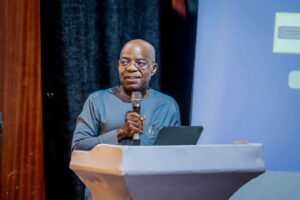





 uture of early education in Nigeria.