
NEWS
INEC Stakeholders’ Meeting: Fresh Legal Storm Looms Today Over 2027 Candidates as Supreme Court Ruling Puts Defections, Primaries Under Spotlight

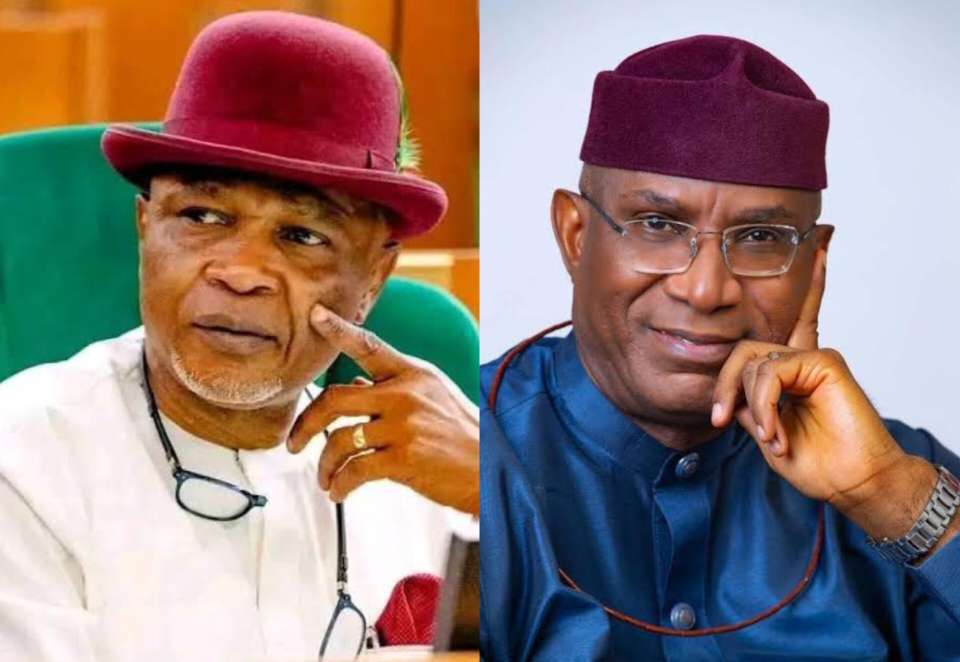
…as Anxiety Grips Chinda, Omo-agege, Others
All eyes will turn to the Independent National Electoral Commission (INEC) in Abuja today, Tuesday, as the electoral umpire convenes a national stakeholders’ meeting to mark 100 days to the 2027 general elections.
The meeting is expected to provide political parties, candidates, civil society organisations and other stakeholders with updates on critical preparations for the elections, including the voters’ register, candidate nominations, election logistics and measures being put in place to safeguard the credibility and integrity of the polls.
Beyond the preparations for the elections, however, the meeting is coming at a particularly sensitive moment, with the eligibility and nomination of several high-profile politicians who changed political parties ahead of the 2027 elections attracting renewed legal and political attention.
Among the prominent cases generating interest are the Rivers State governorship candidate of the All Progressives Congress (APC), Kingsley Chinda; Delta Central senatorial candidate of the Nigeria Democratic Congress (NDC), Ovie Omo-Agege; former Cross River State governor and Peoples Redemption Party (PRP) presidential candidate, Donald Duke; and former Delta State House of Assembly Speaker, Victor Ochei.
At the centre of the controversy is a recent Supreme Court judgment which restored key provisions of the Electoral Act 2026 dealing with political party membership registers and the nomination of candidates.
The apex court, in a unanimous judgment delivered on September 25, upheld INEC’s appeal and restored Sections 77(5), 77(6), 77(7) and 84(2) of the Electoral Act. The provisions had earlier been struck out by the Court of Appeal. The restoration has triggered fresh questions over the status of politicians who defected to new political parties after their former parties had concluded, or were already conducting, their nomination exercises. The controversy is rooted in a Federal High Court judgment delivered in May, which invalidated aspects of INEC’s timetable for the 2027 general elections. The court had ruled that INEC could not reduce statutory periods prescribed by the Electoral Act for political parties to conduct primaries and submit, withdraw or replace candidates. It also faulted the commission’s deadline for political parties to submit their membership registers.
The judgment subsequently created considerable uncertainty within the political space, particularly as politicians switched parties and sought new platforms through which to pursue their electoral ambitions.
The legal landscape, however, changed significantly on July 16 when the Court of Appeal overturned the Federal High Court judgment and restored INEC’s timetable.
The appellate court held that the electoral commission acted within its statutory powers in issuing the relevant electoral guidelines.
The Supreme Court subsequently went a step further in September by restoring the disputed provisions of the Electoral Act concerning party membership registers and candidate nominations.
While INEC has not announced that it will disqualify any particular candidate at Tuesday’s stakeholders’ meeting, the commission’s interpretation and implementation of the restored provisions could offer important indications about the future of candidates whose emergence followed controversial defections, waivers, membership questions and party primaries.
Chinda’s Rivers Governorship Battle:
In Rivers State, the candidacy of Kingsley Chinda, an ally of Minister of the Federal Capital Territory (FCT), Nyesom Wike, is among the cases attracting considerable attention.
Chinda emerged as the APC governorship candidate on May 21, 2026, shortly after the Federal High Court judgment had invalidated parts of INEC’s electoral timetable. Although the subsequent Supreme Court judgment restored the disputed provisions of the Electoral Act, it did not expressly disqualify Chinda or any other named candidate.
Supporters of the Rivers APC candidate have consequently maintained that the Supreme Court ruling does not automatically invalidate his nomination.
The question is whether INEC will treat the restored provisions as having consequences for nominations conducted during the period when those provisions were not operational, or whether each candidate’s circumstances will have to be considered independently.
Omo-Agege’s NDC Ticket Faces Fresh Scrutiny:
In Delta State, the candidacy of former Deputy Senate President Ovie Omo-Agege provides another significant test of the legal implications of the Supreme Court ruling.
Omo-Agege contested the APC’s Delta Central senatorial primary in May but lost to Ede Dafinone. He resigned from the APC on May 22 and subsequently joined the NDC, where he was granted a waiver to participate in the party’s Delta Central senatorial primary. He eventually emerged with the party’s ticket through a consensus arrangement.
His emergence has now generated questions about the implications of the restored Electoral Act provisions, particularly those relating to party membership registers and the statutory conditions governing participation in party primaries. The issue is not limited to Omo-Agege.
Victor Ochei, who also left the APC after its nomination process and joined the NDC, was granted a waiver and subsequently secured the party’s Delta North senatorial ticket. His candidacy could therefore attract similar legal questions as political parties and INEC move towards the final stages of preparations for the 2027 elections.
Lawyer Explains Why Supreme Court Judgment Does Not Automatically Void Nominations:
A human rights lawyer, Maximus Ugwuoke, has offered a legal perspective on the controversy, arguing that the recent Supreme Court judgment does not automatically invalidate nominations or disqualify candidates whose party primaries were conducted while the affected provisions were inoperative.
Ugwuoke stated this in an interview on Monday while examining the likely implications of the judgment for political parties and candidates ahead of the 2027 general election.
According to him, the judgment restored the legal operation of the affected provisions, particularly those dealing with party membership registers and the conduct of party primaries.
However, he cautioned that the restoration of the provisions should not be interpreted as an automatic declaration that individual nominations are invalid.
“The Supreme Court judgment should not be interpreted as automatically invalidating all nominations or disqualifying all candidates whose primaries were conducted while the affected provisions of the Electoral Act were inoperative,” he said.
Ugwuoke explained that INEC would need to examine the circumstances surrounding each nomination before determining the practical effect of the Supreme Court decision.
He identified the law applicable at the time each primary was conducted, the relevant party membership register, the procedure adopted for the primary and applicable statutory timelines as factors that could become crucial in determining the validity of individual nominations.
“In my view, the crucial issue tomorrow is not simply whether INEC will ‘review the candidates’ list’, but the legal basis and extent of any such review,” he said.
The lawyer also warned against interpreting the Supreme Court judgment as creating a blanket legal basis for the cancellation of nominations already conducted by political parties.
“A blanket cancellation of nominations cannot be assumed merely from the Supreme Court judgment,” he added.
Ugwuoke maintained that although the apex court had restored the statutory provisions, their impact on candidates who had already emerged from party primaries would depend on the particular facts of each case and the proper application of the Electoral Act.
“In short, the Supreme Court has restored the statutory rules; it has not automatically declared every previously concluded nomination invalid,” he said.
As INEC enters the final stretch towards the 2027 general elections, Tuesday’s stakeholders’ meeting could therefore become more than another milestone in the commission’s electoral preparations.
With party nominations, defections, membership registers and the validity of primaries already under legal scrutiny, political parties and affected candidates will be watching closely for any clarification from the electoral umpire that could shape the next phase of the race.