
NEWS
Israel Flags Turkey as Emerging Regional Threat, as PM, Netanyahu Pushes for “Hexagon” of Alliances Amid Tehran Tensions

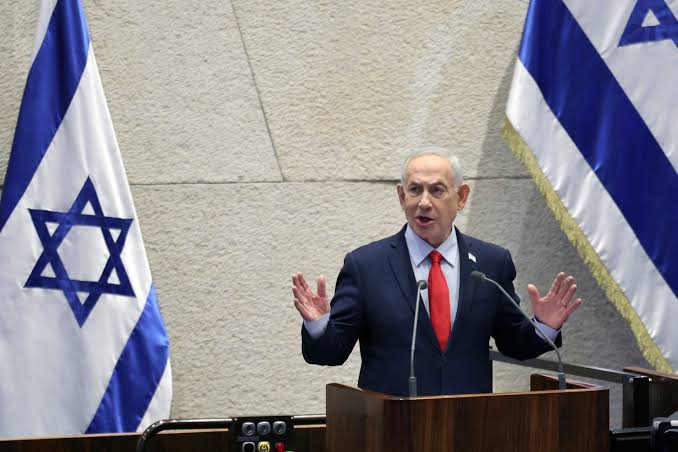
In a striking escalation of regional rhetoric, former Israeli Prime Minister Naftali Bennett warned last week that Israel must not “turn a blind eye” to Turkiye, accusing Ankara of aligning with a regional axis “similar to the Iranian one.”
“A new Turkish threat is emerging. We must act in different ways, but simultaneously against the threat from Tehran and against the hostility from Ankara,“ Bennett said.
Bennett’s remarks signal a shift in Israeli strategic thinking, suggesting that while the Iranian government remains in power in Tehran, Israel is already identifying a new regional adversary, backed by a network of like-minded states.
Other Israeli politicians have expressed similar concerns in recent months. Turkiye has been a vocal critic of Israel’s military campaigns against Palestinians, including what critics describe as its genocidal war on Gaza. At the same time, Ankara has moved closer to influential regional powers such as Saudi Arabia and Egypt, amplifying Israel’s perception of an emerging threat.
On Sunday, Israeli Prime Minister Benjamin Netanyahu reinforced this strategy during an announcement regarding the upcoming visit of Indian Prime Minister Narendra Modi.
Netanyahu declared his intention to forge a new “hexagon” of alliances aimed at outflanking a so-called “emerging radical Sunni [Muslim] axis” and consolidating Israel’s influence in the region. The proposed alliance reportedly includes Greece and Cyprus, countries with historically antagonistic relations with Turkiye.
Alon Pinkas, a former Israeli ambassador, described the timing of Bennett’s and Netanyahu’s apparent campaign against Turkiye as unsurprising.
“Politicians like Naftali Bennett and Benjamin Netanyahu rely on the perpetual threat of war. If it wasn’t Turkiye, it would be Iraq. If it wasn’t Iraq, it would be Hezbollah. If it wasn’t Hezbollah, it would be the Muslim Brotherhood. It doesn’t matter who. There just always needs to be a threat,” Pinkas told Al Jazeera.
Israel has operated in a heightened state of conflict since the October 7, 2023 attack led by Hamas. Since then, it has conducted military operations in Gaza, Lebanon, Yemen, Syria, and launched a broader confrontation with Iran. Israel has also moved toward annexing territory in the occupied West Bank, defying international law and global opinion.
Against this backdrop, talk of a Turkish threat and fresh alliances reflects a continuation of Israel’s long-standing approach to regional security. Despite their political differences, both Netanyahu and Bennett are right-wing figures who oppose the creation of a Palestinian state and advocate for Israeli regional hegemony.
“This has always been what Naftali Bennett has been about. Liberal [Israelis] have been projecting their own hopes onto him for years, simply because he was an opponent of Benjamin Netanyahu. That’s to miss the point. He isn’t even pretending now. He’s just trying to overtake Netanyahu on his right,” political analyst Ori Goldberg said.
However, framing Turkiye as a threat carries both historical complications and strategic logic. Israel-Turkiye relations have spanned decades of pragmatic engagement, even as disagreements over Palestinian issues occasionally flared. Since taking office in the early 2000s, Turkish President Recep Tayyip Erdogan has grown increasingly critical of Israel. The 2010 attack on a flotilla heading to Gaza, which killed 10 Turkish activists, marked a defining low point in bilateral relations, followed by diplomatic downgrades and sustained political rhetoric.
Subsequent Israeli operations in Gaza and Syria have further fueled Turkish public and governmental anger.
Ankara’s confrontational stance toward Israel’s military campaigns and territorial ambitions has strained bilateral ties, making Turkiye’s potential involvement in Gaza’s proposed interim security force a politically sensitive issue within Israel.
Yet analysts caution that comparisons between Ankara and Tehran are overblown.
“Israel has worked alongside Turkiye numerous times. It wasn’t all that long ago that policymakers in Israel talked of the Middle East being overseen by two superpowers, Israel and Turkiye, in opposition to Iran. And now they’re trying to supplant Iran with Turkiye? What are they talking about, armed conflict? Turkiye is a NATO power,” Pinkas noted.
Pinkas added: “Has the leadership in Turkiye ever denied Israel’s right to exist, or threatened to wipe it from the map? No. It’s ridiculous.”
Israel continues to rely heavily on its alliance with the United States but is seeking to expand its network of regional and global partners.
Netanyahu’s proposed “hexagon” would include India, Greece, Cyprus, and other unspecified Arab, African, and Asian nations.
“The intention here is to create an axis of nations that see eye to eye on the reality, challenges, and goals against the radical axes, both the radical Shia axis, which we have struck very hard, and the emerging radical Sunni axis,” Netanyahu said.
While Netanyahu framed the new alliance as complementary to the US, analysts argue the strategy is partly driven by concern over waning political support in Washington. Goldberg described the moves as “desperate”: “All of this because we’ve burnt through past alliances with Russia and now the United States, so we’re [now] claiming that India will be leading this hexagon of ‘moderate states’. Not even people in Israel, not even the most deluded, have any belief that Israel might still be a moderate state.”
Chatham House expert Yossi Mekelberg suggested the focus on Turkiye is largely a distraction from Israel’s primary objective in the region: Iran.
“It’s all deflection; there just isn’t any honesty, and it just gets worse and worse. The big issue is Iran. [That is] what they’re interested in. Turkiye is just so much noise,” Mekelberg said.
However, he also cautioned that intensifying rhetoric against Turkiye could carry real risks.
“Most leaders, at least the devious ones, can separate rhetoric and reality, so there’s no real chance of one spilling over into the other. The risk is that as Israel ramps up its rhetoric against Turkiye, it risks making it a genuine opponent,” he said.