
NEWS
Nigeria Moves to Expand Yuan–Naira Currency Swap to $10 Billion in Strategic Push to Ease Dollar Pressure and Correct $23 Billion Trade Imbalance with China

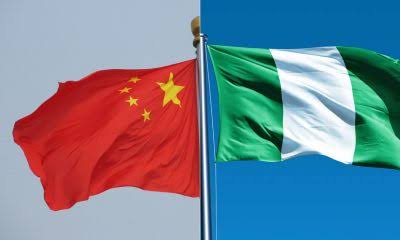
The Federal Government of Nigeria has entered advanced negotiations with China to significantly expand its existing Yuan–Naira currency swap arrangement to as much as $10 billion, in a strategic move aimed at reducing pressure on the U.S. dollar, stabilising the naira, and addressing a widen ing $23 billion trade imbalance that strongly favours China.
The development signals a renewed effort by Nigeria to deepen financial and trade cooperation with Beijing while providing Nigerian businesses with a more efficient means of conducting transactions with Chinese partners without relying heavily on the U.S. dollar.
Speaking to BusinessDay in Abuja, the Director-General and Global Liaison for the Nigeria–China Strategic Partnership, Joseph Tegbe, disclosed that the government is working to renew and significantly expand the existing $2.5 billion swap agreement currently in place between the two countries.
According to Tegbe, the plan is to scale up the arrangement so that Nigerian businesses can transact directly in Chinese yuan, eliminating the costly and dollar-dependent conversion process that currently dominates trade between both nations.
He explained that the existing swap line, although initially underutilised, is now being revived with proposals to increase its value to as much as $10 billion, which would make it more practical and beneficial for Nigerian importers and exporters.
“We are in discussions with China to establish a truly workable Yuan–Naira swap arrangement. We already have about a $2.5 billion swap line, and although progress slowed toward the end of last year, we are now looking to renew and expand it.
“What this means for the economy is simple: a Nigerian business should be able to pay in naira into his local bank account here and receive yuan in China directly to do his/her business.
“Currently, traders convert naira to dollars, and then dollars to yuan, which increases demand for the U.S. dollar. But someone trading with China does not need dollars, they need yuan. If transactions move directly between naira and yuan, it will significantly reduce pressure on the dollar–naira exchange rate,” he said.
Tegbe further emphasised that the success of the expanded swap arrangement will depend largely on the strength of Nigeria’s foreign exchange reserves, noting that the Central Bank of Nigeria (CBN) is already working to strengthen the country’s FX position to ensure the mechanism operates effectively.
“Our foreign exchange reserves must also be at a comfortable level for the swap to function effectively. Without sufficient reserves, the arrangement cannot deliver its full benefits. That is why we are strengthening our FX position and renewing the agreement.
Businesses have told us the current threshold is insufficient, so we are working to increase it to the equivalent of $10 billion,” Tegbe said.
The Yuan–Naira currency swap was first introduced in 2018 during the tenure of former Central Bank of Nigeria governor Godwin Emefiele, in collaboration with Yi Gang, the governor of the People’s Bank of China.
The original three-year $2.5 billion agreement, equivalent to about ₦720 billion or 16 billion yuan, allows both countries to exchange principal and interest payments in their respective local currencies. The arrangement was designed to reduce reliance on the U.S. dollar and make bilateral trade between Nigeria and China more efficient.
Despite the agreement, trade between the two countries remains heavily skewed in China’s favour. Nigeria’s total trade volume with China currently stands at approximately $23 billion, making China the country’s largest trading partner.
However, the trade relationship remains largely imbalanced. Out of the total volume, only about $2 billion represents Nigerian exports to China, while more than $20 billion consists of imports from China.
Nigeria’s imports from China are dominated by electronics, machinery, textiles, and industrial equipment, many of which are essential inputs for Nigeria’s manufacturing and technology sectors.
To address this imbalance, the Nigerian government is also accelerating export protocols aimed at enabling local producers to benefit from China’s zero-tariff policy for African countries, which is expected to take effect in May 2026.
Tegbe revealed that several Nigerian products, which are currently exported informally, will soon gain formal access to the Chinese market under the new policy framework.
“Products like hides, skins, cashew, and aquatic products such as crabs and shrimps, which are often exported informally, will now enter China legally under zero duty,” he said.
Beyond trade facilitation, Nigeria is also pursuing equity-based partnerships with Chinese firms in strategic sectors of the economy.
Among the major initiatives already underway is the $1 billion investment by China Harbour Engineering Company in the Lekki Deep Sea Port, alongside other large-scale development projects spanning agriculture, steel production, and poultry.
Analysts believe that if successfully implemented, the expanded Yuan–Naira swap arrangement could play a significant role in easing pressure on Nigeria’s foreign exchange market, lowering transaction costs for businesses, and strengthening economic ties between Africa’s largest economy and its biggest trading partner.