
COMMENTARY
“Nyesom Wike Said, ‘Among the Agreements Is That Governor Fubara Must Not Defect to APC’” — Analyst, Yusuf Haroun Disclosed, Warns as Rivers Impeachment Crisis Deepens

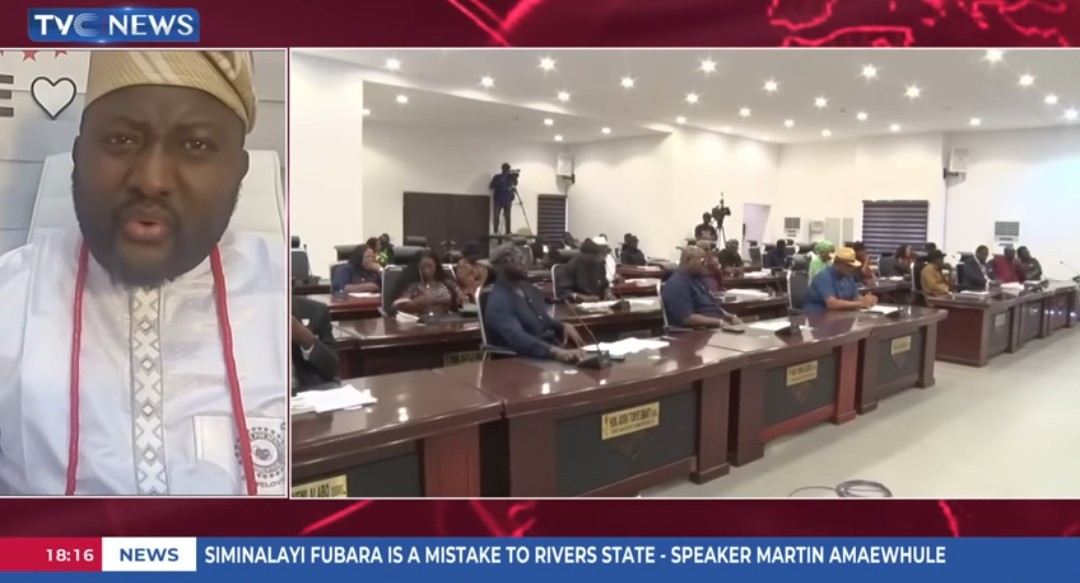
The lingering political crisis in Rivers State has once again taken centre stage in Nigeria’s national discourse, following renewed impeachment proceedings against Governor Siminalayi Fubara and his deputy, a development that has heightened tension across the state.
Speaking during a recent interview on TVC News, public affairs analyst Yusuf Haroun warned that the situation could further deteriorate if urgent mediation efforts are not initiated by key political stakeholders. He noted that the impeachment process, which has resurfaced amid mounting political hostilities, poses serious risks to governance stability in the oil-rich state.
Members of the Rivers State House of Assembly have levelled several allegations against the governor’s administration, including the failure to present statutory budgets, unauthorized spending, and the withholding of constitutionally approved funds.
Lawmakers insist that these actions represent a consistent undermining of democratic principles, leading the House to suspend all budget considerations until ongoing investigations are concluded.
Highlighting the political roots of the crisis, Haroun recalled earlier power-sharing arrangements that, according to him, helped shape the current administration but have since collapsed. He drew attention to statements credited to former Rivers State Governor and current Minister of the Federal Capital Territory, Nyesom Wike, which underscore the fragile agreements that once held the political structure together.
“Nyesom Wike said, ‘Among the agreements is that Governor Fubara must not defect to APC’,” he said, explaining that the alleged violation of this understanding has significantly eroded trust between key political actors and intensified the confrontation.
According to Haroun, the crisis is not purely legal but deeply political, driven by rival interests and the breakdown of earlier alliances. He observed that the alleged defection of Governor Fubara to the All Progressives Congress (APC), coupled with the collapse of trust between him and his predecessor, has created a vacuum that makes reconciliation increasingly difficult.
The analyst further noted that the involvement of national political figures has added another layer of complexity to the crisis. He explained that the perceived influence of the presidency and senior APC leaders has emboldened both camps, turning what should have been a state-level dispute into a broader national political contest.
Haroun urged respected elders of Rivers State, former leaders, and federal representatives to intervene swiftly, warning that failure to do so could push the state into deeper political instability. He maintained that quiet, closed-door engagements between the principal actors still offer the best chance of resolving the impasse without resorting to drastic constitutional measures.
As the 2027 general elections approach, Haroun cautioned that the stakes are rising rapidly. He warned that any mishandling of the crisis could have long-term consequences for democratic governance, public confidence, and investor trust in Rivers State, stressing that timely mediation remains critical to preventing an avoidable descent into political chaos.