
NEWS
President Tinubu Directs EFCC Recoveries, Dormant Funds and Unclaimed Dividends to Student Loan Fund

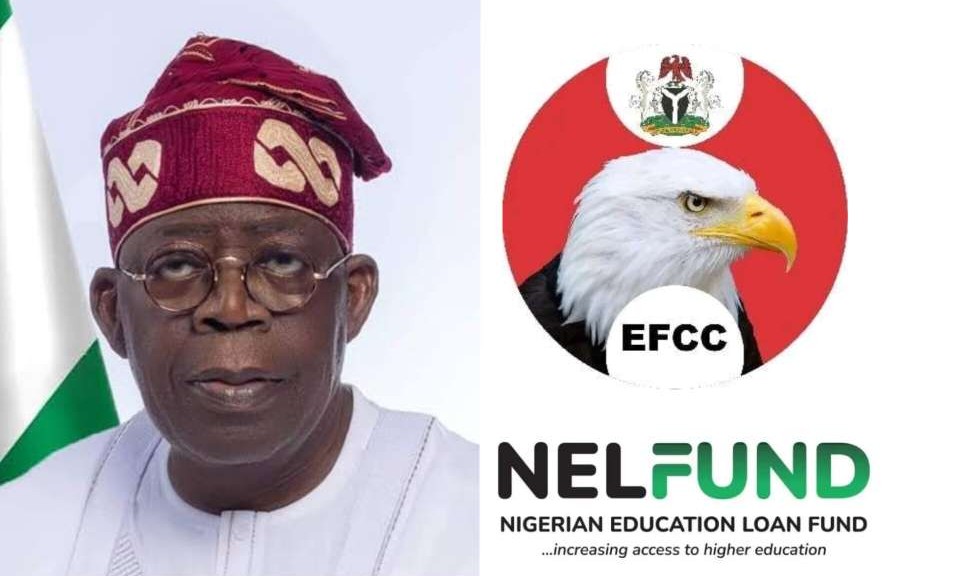
President Bola Tinubu has directed that funds recovered by the Economic and Financial Crimes Commission, alongside unclaimed dividends and monies held in dormant bank accounts, be channelled into the Nigerian Education Loan Fund to strengthen the Federal Government’s student loan programme.
The directive is expected to create an additional funding stream for NELFUND and enable the agency to extend financial support to more Nigerian students pursuing tertiary education.
The move reflects the administration’s broader strategy of redirecting recovered and otherwise idle funds into critical areas of national development, particularly education and human capital development.
With demand for student financing continuing to rise, the additional resources could significantly boost NELFUND’s capacity to provide institutional fees and upkeep allowances to students enrolled in public tertiary institutions across the country.
NELFUND Managing Director, Mr Jimtunde Sawyer, recently disclosed that the fund had disbursed more than ₦322 billion to beneficiaries. The figure includes approximately ₦192 billion released for institutional fees and ₦129.8 billion provided as upkeep allowances.
The growing financial commitment underscores the expanding role of NELFUND in helping students overcome the cost barriers associated with higher education.
The student loan programme operates as an interest-free revolving fund, with repayment structured around beneficiaries’ employment and income status. Under the scheme, beneficiaries are expected to repay 10 per cent of their income after securing employment, while repayment obligations are suspended during periods of unemployment.
The President’s latest directive could therefore provide NELFUND with a more sustainable pool of funds to support its operations and accommodate more applicants.
Beyond easing the financial burden on students and their families, the initiative is expected to strengthen the government’s efforts to widen access to tertiary education and invest recovered and dormant public resources in the development of Nigeria’s human capital.
If effectively implemented, the new funding arrangement could mark a significant step towards ensuring that financial constraints do not prevent qualified Nigerian students from pursuing higher education.