
NEWS
PRESIDENT TINUBU’S AMBASSADORIAL NOMINATIONS: WHO IS LATEEF KAYODE ARE, AND WHO ARE THE OTHER NOMINEES?

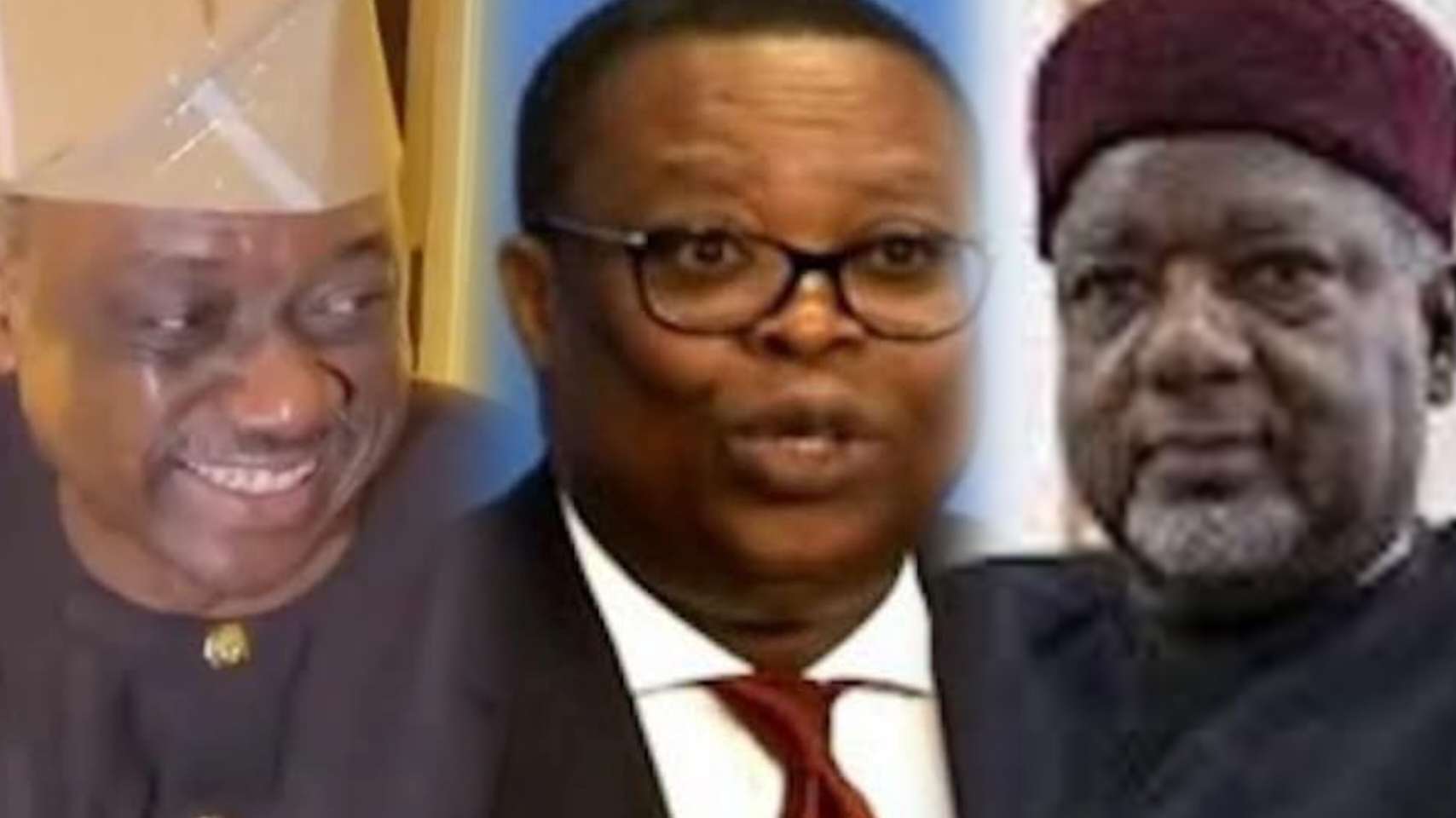
President Bola Ahmed Tinubu’s recent submission of three non-career ambassadorial nominees to the Nigerian Senate has drawn nationwide attention, especially with the inclusion of Lateef Kayode Are, a name widely associated with Nigeria’s modern intelligence history. The nomination adds a new chapter to the career of a man who has played some of the most discreet but influential roles in national security for over three decades.
Lateef Kayode Are is a distinguished retired military intelligence officer with an illustrious background that began at the University of Ibadan, where he graduated with First Class Honours in Psychology in 1980. His exceptional performance earned him the University Senate prize, the Faculty of Social Sciences prize, and the Department of Psychology prize as the best graduating student. In 1987, he expanded his academic strength with a Master’s degree in International Law and Diplomacy from the University of Lagos, reinforcing his grounding in global security and diplomacy.
His military career began much earlier, in December 1974, when he was commissioned as a Second Lieutenant after completing the Nigerian Defence Academy Regular Course 12. He graduated among the top ten student officers and was deployed to the Nigerian Army Intelligence Corps, where he served as an Intelligence Officer at the Directorate of Military Intelligence. His course mates included some of Nigeria’s most notable military figures such as General Owoye Andrew Azazi, Colonel Sambo Dasuki, and Admiral Ganiyu Adekeye. Are rose to the rank of Colonel before he was compulsorily retired from the Nigerian Army by General Sani Abacha in 1993.
Despite this forced retirement, his experience and expertise soon returned to national service when President Olusegun Obasanjo appointed him as Director General of the State Security Service (SSS) in May 1999. Are went on to serve as the longest-serving DG of the SSS, working under both Obasanjo and President Umaru Musa Yar’adua until his removal in August 2007. His security journey continued when President Goodluck Jonathan appointed him Deputy National Security Adviser in 2010, a role in which he briefly served as Acting National Security Adviser following the resignation of Aliyu Mohammed Gusau.
In 2015, his Ikoyi residence became the subject of controversy during an invasion by the Lawal Daura-led SSS following a dispute over property. Lateef Kayode Are, who hails from Owu ancestry, is married with children and now stands on the verge of a new diplomatic assignment pending Senate confirmation.
Among the other notable figures connected to Tinubu’s new foreign policy direction is Ambassador Ayo Oke, formerly sacked as Director General of the National Intelligence Agency (NIA) by President Muhammadu Buhari on October 30, 2017. Oke, appointed by President Goodluck Jonathan in November 2013, is a career diplomat from Oyo State with academic training in economics and political science from Emory University, Atlanta. Before becoming DG of the NIA, he served as Director (Regions) at the agency and earlier worked at the Commonwealth Secretariat in London.
His tenure ended amid controversy in April 2017, when EFCC operatives discovered US$43.4 million, nearly £27,800, and ₦23 million in an apartment at Osborne Towers in Ikoyi, a flat he described as a safe house. A subsequent investigation led to his suspension, prosecution, and a warrant for his arrest in February 2019 after he and his wife failed to appear in court. They later left Nigeria for medical treatment and were declared wanted. The charges, including alleged diversion of $160 million were eventually withdrawn by the EFCC in June 2023, shortly after President Tinubu assumed office.
Also spotlighted is another accomplished diplomat and Ambassador of the Federal Republic of Nigeria, who served as Nigeria’s Ambassador Extraordinary and Plenipotentiary to the Republic of Korea from 2017 to 2023. He presented his Letters of Credence in September 2017 and spent six years strengthening relations between Nigeria and South Korea, overseeing economic, political, and cultural engagements. A career diplomat with extensive service in the Nigerian Foreign Service, he contributed significantly to Nigeria’s foreign policy implementation and hails from Jigawa State.
With these nominations and connections to the nation’s intelligence and diplomatic community, President Tinubu signals a strategic recalibration of Nigeria’s presence on the global stage, one built on experience, discipline, and deep institutional memory.