
NEWS
SEVEN MAJOR TAKEAWAYS FROM THE U.S. JOINT CONGRESSIONAL HEARING ON ALLEGED CHRISTIAN PERSECUTION IN NIGERIA

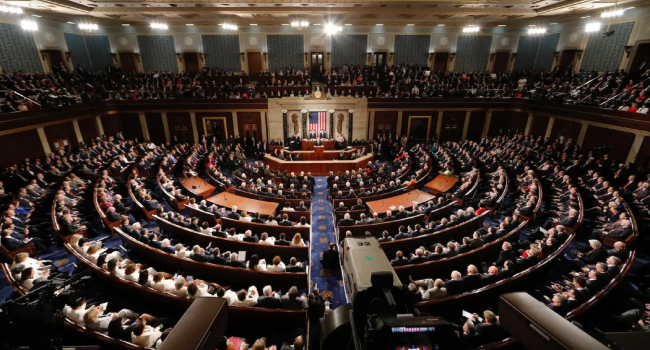
The United States Congress, in a high-stakes joint hearing convened by lawmakers and foreign policy experts, has renewed global attention on the escalating violence and alleged religious persecution of Christians in Nigeria. The briefing, held under the leadership of Rep. Mario Díaz-Balart (R-FL), followed President Donald J. Trump’s directive mandating a thorough investigation into what he described as the “slaughter of Christians” in Africa’s most populous nation.
During the session, lawmakers unanimously dismissed claims that the violence is simply a “resource conflict” or “inter-communal clashes.” Instead, they argued that the pattern of killings, displacement, and attacks reflects a coordinated campaign of religious cleansing executed with impunity. Experts and legislators put forward actionable proposals and demanded immediate intervention from both the U.S. government and Nigerian authorities.
Below are the seven key submissions and policy recommendations presented at the hearing:
1. Advancing Policy through Funding — Rep. Mario Díaz-Balart (R-FL):
Rep. Díaz-Balart reaffirmed the U.S. government’s moral duty to protect global religious freedom. As Chair of the National Security and State Department Funding Subcommittee, he pledged to use the FY26 appropriations process to strengthen policies safeguarding the right to practice one’s faith without fear. He emphasized his commitment to passing a full-year funding bill that supports these measures.
2. Demanding Justice, Disarmament, and Restoration — Rep. Brian Mast (R-FL):
Rep. Mast, Chair of the House Foreign Affairs Committee, condemned the violent operations of Boko Haram, ISWAP, and radicalized Fulani militias. He described their mission as a deliberate effort to expel Christians from the Middle Belt region. He insisted that the Nigerian government must:
i. Disarm militant groups,
ii. Facilitate the safe return of displaced families, and
iii. Prosecute all perpetrators involved in the attacks.
3. Accountability and Decisive U.S. Action — Rep. Chris Smith (R-NJ):
Rep. Smith characterized Nigeria as the “ground zero of religious violence.” He stressed that the Nigerian government has a constitutional responsibility to protect its citizens. He expressed confidence that the Trump administration would hold Nigeria accountable for enabling the widespread persecution. Smith called for swift U.S. intervention to prevent further loss of life.
4. Solidarity with Persecuted Communities — Rep. Robert Aderholt (R-AL):
Rep. Aderholt emphasized that the situation in Nigeria is a humanitarian and religious crisis that demands urgent international attention. He underscored the necessity for the U.S. to stand firmly with Christian communities in Nigeria and with persecuted believers across the world.
5. Ending Global Silence — Rep. Riley Moore (R-WV):
Rep. Moore revealed that President Trump tasked him and the Appropriations Committee with investigating the ongoing violence. He welcomed the expert testimonies received and declared that the global community “will no longer turn a blind eye” to the plight of Nigerian Christians.
6. Degrading Terrorism and Constitutional Overhaul — Dr. Ebenezer Obadare:
Dr. Obadare, of the Council on Foreign Relations, identified jihadist insurgency, particularly Boko Haram, as Nigeria’s most severe existential threat. He insisted that no effective solution can ignore the need to neutralize these groups. His policy recommendations included:
i. Collaborating with the Nigerian military to dismantle Boko Haram,
ii. Pressuring President Tinubu to make Sharia law unconstitutional in the twelve northern states where it has been adopted since 2000, and
iii. Disbanding Hisbah police groups enforcing Islamic law on all citizens.
He noted that Nigeria’s recent actions, including airstrikes and the recruitment of 30,000 additional police officers, show that the government responds when international pressure intensifies.
7. Strengthening Accountability and Leveraging U.S. Aid — Hon. Vicky Hartzler:
USCIRF Chair Vicky Hartzler stressed the urgency of restoring religious freedom in Nigeria. She outlined a comprehensive path forward, urging the U.S. government to:
i. Push Nigeria to improve transparency and accountability,
ii. Utilize U.S. security assistance for police training and conflict mediation,
iii. Invest in early warning mechanisms to prevent attacks and ensure rapid government response,
iv. Continue supporting Nigerian authorities with technical expertise to counter violent extremist groups.
The hearing concluded with a unified message from Congress: the United States must act decisively, and Nigeria must shoulder its constitutional responsibility to protect its people. The lawmakers insisted that religious persecution can no longer be downplayed or ignored, and that effective international cooperation is essential to ending the cycle of violence.