
BUSINESS
Tax Reform: Oyedele Debunks Claims of Bank Narration-Based Deductions, Says Fears Are Fueled by Misinformation

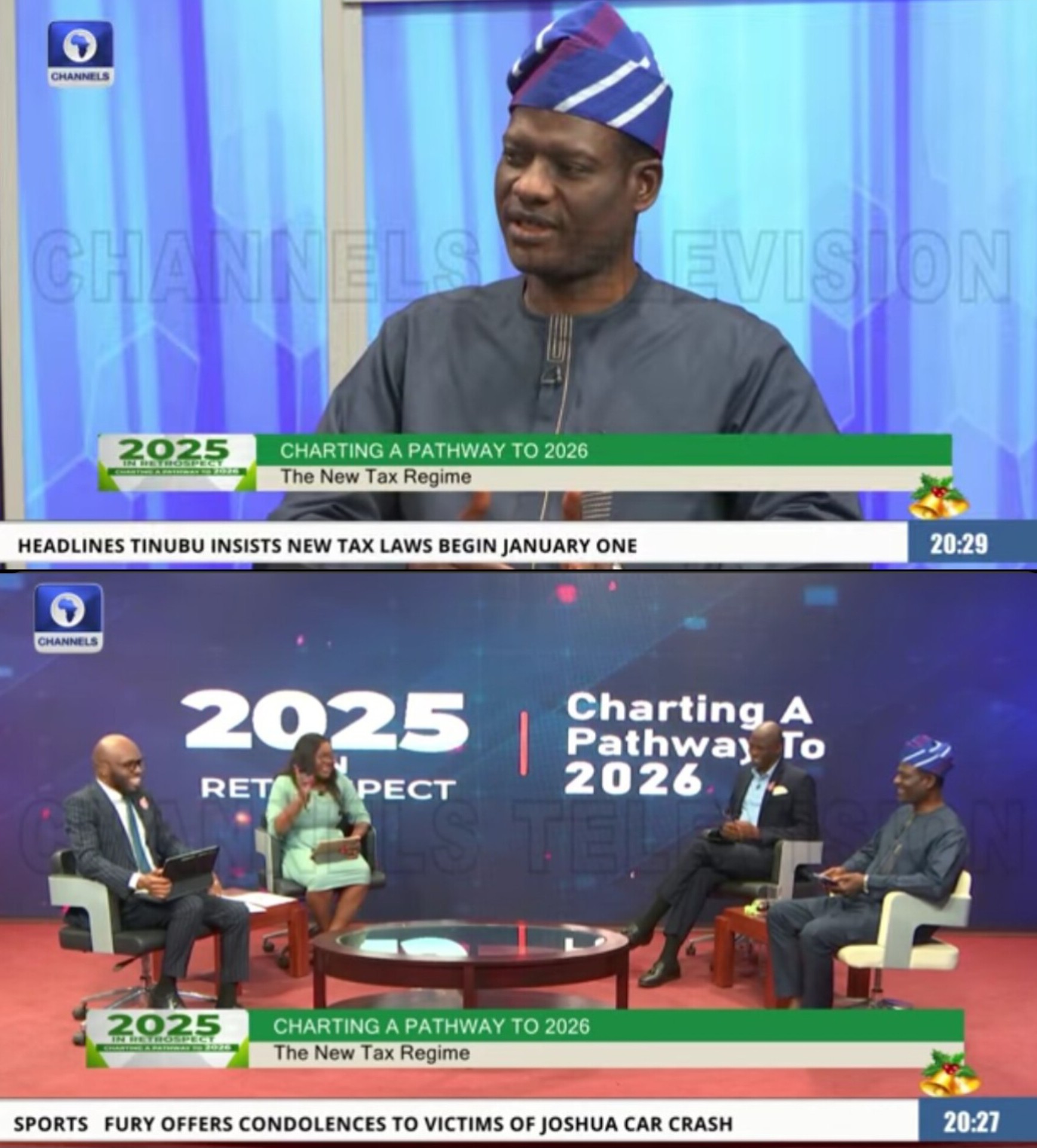
The raging insinuation that bank transaction narrations could be used to impose taxes has been described as a baseless misinformation, as the Federal Government moves to clarify public concerns surrounding Nigeria’s ongoing fiscal and tax reforms.
The Chairman of the Presidential Committee on Fiscal Policy and Tax Reforms, Taiwo Oyedele, has firmly dismissed widespread claims suggesting that tax authorities would begin monitoring Nigerians’ bank transaction narrations or automatically debiting bank accounts to collect taxes. He described such fears as unfounded and deliberately misleading.
Speaking in an interview, Oyedele stated that tax authorities do not monitor individual bank transfers or the descriptions attached to them for the purpose of imposing or deducting taxes. He emphasized that no tax system anywhere in the world has the capacity to pursue every citizen individually, noting that governments typically focus on areas that yield the highest revenue returns.
“With limited capacity, you go after the highest yield. Where can I get one billionaire or ₦100 million?” he said, explaining that tax authorities naturally prioritize high-income earners rather than ordinary Nigerians struggling to make ends meet.
Oyedele further revealed that data available to policymakers shows that the vast majority of Nigerians are not within the income bracket targeted by the current tax reforms.
According to him, about 98 per cent of bank account holders in Nigeria do not have up to ₦500,000 in their accounts. Ironically, he noted, many of those outside the taxable bracket have been the most vocal critics of the reforms—an outcome policymakers did not anticipate.
He alleged that some wealthy individuals are deliberately fuelling public anxiety in a bid to evade taxation.
According to Oyedele, certain high-earning content creators, some of whom reportedly earn as much as $10,000 monthly, have been at the forefront of spreading alarming narratives that suggest the government intends to debit small bank accounts.
“They won’t say they don’t want to pay tax. Instead, they say the government will debit your ₦5,000 so you can help them fight the reform,” he said.
Describing these claims as entirely false, Oyedele reiterated that no Nigerian’s bank account would be debited by the government under the new tax regime. He clarified that neither the amount transferred whether ₦1,000 or ₦1 billion nor the narration attached to any transaction has any bearing on taxation or triggers automatic deductions.
He explained that Nigeria operates a self-declaration tax system, where individuals are required to declare their income at the end of the year and assess their own tax obligations accordingly.
“You know what is your income and what is not. You tell the government, this is my income, and this is the tax,” he said.
Oyedele also clarified that individuals who are legally exempt from paying tax are still required to file tax returns, clearly stating their exemption status. He added that one of the core objectives of the ongoing reforms is to simplify tax processes and make compliance easier and more transparent for citizens.
He concluded by stressing that the tax reforms are designed to protect vulnerable Nigerians while shifting the tax burden toward a more progressive system. According to him, those who stand to benefit the most from the reforms often lack the platforms to defend them publicly, leaving room for m
 isinformation to thrive.