
NEWS
Umahi Challenges Peter Obi to Debate on Road Infrastructure, Defends Tinubu’s Legacy Highway Projects

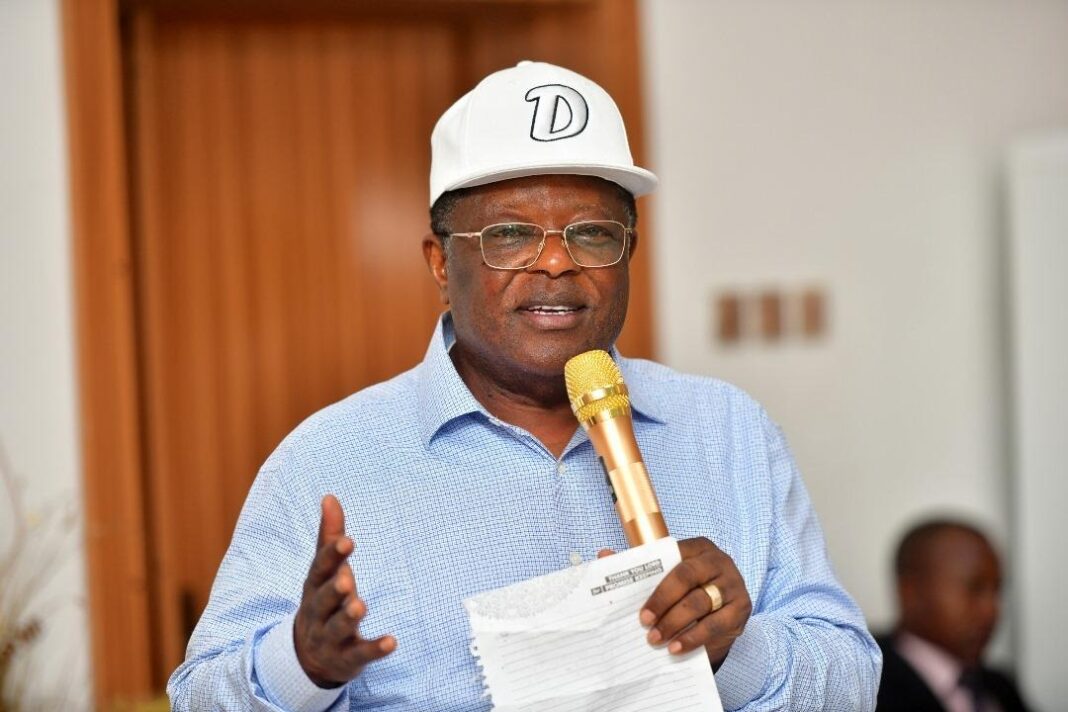
Minister of Works, David Umahi, has challenged former Anambra State Governor, Peter Obi, to a public debate on road infrastructure, criticizing what he described as the use of deteriorated road sections for political campaigns and insisting that governance should be approached with responsibility rather than sensationalism.
Umahi made the remarks on Wednesday during the commissioning of the Akwanga–Jos–Bauchi–Gombe–Borno Superhighway in Nasarawa State, where he defended the Federal Government’s ongoing investments in road infrastructure under the administration of President Bola Tinubu.
The Minister expressed disappointment over Obi’s recent comments on the condition of some federal roads, arguing that as a former governor, he should better appreciate the complexities of governance and infrastructure development.
“I feel so sad when my brother, the former governor of Anambra State, who should know what governance is, makes some remarks. I saw on social media where he got to a point where the road is bad and took a picture. This is bad for his dignity and personality.
“And I’m always ready for a debate. I’m always ready to disaggregate the cost, the unique cost of concrete, and to debate with him. And so, I feel so sad because governance is the responsibility of everybody,” he said.
Umahi further highlighted the Federal Government’s long-term infrastructure agenda, revealing that the Akwanga–Maiduguri Superhighway would be expanded to include Yobe State, extending from Yobe through Gombe to Maiduguri as part of the 700-kilometre corridor aimed at improving connectivity and stimulating economic growth across the North-East.
Speaking on other strategic highway projects being executed by the Tinubu administration, the Minister outlined additional legacy road corridors stretching across several regions of the country.
“Don’t forget that the first legacy project of Mr President is 750, cutting through Lagos to Ondo to Edo to Delta to Bayelsa to Rivers to Akwa Ibom and Cross River. And the third legacy project is taking off from Cross River where the first legacy project stopped. And that is going from Cross River to my state, Ebonyi, where the first section is ongoing.
“The second section has just been approved, and it is ongoing, and it is going from Ebonyi down to Benue, down to the Benue boundary between Benue and Ebonyi. That’s another 168 kilometres that has been awarded,” he stated.
Also speaking at the event, President Tinubu described the Akwanga–Maiduguri Superhighway as one of the administration’s landmark infrastructure projects approved by the Federal Executive Council (FEC), emphasizing that the road is being delivered in phases to enhance transportation, regional integration, and economic activities across the affected states.
The President explained the scope of the project, noting that the 700-kilometre superhighway would connect several major cities and communities across the North-East.
“In Section 1, Phase 1 of the Akwanga–Maiduguri Superhighway, it is a 125-kilometre stretch spanning Akwanga–Kaduna–Jos, Nasarawa, Kaduna and Plateau States as part of the larger 700-kilometre Akwanga–Maiduguri Superhighway, cutting across five states in the North-East as follows:
“Akwanga–Kaduna–Jos, 125 kilometres; Jos–Bauchi, 135 kilometres; Bauchi–Gombe, 162 kilometres; Gombe–Biu, 125 kilometres; Biu to Maiduguri, 188 kilometres, spanning 700 kilometres in all. They are distances connecting communities and cities along one of the most important inland passages in the country.”
The commissioning of the superhighway marks another milestone in the Federal Government’s ongoing drive to modernize Nigeria’s road network, with the administration maintaining that the legacy projects are designed to improve interstate connectivity, facilitate trade, reduce travel time, and unlock economic opportunities across the country.