
NEWS
UK Housing Pressure Forces Young Adults to Stay Home Longer as Homeownership Gap Widens Between Generations

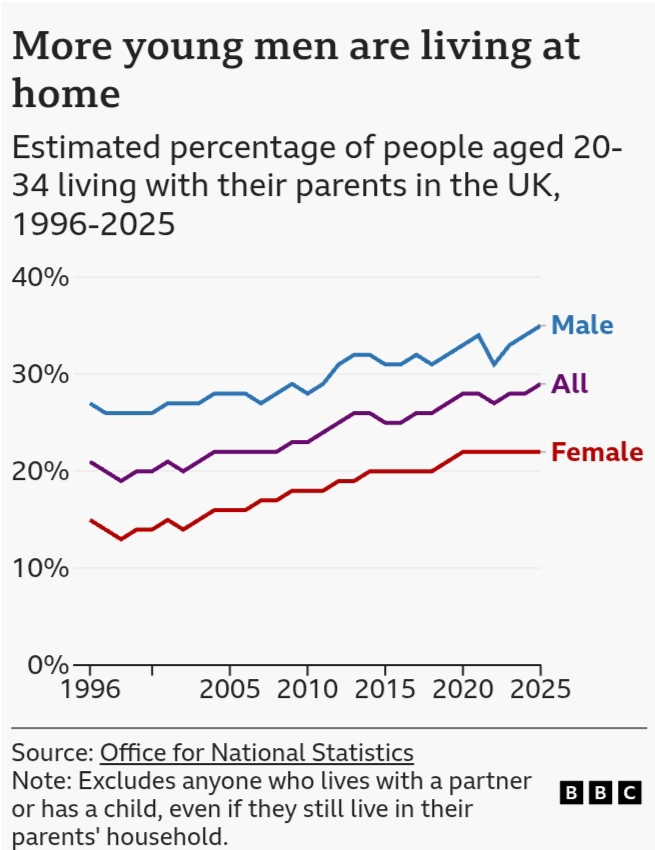
…as New Figure Shows Over One in Three Young Men Now Living with Parents Amid Rising Costs
A growing number of young adults in the United Kingdom are remaining in the family home well into adulthood, as soaring rental prices and high property costs continue to reshape living patterns across the country.
New figures from the Office for National Statistics (ONS) show that more than one in three young men are now living with their parents in 2025, marking a significant rise compared to earlier decades. In 2000, the figure stood at 26%, but it has now climbed sharply as economic pressures intensify.
According to the data, 35% of young men aged between 20 and 35 are currently living at home. While young women are also affected by the same trend, the proportion is notably lower at 22%.
However, both groups have experienced steady increases over time, reflecting broader affordability challenges in the housing market.
Analysts point to escalating rental costs and rapidly increasing house prices as the primary drivers behind the shift. For many young adults, independent living has become financially difficult, even for those in full-time employment.
Separate findings from the statistics body further highlight the severity of the cost-of-living crisis in the UK. Rising living expenses were identified as the most pressing concern among adults, surpassing worries about the National Health Service (NHS) and the wider economy.
For many individuals, staying at home is no longer simply a matter of convenience but a strategic financial decision.
One such example is Nathan, a 24-year-old who lives with his father in a council house on the outskirts of Manchester. Working night shifts maintaining and cleaning trains, he has been able to accumulate significant savings while continuing to live at home.
“If you are lucky enough to live with a mum, dad or grandparent who doesn’t charge you much rent, then you can build up money even on the minimum wage,“ he says.
Nathan credits his disciplined spending habits for helping him build savings of around £50,000. He says he prepares his own meals for work, carefully avoids unnecessary purchases, and limits his social spending.
He explains, “I cook chillis and stews to take to work, avoids impulse purchases and tries to keep spending on a night out below £20.“
His approach extends to lifestyle choices as well, as he deliberately avoids expensive consumer habits that he considers unnecessary.
“I’m not that interested in getting a flashy car, spending it all on alcohol, or getting some £500 trainers,“ he adds.
Reflecting on generational differences in financial opportunities, Nathan also notes how housing accessibility has changed over time.
“My dad managed to buy a house at 21, but that was just how it was back then.“
The rising number of young adults remaining in the parental home continues to fuel debate in the UK over affordability, wage growth, and whether homeownership is becoming increasingly out of reach for a large portion of the younger generation.