
NEWS
₦20 Trillion Federation Account Scandal: How Nigeria’s Missing Revenue, NNPCL Remittance Gaps and Constitutional Loopholes Are Driving Debt, Poverty, Inflation and Economic Hardship Across the Country

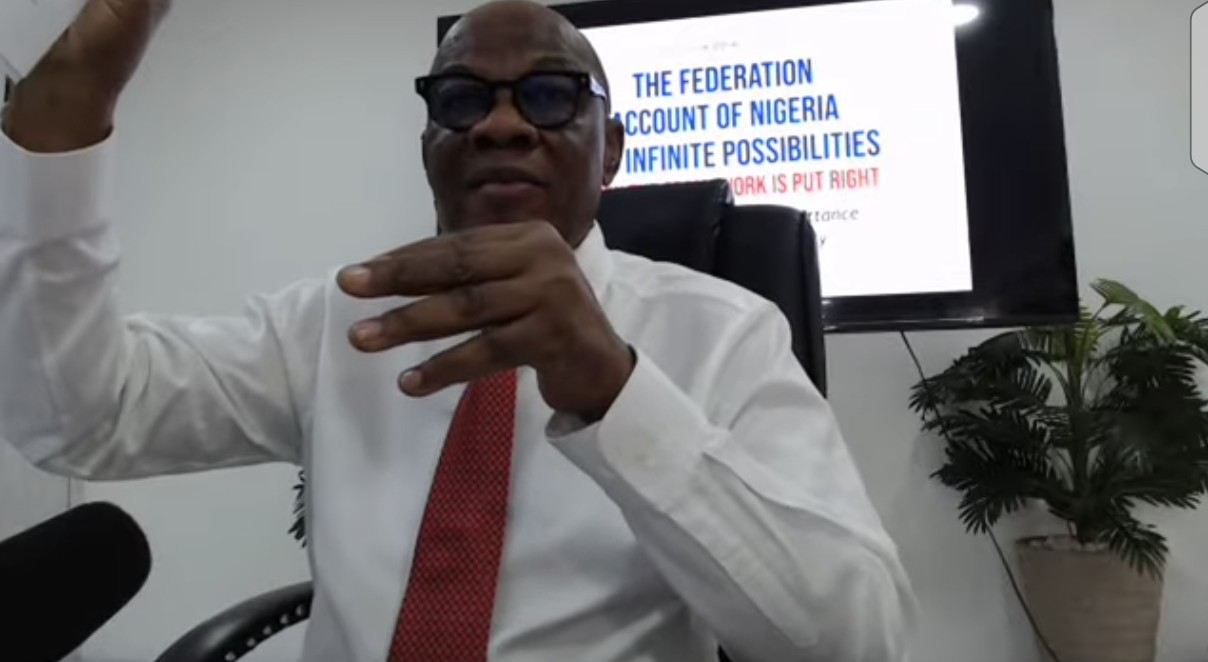
A growing national debate has emerged over the management of Nigeria’s Federation Account following alarming revelations that trillions of naira in public revenue allegedly failed to reach the constitutionally recognised national pool meant for sharing among the federal, state and local governments.
The controversy, which has intensified amid worsening economic hardship, rising inflation and increasing public debt, has once again raised serious questions about transparency, accountability and revenue management in Nigeria’s public finance system.
At the centre of the debate is Section 162 of the 1999 Constitution, which established the Federation Account as the central account into which all revenues collected by the Federal Government on behalf of the federation are expected to be paid before distribution to the three tiers of government.
Analysts and policy advocates argue that despite the constitutional provision, massive deductions, under-remittances and unauthorised financial practices over the years have weakened the integrity of the account and contributed significantly to Nigeria’s economic struggles.
According to figures referenced from the World Bank’s Nigeria Development Update, approximately ₦14.94 trillion in federation revenue was reportedly deducted in 2025 before reaching the Federation Account. The amount represented about 39 per cent of total revenues generated within the period, sparking concerns that nearly two-fifths of national earnings were withheld before distribution to states and local governments.
Further concerns were raised over the remittances of the Nigerian National Petroleum Company Limited, NNPCL, regarded as one of the country’s largest revenue-generating institutions.
Reports indicated that in 2024, the company was expected to remit about ₦1.1 trillion into the Federation Account but allegedly paid only ₦600 billion, leaving a shortfall of roughly ₦500 billion.
The issue becomes even more troubling against the backdrop of an ongoing Federation Accounts Allocation Committee, FAAC, investigation into allegations that NNPCL under-remitted about $42.37 billion between 2011 and 2017. At current exchange rates, the amount is estimated at over ₦12 trillion.
Economic observers say the alleged leakages represent resources capable of transforming critical sectors including healthcare, education, infrastructure and security if properly accounted for and utilised.
The revelations have also reignited concerns over Nigeria’s rising debt profile.
Data released by the Debt Management Office in February 2026 placed Nigeria’s total public debt at ₦159.27 trillion by the end of 2025.
Available fiscal reports further showed that debt servicing consumed about 78 per cent of federal revenue in 2023 and approximately 69 per cent in 2024, far above the 30 to 40 per cent benchmark recommended by global financial institutions such as the International Monetary Fund and the World Bank.
Financial experts warn that the situation leaves limited revenue for governance, infrastructure development and social services for Nigeria’s growing population.
Many analysts argue that Nigeria’s borrowing crisis is worsened by the inability of the government to fully recover and remit revenues already generated within the country.
They contend that the nation is increasingly borrowing funds to finance projects and services that could ordinarily be sustained through properly managed domestic revenues.
The debate has also drawn attention to longstanding constitutional and administrative gaps surrounding the Federation Account.
Critics maintain that while the Constitution established the account, it failed to clearly define key operational safeguards such as who should manage the account, timelines for remittances, audit mechanisms, penalties for diversion of funds and public access to financial records.
Over the years, these loopholes allegedly enabled several agencies to deduct management costs before remitting revenues, operate unauthorised sub-accounts and retain internally generated funds outside official channels.
A 2023 investigation by the House of Representatives reportedly uncovered that despite the implementation of the Treasury Single Account, TSA, government agencies still operated numerous unauthorised parallel accounts while trillions of naira passed through the federal financial system.
The Minister of Finance reportedly admitted in 2024 that the Federal Government did not have complete visibility over its own financial balance sheet until August of that year, a revelation that further intensified concerns over transparency in public finance management.
Attention has also shifted to the limitations of the Treasury Single Account policy introduced in 2015 under former Finance Minister, Ngozi Okonjo-Iweala.
Although the TSA was designed to consolidate government accounts and reduce leakages, policy analysts argue that the reform addressed only federal cash management and failed to resolve the deeper constitutional issues affecting Federation Account remittances and revenue sharing among states and local governments.
Legal and economic stakeholders are now calling for comprehensive reforms to strengthen oversight, accountability and transparency within the Federation Account system.
Senior Advocate of Nigeria, Olisa Agbakoba, recently released a policy paper titled “Where Is Our Money? Nigeria’s Federation Account Crisis and the Case for Reform,” in which he reportedly proposed structural reforms aimed at addressing decades of financial leakages and weak accountability mechanisms.
The growing controversy has continued to generate widespread reactions among Nigerians, with many citizens demanding greater transparency in revenue management and stronger institutional safeguards to prevent future leakages.
Observers say the unfolding debate may further shape national conversations around fiscal federalism, constitutional reform and economic governance as the country struggles with inflation, declining purchasing power and mounting public debt.