
NEWS
Saudi Arabia Unveils Ambitious Plans for the World’s First “Sky Stadium”, A 350-Meter-High Marvel to Host 2034 FIFA World Cup

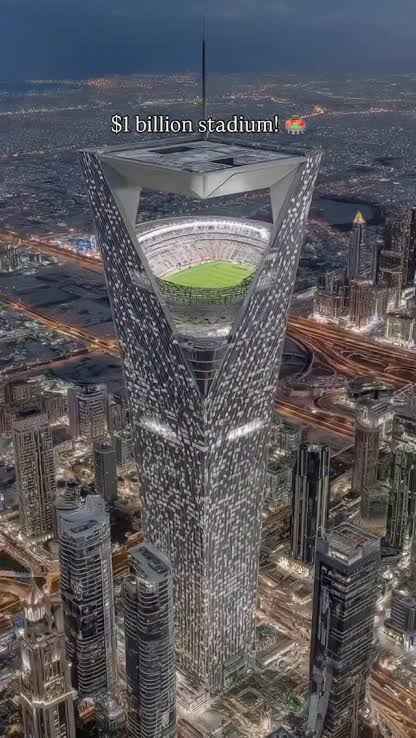
In a move that redefines the boundaries of architectural and sporting innovation, Saudi Arabia has unveiled plans for the world’s first “Sky Stadium”, an ultra-modern football arena designed to hover approximately 350 meters (1,150 feet) above the desert floor. The proposed venue, located within the futuristic NEOM megacity and its revolutionary linear smart-city project, The Line, is projected to accommodate about 46,000 spectators and operate entirely on renewable energy. The announcement marks another milestone in Saudi Arabia’s bold preparations to host the 2034 FIFA World Cup.
The NEOM Sky Stadium, as it is tentatively called, stands as a central pillar of the Kingdom’s ambitious Vision 2030 agenda, which aims to transform Saudi Arabia into a global hub of innovation, tourism, and sustainable development. As part of plans to construct 15 cutting-edge sports venues across five host cities, the Sky Stadium will embody a new era of eco-conscious sports architecture.
Designed to “float” above the NEOM desert landscape, the stadium will offer a panoramic 360-degree view of Saudi Arabia’s northwestern region, a breathtaking fusion of technology, engineering, and aesthetics. The arena will seamlessly integrate with NEOM’s autonomous mobility network, ensuring spectators access the venue through electric and driverless transport systems aligning perfectly with the city’s car-free and zero-carbon blueprint.
Construction is expected to commence by 2027 and reach completion by 2032, giving ample time for testing and fine-tuning ahead of the 2034 global football spectacle.
With a seating capacity of 46,000, the Sky Stadium will be smaller than some of its World Cup counterparts but promises to outshine them through its technological sophistication. The venue will feature advanced climate-control systems, renewable energy integration, and smart digital experiences for both fans and athletes.
Hovering high above the desert terrain, the structure will be supported by next-generation materials and engineering systems designed to withstand extreme temperatures, wind speeds, and seismic activity. Energy demands will be met through solar, hydrogen, and wind-based systems, echoing NEOM’s pledge to be fully powered by clean energy.
Saudi officials describe the project as more than just a stadium, it is a symbol of futuristic ambition, merging sustainability with spectacle. If completed as envisioned, it could set a global precedent for how mega-sporting infrastructures are built in the age of environmental consciousness.
While the Sky Stadium has captured worldwide fascination, it also poses significant engineering and logistical challenges. Building a 46,000-seat arena suspended hundreds of meters above ground raises critical questions about structural safety, crowd access, and emergency evacuation.
Architects and environmental analysts have also expressed concern over the feasibility and long-term sustainability of the project. With NEOM and The Line already undergoing budgetary adjustments and scope revisions, some wonder whether the stadium can realistically be completed within its proposed timeline and cost structure.
Moreover, critics have spotlighted ethical concerns from labor rights and environmental disruption to project transparency reflecting broader debates about Saudi Arabia’s rapid transformation into a global sports and tourism powerhouse.
Key questions remain:
1. Can the Sky Stadium meet its 2032 completion target without compromising safety or quality?
2. How will high-altitude heat and wind conditions affect both players and fans?
3. Will the facility serve local communities beyond the World Cup, or risk becoming a futuristic relic of spectacle?
Saudi Arabia’s Sky Stadium represents one of the boldest and most imaginative sports infrastructure proposals of the 21st century, an engineering feat that dares to merge sport, science, and sustainability in ways the world has never seen.
Whether the stadium soars to reality or remains a lofty dream, it undeniably cements Saudi Arabia’s position at the forefront of global architectural innovation. As the world anticipates the 2034 FIFA World Cup, all eyes will be on the Kingdom watching to see if the “Sky Stadium” can truly rise above both the desert sands and th e limits of human imagination.