
NEWS
DEADLY NATIONWIDE WINTER STORM BATTERS UNITED STATES, CLAIMS AT LEAST SEVEN LIVES, PARALYSES TRAVEL AND PLUNGES OVER 800,000 HOMES INTO DARKNESS FROM TEXAS TO NEW ENGLAND

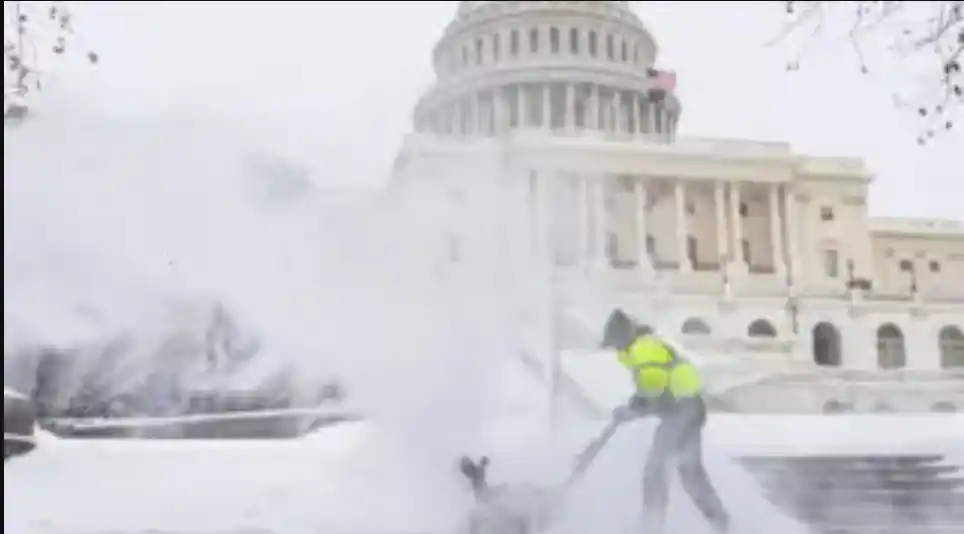
A powerful and far-reaching winter storm has unleashed widespread devastation across the United States, stretching from the southern plains of Texas to the northeastern states of New England, leaving at least seven people dead, crippling transportation networks, and cutting electricity to more than 800,000 homes and businesses.
The storm, which intensified over the weekend, has delivered a dangerous combination of heavy snow, freezing rain, sleet and extreme cold temperatures across vast portions of the country. Meteorologists describe the system as one of the most disruptive winter weather events of the season, with hazardous conditions persisting into Monday morning.
Warnings issued by the US National Weather Service span thousands of kilometres, covering southern, central and eastern states. Extreme cold alerts dominate much of Texas and the south-eastern US, while winter storm warnings extend across the Midwest, Mid-Atlantic and Northeast regions.
At least two people in Louisiana have died from hypothermia after being exposed to the bitter cold. Additional storm-related deaths have been reported in Texas, Tennessee and Kansas, bringing the confirmed toll to seven, with authorities warning the number could rise as the storm continues to move eastward.
Emergency officials are urging residents to remain indoors where possible, avoid unnecessary travel, and check on elderly neighbours and vulnerable individuals.
The most intense snowfall has occurred in elevated and mountainous areas, where accumulations have reached extraordinary levels. Bonito Lake in New Mexico recorded up to 79 centimetres (31 inches) of snow, while Crested Butte in Colorado’s Rocky Mountains received approximately 58 centimetres (23 inches).
However, the storm’s reach extends far beyond high-altitude terrain. Major urban centres have been heavily impacted, including:
Boston, Massachusetts: 43 cm (17 inches)
Newark, New Jersey: 30 cm (12 inches)
Central Park, New York City: Over 28 cm (11 inches)
Significant snowfall has also blanketed parts of Texas, Oklahoma and Tennessee, regions that rarely experience such intense winter conditions.
In addition to snow, freezing rain has created thick layers of ice on roads, bridges and power lines, making travel extremely dangerous and increasing the risk of accidents and infrastructure damage.
Power supply has been severely disrupted, with more than 800,000 customers currently without electricity nationwide, according to outage monitoring agencies.
Tennessee is the hardest-hit state, with nearly 250,000 customers in darkness. Mississippi follows with about 157,000 outages, while Louisiana has over 100,000 customers without power, with East Carroll County among the worst affected areas.
Utility companies are racing to restore service, but icy conditions and fallen trees continue to hamper repair efforts.
The storm has also wreaked havoc on air travel. More than 3,650 flights have been cancelled across the United States on Monday alone, adding to over 15,700 cancellations recorded over the weekend.
Major airports, including New York’s LaGuardia, have experienced severe delays as crews struggle to clear runways and de-ice aircraft amid heavy snowfall.
In response to the scale of the crisis, 23 states and Washington, DC, have declared states of emergency. At least 10 states have activated their National Guards to assist with rescue operations, traffic control, shelter management and emergency logistics.
States under emergency declarations include Alabama, Arkansas, Connecticut, Delaware, Georgia, Indiana, Kansas, Kentucky, Louisiana, Maryland, Mississippi, Missouri, Nebraska, New Jersey, New York, North Carolina, Ohio, Pennsylvania, South Carolina, Tennessee, Texas, Virginia and West Virginia, as well as Washington, DC.
Schools across many of these states have suspended classes, while numerous highways and secondary roads remain closed or restricted.
Snowfall maps tracking a 72-hour period show a broad band of heavy snow stretching from Texas through the Midwest and into the Northeast, with lighter snow extending into New Mexico and Arizona. Forecasters say the combination of snow, ice and extreme cold presents a rare, coast-to-coast winter threat.
Authorities continue to warn that conditions may remain dangerous for several more days, urging the public to stay informed, follow official guidance and prioritize safety as the nation grapples with the ongoin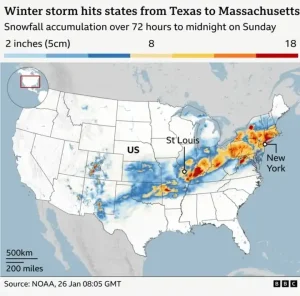 g impact of this deadly winter storm.