
NEWS
Nigerian-American Harvard Graduate, Yinka Ogunbiyi Develops World’s First Braid-Assist Robot, Raises $7 Million in Funding

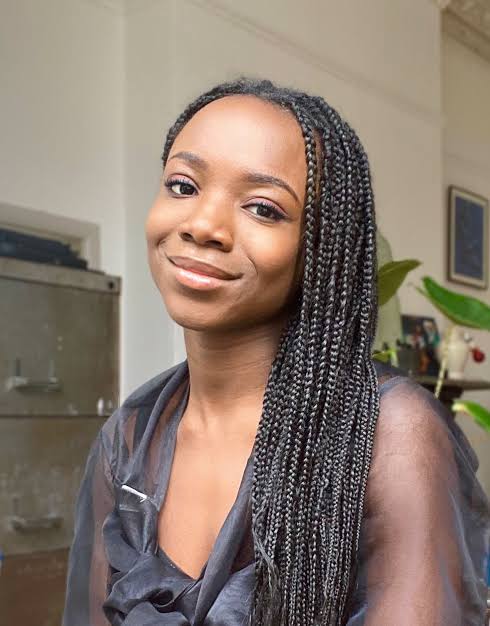
A Nigerian-American engineer and Harvard graduate, Yinka Ogunbiyi, is making waves in the beauty technology industry after developing HaloBraid, described as the world’s first braid-assist robot designed to reduce the physical strain on hairstylists while significantly cutting the time spent on braiding appointments in salons.
The innovation has already attracted global attention, with the United States Mission in Nigeria announcing on Friday that the startup has secured $7 million in seed funding and amassed a waiting list of more than 7,000 professional salons eager to adopt the technology.
In a post shared on its official X account, the US Mission celebrated Ogunbiyi’s achievement, describing it as another example of innovation with global impact.
“Nigerian-American engineer & Harvard Grad Yinka Ogunbiyi built HaloBraid, the world’s first braid-assist robot easing strain on stylist & saving salons time.
“$6M raised 7000+ salons waitlisted American innovation, global impact #AmericanExcellence in action,“
The mission further praised the entrepreneur after she successfully raised $7 million in seed funding to commercialize HaloBraid, which is described as the world’s first patented braid-assist mechanical technology.
The investment round was led by Seven Seven Six, the venture capital firm founded by Reddit co-founder Alexis Ohanian, with additional backing from AlleyCorp and Bling Capital.
According to the company, the fresh funding will accelerate the market rollout of HaloBraid, which already has more than 7,000 professional hair salons on its waiting list, highlighting strong demand for the technology even before its commercial launch.
Ogunbiyi holds a joint Master of Science and Master of Business Administration from the Harvard Engineering School and Harvard Business School. Before launching HaloBraid, she built a career developing connected smart home appliances and consumer electronics.
The inspiration for HaloBraid came during the COVID-19 pandemic when Ogunbiyi spent four days installing her own protective knotless braids. The experience inspired her to explore how technology could simplify one of the most labour-intensive aspects of hairstyling.
She later partnered with co-founder David Afolabi to develop an automated solution aimed at supporting professional hairstylists.
Rather than replacing salon professionals, HaloBraid is designed to function as an assistant by taking over the repetitive mid-shaft braiding process, which typically consumes a significant portion of a braiding appointment.
Under the system, a hairstylist first parts the scalp, sections the hair, and creates the initial anchor knot manually. The HaloBraid device is then attached to perform the repetitive braiding sequence before the stylist removes it to complete the hairstyle by trimming and sealing the ends according to the client’s preferences.
PUNCH Online reports that HaloBraid has an official website dedicated to the robotic braiding assistant, reflecting growing interest in the innovation from salons and the wider beauty industry.
Addressing concerns that automation could diminish the cultural significance and artistry of traditional African hairstyling, Ogunbiyi emphasized that the technology is intended to complement, not replace, the human experience.
“I didn’t think anything w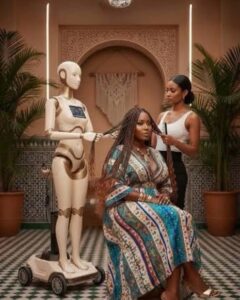 ill get from the experience.“