
NEWS
U.S Gains Upper Hand in Strait of Hormuz as Iran’s Grip on Key Waterway Weakens

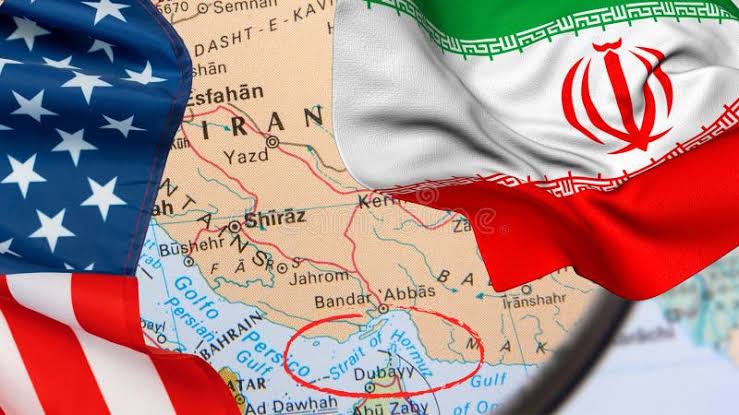
The balance of control in the Strait of Hormuz appears to be shifting, with the United States increasingly asserting its military presence across the strategic waterway while Iran’s ability to dictate shipping movements faces growing challenges.
Fresh shipping data indicates that a significant number of vessels are now bypassing routes favoured by Iran and instead using the Omani route, despite Tehran’s strong opposition to the channel.
According to Kpler, a global shipping intelligence firm that tracks vessels through transponder signals and satellite data, more than 80 per cent of liquid cargo transits through the Strait of Hormuz over the past two weeks have either passed through the UN-authorized Omani route or moved as so-called “dark” transits, which are also believed to have taken the same route.
The development marks a significant change from the situation just a month ago, when Kpler reportedly observed virtually no shipping traffic using the Omani route.
Iran, which has declared the strategic strait to be under its control, has attacked dozens of vessels attempting to navigate the waterway through the northern coast of Oman.
However, despite the continuing danger, an increasing number of ships appear to be ignoring Tehran’s demands and proceeding through the strait under the expectation of protection from US naval forces patrolling the area.
“It increasingly looks like Iran has at least partially lost control of the strait,” said Homayoun Falakshahi, head of crude oil analysis at Kpler.
The sharp decline in traffic along Iran’s preferred shipping route has also affected Tehran’s ability to collect tolls from vessels passing through the strait, a practice the country had reportedly imposed during the spring.
The expiration this week of the Memorandum of Understanding between the United States and Iran theoretically opens the door for Iran to begin demanding toll payments again.
However, available shipping data suggests that Tehran may not currently be in a position to effectively enforce such demands.
“Iran’s request to collect tolls is something that most Middle East folks don’t want to do and haven’t been doing.
“So the Oman route absolutely makes the most sense,” said Dan Pickering, founder and chief investment officer at Pickering Energy Partners.
Major oil-producing countries in the Gulf are also reportedly adopting new strategies to keep crude supplies moving while reducing exposure to potential attacks.
Kuwait, Saudi Arabia and the United Arab Emirates have chartered Very Large Crude Carriers, or VLCCs, the world’s largest class of oil tankers to move crude out of the Persian Gulf through the Strait of Hormuz before transferring the oil to customers’ tankers outside the immediate danger zone in the Gulf of Oman.
According to Andy Lipow, president of Lipow Oil Associates, the strategy is aimed at maintaining oil exports while limiting the amount of time customer-bound vessels spend in the most dangerous parts of the waterway.
In an effort to avoid possible Iranian attacks, some vessels have reportedly switched off their transponders for extended periods, in some cases for weeks.
This practice, known as “dark traffic,” makes conventional ship tracking significantly more difficult. While satellites can detect some of the vessels, their movements may not be fully captured by traditional commercial tracking systems.
The result is a lack of complete clarity over exactly how much oil is currently passing through the Strait of Hormuz.
The United States, however, maintains that it has a clearer picture because of its substantial naval presence in the region.
With military forces monitoring activity across the waterway, US authorities have reported oil shipping volumes significantly higher than estimates previously produced by some commercial tracking services.
Energy Secretary Chris Wright said last week that combined oil shipments passing through the Strait of Hormuz and those rerouted around the waterway averaged about 15 million barrels per day over the course of a week.
That figure is considerably closer to the roughly 20 million barrels per day that moved through the region before the conflict disrupted normal shipping operations.
The developments prompted President Donald Trump to declare on Monday that the United States has “total control over the strait,” a claim he has repeated several times during the conflict.
However, Iran’s continued attacks on vessels and the fact that oil flows remain below pre-war levels suggest that control of the critical waterway remains contested.
“If their goal is to be ‘in charge,’ then I’d say they were never completely in control to start with.
“It feels like their goal is deterrence, in order to be validated as in-control. I think they are still deterring,” said Pickering.
The Strait of Hormuz remains one of the world’s most strategically important maritime routes, serving as a crucial passageway for global oil supplies.
While the United States may not have achieved complete control of the strait, the growing use of the Omani route and the apparent inability of Iran to fully enforce its demands indicate that Tehran’s influence over shipping through the waterway may have weakened significantly compared with a month or two ago.
If U.S estimates of current oil flows are accurate, the figures could represent a major setback for Iran’s efforts to use control of the Strait of Hormuz as a tool of military and economic pressure.