
NEWS
Cement Price Hits ₦13,000 Per Bag as Housing Costs Soar, Wammakko Urges FG to Intervene

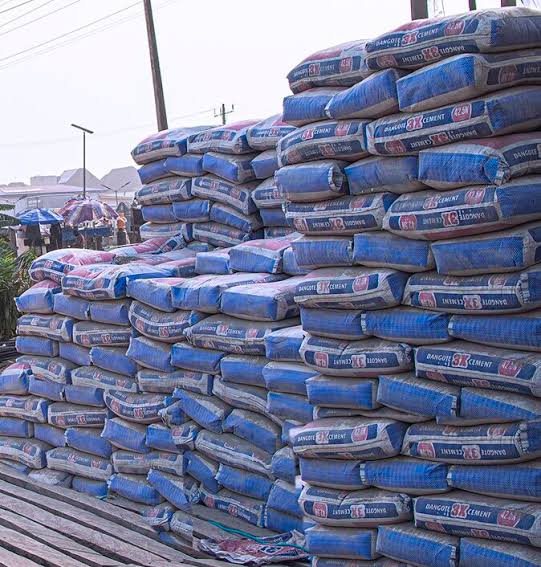
The rising cost of cement and other essential building materials in Nigeria is worsening the country’s housing crisis, with an expert in the housing sector, Aliyu Wammakko, calling on the Federal Government to urgently introduce measures capable of reducing production costs and making home ownership more affordable.
Wammakko, a former President of the Real Estate Developers Association of Nigeria (REDAN), made the call in an interview with DAILY POST on Friday, amid growing concerns over increasing house rents and the escalating cost of constructing residential buildings across the country.
According to him, the sharp increase in the prices of building materials, particularly cement and iron rods, has created a chain reaction in the housing sector. As the cost of construction rises, landlords and property developers are forced to spend more on building projects, ultimately pushing up rents and the prices of completed houses.
“The most nagging issue today in Nigeria is the price of building materials,” Wammakko said.
He noted that the rising cost of accommodation should not be viewed solely from the perspective of landlords, arguing that property owners and developers are also operating within an increasingly expensive construction market.
“People are complaining about paying higher rent. You don’t have to see the fault of the landlords because they go to the same market you go as a tenant.
“The higher cost of rent now in Nigeria doesn’t come by accident. It has its genesis in the cost of building materials in the country.
“Presently, cement is about ₦13,000 per bag. As far as March 2025, I bought cement for ₦7,500. So now it is about ₦13,000 and moving upward,” he said.
The development represents a significant increase from the price Wammakko said he paid in March 2025, reflecting the mounting pressure faced by developers, contractors and individuals attempting to build homes.
He warned that if the trend continues unchecked, more Nigerians could be priced out of the housing market, further widening the country’s already substantial housing deficit.
Wammakko therefore urged the Federal Government to urgently review the taxes, levies and other charges associated with cement manufacturing, arguing that reducing the burden on producers could create room for lower prices at the consumer end.
He also advocated government incentives and subsidies for cement production as part of a broader strategy to make building materials more affordable.
“If they want to give a solution to the whole saga, they should be able to bring at least a subsidy in terms of cement production and cut all the taxes that have been associated with it so that the producers can sell cement at a price that is affordable to Nigerians.
“And I’m sure that will bring down the cost of houses in Nigeria as well,“ he said.
Beyond the immediate challenge of cement prices, the housing expert called for stronger government intervention in housing finance, stressing that access to affordable credit remains critical to addressing the country’s housing shortage.
He urged the Federal Government to increase funding for the Federal Mortgage Bank of Nigeria to enable more Nigerians and developers to access long-term financing for affordable housing projects.
“The solution to the housing deficit in the country is for the government to channel more money into the Federal Mortgage Bank so that people can get affordable finance for affordable construction,” he said.
“We are thinking of at least not less than ₦1 trillion into the Federal Mortgage Bank,” former President of the Real Estate Developers Association of Nigeria, REDAN stated.
Wammakko also called for the signing of the Real Estate (Regulation and Development) Bill, popularly known as the RECON Bill, which was passed by the 9th National Assembly.
He argued that appropriate legislation and regulatory reforms could help strengthen the real estate sector, improve accountability and create a more sustainable environment for housing development.
With cement prices now significantly higher than they were in 2025, and other construction materials also exerting pressure on developers, stakeholders fear that the cost of both buying and renting homes could continue to rise unless urgent measures are taken.
The situation has placed additional financial pressure on millions of Nigerians already struggling with high living costs, while the combination of expensive construction materials, limited access to mortgage finance and rising land and labour costs continues to make affordable housing increasingly difficult to achieve.
Wammakko’s position is that reducing the cost of production, easing the tax burden on manufacturers and substantially increasing government-backed housing finance could provide a pathway towards lowering construction costs and, ultimately, easing pressure on the housing market.