
NEWS
CBN Slashes Interest Rate to 23% as Inflation Falls, Naira Stabilises and Economy Gains Momentum

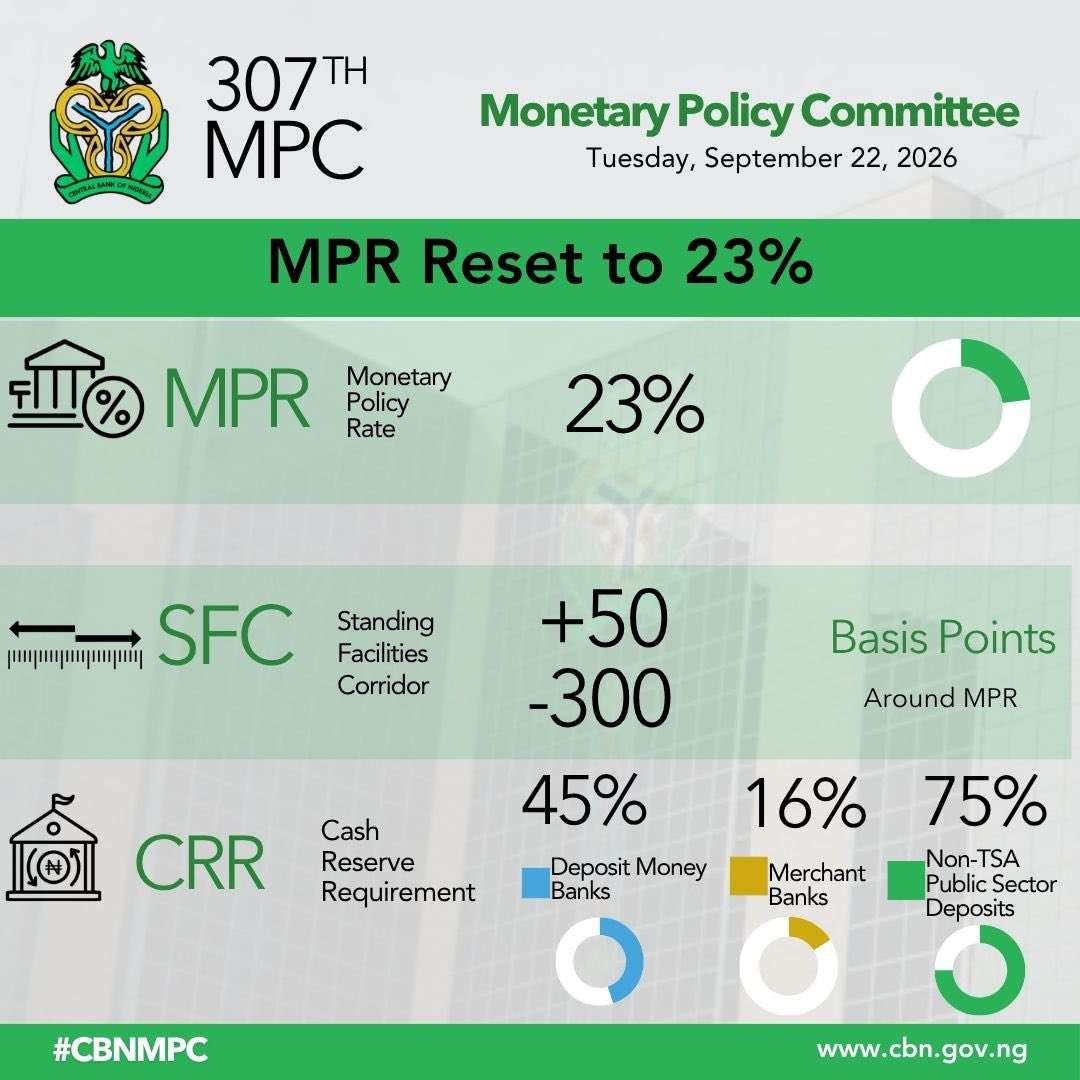
The Central Bank of Nigeria has reduced the country’s benchmark interest rate from 26.5 per cent to 23 per cent, marking a significant shift in the direction of monetary policy and signalling growing confidence in the improving stability of the Nigerian economy.
The decision comes at a time when several key economic indicators are beginning to move in a more favourable direction. Inflation has declined to 15.39 per cent, while the naira has recorded greater stability in the foreign exchange market compared with the severe volatility experienced in previous years.
Nigeria’s external reserves have also continued to strengthen, providing an important buffer for the economy and supporting efforts to improve confidence in the country’s financial system.
At the same time, economic activity has continued to expand. The latest official Gross Domestic Product figures indicate that Nigeria’s economic growth has improved from its earlier position in the year, adding another important dimension to the CBN’s decision to begin easing monetary conditions.
For much of the past two years, the central bank’s monetary policy has been dominated by the need to contain inflation, stabilise the foreign exchange market and restore confidence in the economy. High interest rates became one of the major tools used to tackle those challenges, although the resulting borrowing costs placed considerable pressure on businesses, investors and households.
The latest reduction suggests that the CBN now believes economic conditions are providing greater room to gradually reduce some of that pressure.
The reduction in the Monetary Policy Rate, however, does not mean Nigerians should expect commercial bank loans to immediately become cheap. Lending rates are influenced by several other factors, including banks’ operating costs, risk assessments, liquidity conditions and the overall cost of funds.
Nevertheless, a sustained downward movement in the benchmark rate could eventually translate into lower borrowing costs across the economy.
That could provide some relief for businesses seeking financing for expansion, manufacturers planning new investments and entrepreneurs looking to increase productive capacity. Lower financing costs could also support investment and economic activity if the trend is sustained.
The significance of the latest decision therefore goes beyond the 3.5 percentage-point reduction itself.
It reflects a potentially changing phase in Nigeria’s economic management.
For a considerable period, the central focus was on stabilising the economy and containing the pressures created by elevated inflation and foreign exchange volatility. With inflation now lower, the naira relatively more stable, external reserves strengthening and economic growth showing improvement, monetary authorities have greater space to consider how policy can support productive economic activity.
The combination of falling inflation, improved exchange-rate stability, stronger external reserves, economic growth and a lower benchmark interest rate therefore represents an important development to watch.
If these trends are sustained, the focus of Nigeria’s economic conversation could increasingly shift from simply managing instability towards creating greater room for investment, production and sustainable growth.
The latest rate cut may consequently be more than just a reduction in the cost of money. It could mark the beginning of a new phase in Nigeria’s monetary policy, where stabilisation remains important but economic growth receives greater room to breathe.