
NEWS
ABIA STATE GOVT INAUGURATES OKON AKU-OHAFIA CRISIS IMPLEMENTATION COMMITTEE, SETS 30-DAY DEADLINE FOR WHITE PAPER EXECUTION

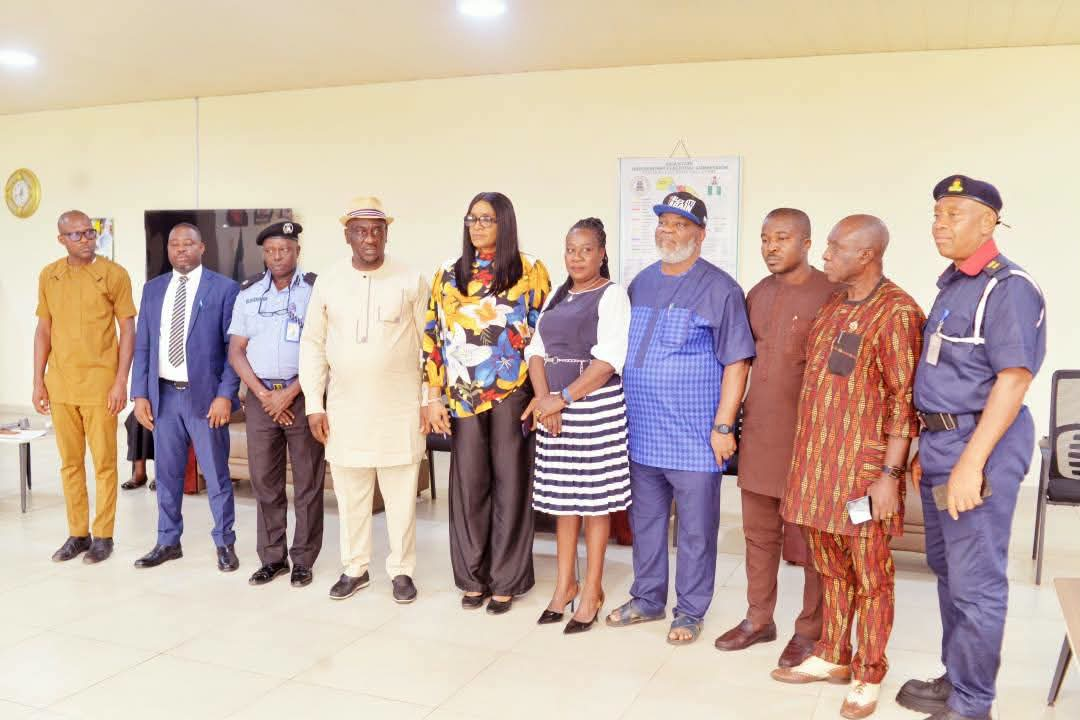
The Abia State Government has taken another decisive step towards restoring lasting peace, resolving lingering disputes and rebuilding confidence in Okon Aku-Ohafia community in Ohafia Local Government Area with the inauguration of an Implementation Committee to ensure the full execution of the Government White Paper on the crisis that rocked the community earlier this year.
The committee, inaugurated on Thursday, November 5, 2026, by the Commissioner for Local Government and Chieftaincy Affairs, Prince Uzor Nwachukwu, PhD, who will also serve as its Chairman, has been given a clear mandate to coordinate the implementation of government directives, address the issues identified in the White Paper and ensure that the circumstances surrounding the crisis are brought to a peaceful and sustainable resolution.
Speaking shortly after the inauguration, Prince Nwachukwu recalled that the crisis erupted on January 2 and 3, 2026, resulting in the alleged killing of one person, the bombing of houses and the forced displacement of residents, who reportedly deserted the community for fear of further attacks.
He explained that the administration of Governor Alex Otti responded promptly to the unfortunate development by deploying security agencies to restore calm and prevent further escalation of violence.
According to him, following the government’s immediate intervention, an Administrative Panel of Inquiry was constituted to investigate the circumstances surrounding the crisis. The panel subsequently conducted its proceedings over several months before submitting its findings and recommendations to the state government.
Dr Nwachukwu disclosed that after carefully examining the panel’s report, the government produced a White Paper outlining specific directives and measures considered necessary to address the underlying issues and establish a lasting framework for peace in Okon Aku-Ohafia.
He noted that the inauguration of the Implementation Committee represents the government’s determination to move beyond investigations and recommendations to the practical execution of the decisions contained in the White Paper.
To ensure effective coordination and accountability, the Ministry of Local Government and Chieftaincy Affairs has been designated as the lead ministry, with other relevant ministries, government officials and security agencies brought together to drive the implementation process.
Membership of the committee includes the Ministry of Justice, represented by the Attorney-General and Commissioner for Justice; Ministry of Agriculture; Ministry of Lands; Mayor of Ohafia Local Government Area; Special Adviser to the Governor on Security; Commissioner of Police, Abia State Command; General Manager of the State Homeland Security Agency; State Director of the Department of State Services (DSS); and State Commandant of the Nigeria Security and Civil Defence Corps (NSCDC).
Explaining the committee’s responsibilities, the Chairman said members were expected to coordinate the implementation of the White Paper, monitor compliance with government directives, maintain close collaboration with relevant security agencies and advise the government on additional measures that may be required to consolidate peace.
The committee is also expected to submit periodic progress reports to Governor Alex Otti through the Secretary to the State Government, ensuring that the implementation process remains transparent, coordinated and accountable.
Emphasising the urgency attached to the assignment, Dr. Nwachukwu announced that the government had given the committee a strict 30-day deadline to complete its work and submit its report.
“Upon inauguration today, 5th day of November 2026, the government through White Paper directs that we must submit our reports within 30 days.
“What it means is that by 4th of December, the report of this committee will have been submitted to the Governor through the SSG,“ Dr. Nwachukwu said.
He further disclosed that every member and participating ministry or agency would receive a copy of the White Paper to enable them to study the government’s directives and prepare adequately for the assignment.
The committee’s first inaugural meeting is scheduled to hold virtually on Monday at 7pm, where members are expected to commence detailed deliberations on the implementation framework and responsibilities assigned to their respective institutions.
Beyond the formal implementation structure, the Commissioner revealed that the state government would establish a broader Peace, Reconciliation and Stabilization Committee to deepen engagement with the affected community and ensure that the peace being pursued is embraced and sustained by the people.
The proposed committee will include traditional rulers, youth leaders from Okon Aku and the wider Ohafia community, as well as religious leaders and other relevant stakeholders.
This wider engagement is expected to complement the work of the Implementation Committee by addressing community-level concerns, encouraging dialogue, rebuilding relationships and fostering mutual understanding among the parties involved.
Dr. Nwachukwu also identified a disputed farm property in Okon Aku-Ohafia as one of the central issues underlying the crisis, directing the Ministry of Lands and the Mayor of Ohafia Local Government Area to produce all relevant documents concerning the property’s legal status, ownership history and transactions.
He stressed that resolving the land-related questions was critical to implementing the White Paper and preventing further disagreements over the disputed property.
“One of the major issues in the centre of this crisis is a rail farm in Okon Aku-Ohafia. We’ve been directed to find out the legal status of that farm.
“Before the end of next week, we must conclude action on that property as directed by White Paper, working with all security agencies,“ he stated.
The directive underscores the government’s intention to establish the facts surrounding the disputed property, ensure that relevant legal and documentary issues are properly examined and prevent unresolved ownership questions from continuing to fuel tensions in the community.
Also speaking at the inauguration, the Attorney-General and Commissioner for Justice, Mr. Ikechukwu Uwanna, SAN, described the assignment as a significant responsibility that goes beyond the formal inauguration of a committee.
Represented by Mrs. Becky Ikechi, Mr. Uwanna explained that the real test of the committee’s success would be its ability to translate government decisions and recommendations into concrete, measurable and legally sustainable actions.
He urged members to discharge their responsibilities with a high sense of commitment, fairness, impartiality and strict adherence to the rule of law, warning against allowing personal interests, sentiments or ethnic and cultural considerations to undermine the integrity of the process.
“We must not allow personal interests, sentiments, ethnic or cultural considerations to influence our decision. White Paper should serve as a guiding document.
“Our responsibility is to ensure recommendations are implemented in letter and spirit without unnecessary alteration or selective application,“ he said.
The Attorney-General further emphasised that the implementation process must recognise and protect the rights of all parties concerned while giving due consideration to relevant traditional institutions, customary practices and existing laws.
He observed that sustainable peace cannot be achieved merely through the absence of violence, stressing that genuine peace must be founded on justice, mutual respect, accountability, fairness and reconciliation.
He assured the committee of the Ministry of Justice’s full commitment to ensuring that every aspect of the implementation process remains consistent with the principles of legality, justice and fairness.
Mr. Uwanna also appealed to community stakeholders and residents of Okon Aku-Ohafia to cooperate with the committee, support the government’s peace initiative and refrain from actions capable of reigniting tensions.
In a further indication of the government’s resolve, the intervention was described as an opportunity for all concerned parties to put the unfortunate events behind them and work towards a dignified, peaceful and sustainable resolution.
In his vote of thanks, the Mayor of Ohafia Local Government Area, Chief Eleanya Ojuu Kalu, expressed satisfaction with the inauguration, noting that Okon Aku, the community directly affected by the crisis, falls within his local government area.
He appreciated the committee members for accepting the responsibility and demonstrating their willingness to contribute to the restoration of peace in the area.
The Mayor pledged his readiness to work harmoniously with the Chairman and other members of the committee, as well as relevant stakeholders, to ensure that the assignment achieves its intended objectives.
The inauguration marks an important phase in the Abia State Government’s response to the Okon Aku-Ohafia crisis, shifting attention from the investigation of the incident to the implementation of concrete measures aimed at addressing its underlying causes.
With a 30-day reporting deadline, a specific directive on the disputed farm property and plans for a broader reconciliation structure involving traditional, youth and religious leaders, the Otti administration is positioning the intervention as a comprehensive effort to secure not just temporary calm, but enduring peace, j
 ustice and stability in Okon Aku-Ohafia and the wider Ohafia community.