
NEWS
Abia Joins World Bank-Assisted SURWASH Programme, Targets Improved Water Supply, Sanitation and End to Open Defecation

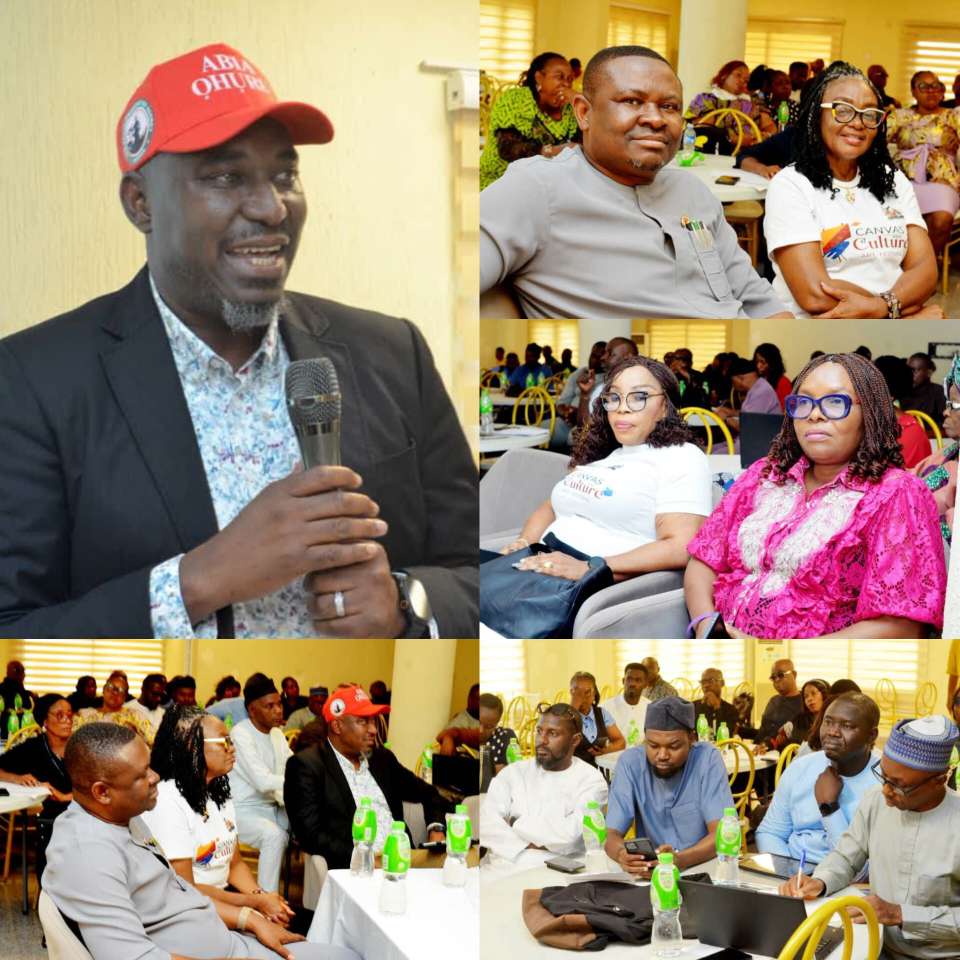
The Abia State Government has described the state’s official admission into the Sustainable Urban and Rural Water Supply, Sanitation and Hygiene (SURWASH) Programme as a landmark achievement that will significantly accelerate efforts to expand access to potable water, improve sanitation infrastructure, and promote better hygiene practices across the state.
The Commissioner for Power and Public Utilities, Engr. Ikechukwu Monday, disclosed this on Thursday June 25, 2026, during a stakeholders’ engagement meeting on the implementation of the World Bank-assisted SURWASH Programme in Abia State.
According to the commissioner, the visit by officials of the Federal Ministry of Water Resources and Sanitation formally marked the commencement of Abia State’s participation in the programme after successfully meeting all the admission requirements following nearly three years of rigorous assessments and reforms.
“Today, we received the team from the Federal Ministry of Water Resources and Sanitation on a visit relating to the Sustainable Urban and Rural Water Supply, Sanitation and Hygiene Programme, SURWASH, for which Abia State was selected as one of the seven states admitted in the second phase of the programme,“ Engr. Monday stated.
He explained that the stakeholders’ engagement served as the state’s official onboarding into the programme, providing comprehensive guidance on the obligations, performance benchmarks and operational framework required for successful implementation.
““The outcome of today’s engagement is essentially the official onboarding of Abia State into the programme, including a detailed explanation of the requirements we must meet to fully participate and benefit from it,“ he said.
Engr. Monday dismissed concerns over the programme’s conditions, explaining that the requirements were carefully designed to ensure sustainability, accountability and efficient service delivery rather than simply constructing infrastructure.
He noted that the SURWASH initiative focuses on ensuring long-term access to safe and affordable water, improved sanitation services and proper hygiene practices, objectives that align with Governor Alex Otti’s development agenda.
“The programme is not just about building infrastructure. It is primarily focused on service delivery and sustainability.
“It seeks to ensure that proper operational frameworks are put in place so that water and sanitation facilities continue to function effectively and provide lasting benefits to the people,” he stated.
The commissioner added that the programme’s objectives are fully consistent with the state government’s commitment to delivering reliable access to clean water, quality sanitation facilities and improved public health outcomes for residents.
Describing Abia’s admission into the programme as a remarkable accomplishment, Engr. Monday said the achievement was the product of years of strategic planning, institutional reforms and successful evaluations.
“This is a great development and something remarkable for Abia State.
“We have been involved in the process for almost three years, undergoing rigorous evaluations and assessments to qualify.
“Today’s event is a confirmation that the effort has paid off,“he said.
He expressed optimism that participation in the World Bank-supported programme would further strengthen the state’s ongoing efforts to transform its water supply and sanitation infrastructure.
The commissioner unveiled several ambitious plans under the programme, including expanding potable water access across the state, strengthening institutional capacity, improving service delivery and eliminating open defecation in communities throughout Abia.
He revealed that the state government has prioritised water supply projects across the three senatorial districts through the development of major water schemes capable of serving large populations, with at least one major project designated for each zone.
According to him, implementation has already commenced in phases, with the CKC Water Scheme in Aba nearing completion on its production component and expected to be ready before the end of next month.
He further disclosed that the state would soon begin reticulation works, noting that an initial 15 kilometres of pipeline network has already been captured in the budget as part of a broader 40-kilometre water distribution plan for Aba.
Beyond infrastructure development, Engr. Monday stressed the importance of building strong institutions capable of sustaining investments in the water sector.
“We believe that even if infrastructure is provided, sustainability will remain a challenge without strong institutions to manage and maintain the facilities,“ he said.
He disclosed that the Abia State government is working towards fully operationalising the State Water and Sewage Corporation within the next six months through the constitution of a governing board and the establishment of the necessary operational framework ahead of the completion of ongoing projects.
Addressing manpower development, the commissioner explained that capacity building has been incorporated into most water contracts awarded by the state government, adding that several civil servants have already undergone specialised technical training in Denmark to strengthen their expertise in future operations and maintenance.
He further explained that the state is restructuring the water sector to improve efficiency and reduce administrative costs by establishing a dedicated Water Division within the ministry while coordinating the operations of the Abia State Water and Sewage Corporation and the Rural Water Supply and Sanitation Agency (RUWASSA). A separate department, he added, will oversee water services in small towns and rural communities.
Engr. Monday also identified renewable energy as a central component of the state’s water and sanitation strategy, explaining that most facilities are being designed to operate primarily on solar power, while electricity from the national grid would serve only as backup.
According to him, dependence on diesel generators has contributed significantly to the collapse of many water schemes because of high operational costs and power-related challenges.
“Our goal is to eliminate diesel-powered operations in water facilities. Solar energy provides a more sustainable and cost-effective solution for long-term service delivery,“ he said.
On sanitation, the commissioner reiterated the government’s determination to eliminate open defecation across the state, revealing plans to ensure that at least two local government areas attain Open Defecation Free (ODF) status before December 2026 while implementation begins simultaneously in two additional councils.
He also disclosed that interventions in the health and education sectors would support the achievement of the programme’s water, sanitation and hygiene targets.
According to him, the state recently renovated about 200 Primary Health Centres, all equipped with solar-powered water and sanitation facilities, with 176 already fully operational.
He added that similar improvements are ongoing in schools across the state, with plans to assess and upgrade facilities where necessary to meet approved standards.
While expressing confidence in the state’s ability to achieve its targets, Engr. Monday acknowledged that funding remains a major challenge despite Governor Alex Otti’s commitment to financing critical infrastructure projects.
He also pointed to global economic uncertainties and rising construction costs as additional risks, noting that some contractors have requested contract reviews due to sharp increases in the prices of construction materials, particularly high-density polyethylene (HDPE) pipes used in water projects.
The commissioner further identified human capacity gaps as another challenge, stressing the need for continuous training and stronger community participation to ensure long-term sustainability.
He noted that involving local communities through employment opportunities during project implementation would encourage ownership and improve maintenance of the facilities.
Engr. Monday expressed confidence that with adequate planning, sustained funding and continuous capacity building, Abia State would record significant progress in water supply, sanitation and hygiene before the end of the year.
Earlier, the National Programme Coordinator of the World Bank-assisted SURWASH Programme, Engr. Abdulhamid Gwaram, confirmed that Abia was among the seven newly admitted states that successfully fulfilled all the requirements for participation.
Speaking with journalists, Gwaram explained that Governor Alex Otti had formally expressed the state’s interest in joining the programme through the Federal Ministry of Water Resources and Sanitation, after which Abia underwent a comprehensive assessment and evaluation process.
He said the state successfully met all the required benchmarks and was admitted following the World Bank’s restructuring of the SURWASH Programme in April 2026.
According to him, SURWASH operates under the Programme-for-Results (PforR) financing model, a performance-based funding mechanism that rewards states only after verified results have been achieved.
“The programme is designed in such a way that states first invest their own resources to generate results. Once those results are verified, the World Bank then disburses the loan based on performance,“ he said.
Gwaram clarified that participating states are not required to provide conventional counterpart funding but must finance implementation activities upfront before qualifying for reimbursement.
“In this kind of arrangement, states actually invest more than what is usually referred to as counterpart funding because they must first finance implementation and achieve results before any disbursement can be made,“ he explained.
The National Programme Coordinator stated that SURWASH is a six-year initiative that commenced in 2022 and is expected to run until 2028, expressing optimism that exceptional performance by participating states could pave the way for an extension of the programme.
Speaking on Abia’s prospects, Gwaram disclosed that the state would be evaluated based on measurable outcomes before becoming eligible for disbursement under the programme.
He revealed that the next major assessment and verification exercise has been scheduled for October, when Abia’s performance will be reviewed.
“We are looking forward to seeing what Abia State will deliver between now and October. The results generated and verified during that period will determine the level of disbursement the state can access,“ he said.
On the challenges confronting implementation, Gwaram identified years of inadequate commitment to the water and sanitation sector as a major obstacle across Nigeria.
He observed that many states still need to undertake extensive reforms to strengthen governance, improve sector management and enhance service delivery, noting that meaningful reforms require time before lasting results can be achieved.
“One of the biggest challenges is that commitment to the sector has been low for a long time. The programme is driving reforms, but reforms take time.
“We are implementing them gradually while ensuring that results continue to be achieved,“ he stated.
He expressed confidence that sustained collaboration among the Federal Ministry of Water Resources and Sanitation, participating states and development partners would significantly improve access to clean water, sanitation and hygiene services across Nigeria.
The stakeholders’ engagement was attended by commissioners, permanent secretaries and several othe
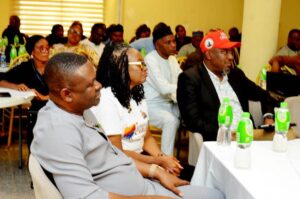
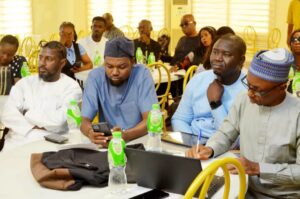 r top government officials, development partners and stakeholders in the water and sanitation sector.