
NEWS
“Do I Annihilate The Islamic Republic Of Iran’ Or Strike A Deal For A ‘Far Greater Country’?“ — President Donald Trump Said at 81st United Nations General Assembly in New York

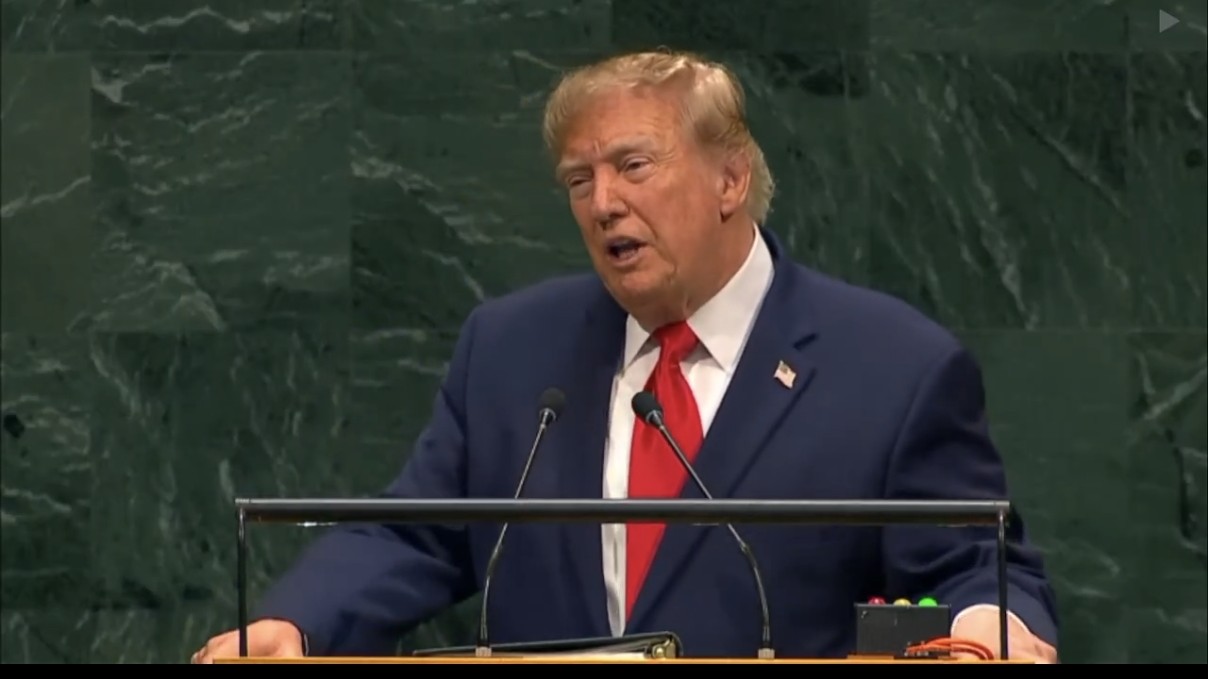
United States President Donald Trump has delivered one of his strongest warnings yet to Iran, presenting what he described as a stark choice between reaching a new agreement that could allow the country to rebuild and pursuing a military course aimed at eliminating the Islamic Republic’s capacity to threaten other countries.
Trump made the remarks on Tuesday, September 22, 2026, while addressing world leaders at the 81st United Nations General Assembly in New York, where the ongoing conflict involving the United States and Iran featured prominently in his speech. His comments came amid continuing tensions over Iran’s nuclear programme, regional security and the wider economic consequences of the conflict, including pressure on global energy markets.
Speaking about the future of the confrontation with Tehran, Trump said he faces a major decision over whether to pursue a diplomatic settlement or intensify military action against Iran.
“But, I have a decision to make. Will a deal be made with Iran to make them rebuild and create a far greater country than ever it was before. Maybe one of the greatest countries in the Middle East or one of the greatest countries of the World or do I annihilate the Islamic Republic of Iran and do it quickly never giving them a chance to kill and destroy people and countries again.
“Do I drive them into hell with no chance of survival and no hope of future greatness or generations? But I believe we will make a deal right after the elections,“ he said.
The remarks represent a continuation of Trump’s recent public statements in which he has alternated between threatening further military escalation against Iran and expressing confidence that negotiations could eventually produce an agreement. Earlier in September, Trump had also described his decision over whether to intensify the war as a “big decision,” indicating that further military action remained under consideration.
At the UN, however, Trump placed particular emphasis on the possibility of a negotiated settlement, arguing that Iran could potentially emerge from the confrontation as a stronger and more prosperous country if an agreement is reached.
His reference to reaching a deal “right after the elections” also drew attention because the United States is approaching its 2026 midterm elections.
Trump has separately insisted that his Iran policy is not being dictated by the elections, while maintaining that he expects the conflict could end after the electoral period.
The president’s remarks came against the backdrop of an increasingly consequential confrontation that has affected not only Washington and Tehran but also the wider Middle East and global energy markets. The Strait of Hormuz, a critical route for international oil transportation, has been a central concern in the conflict, with disruptions posing potential consequences for fuel prices and the global economy.
Trump has continued to argue that U.S. military pressure is intended to prevent Iran from developing a nuclear weapon and to constrain its ability to threaten American forces, allies and other countries.
Iranian authorities, meanwhile, have maintained their own positions regarding the conflict and negotiations, leaving the prospects for an immediate diplomatic breakthrough uncertain.
The UN address therefore placed the future of the U.S.-Iran confrontation squarely before the international community, with Trump’s latest remarks highlighting two sharply different possibilities: a negotiated settlement that he says could allow Iran to rebuild, or a further escalation of military action.
For now, Trump said he believes a deal remains possible after the elections, even as his warning of potential annihilation underscores the continued seriousness of the confrontation between Washington and Tehran.