
NEWS
EFCC Opposes Diezani’s Bid to Introduce UK Acquittal Into Nigerian Asset Forfeiture Case

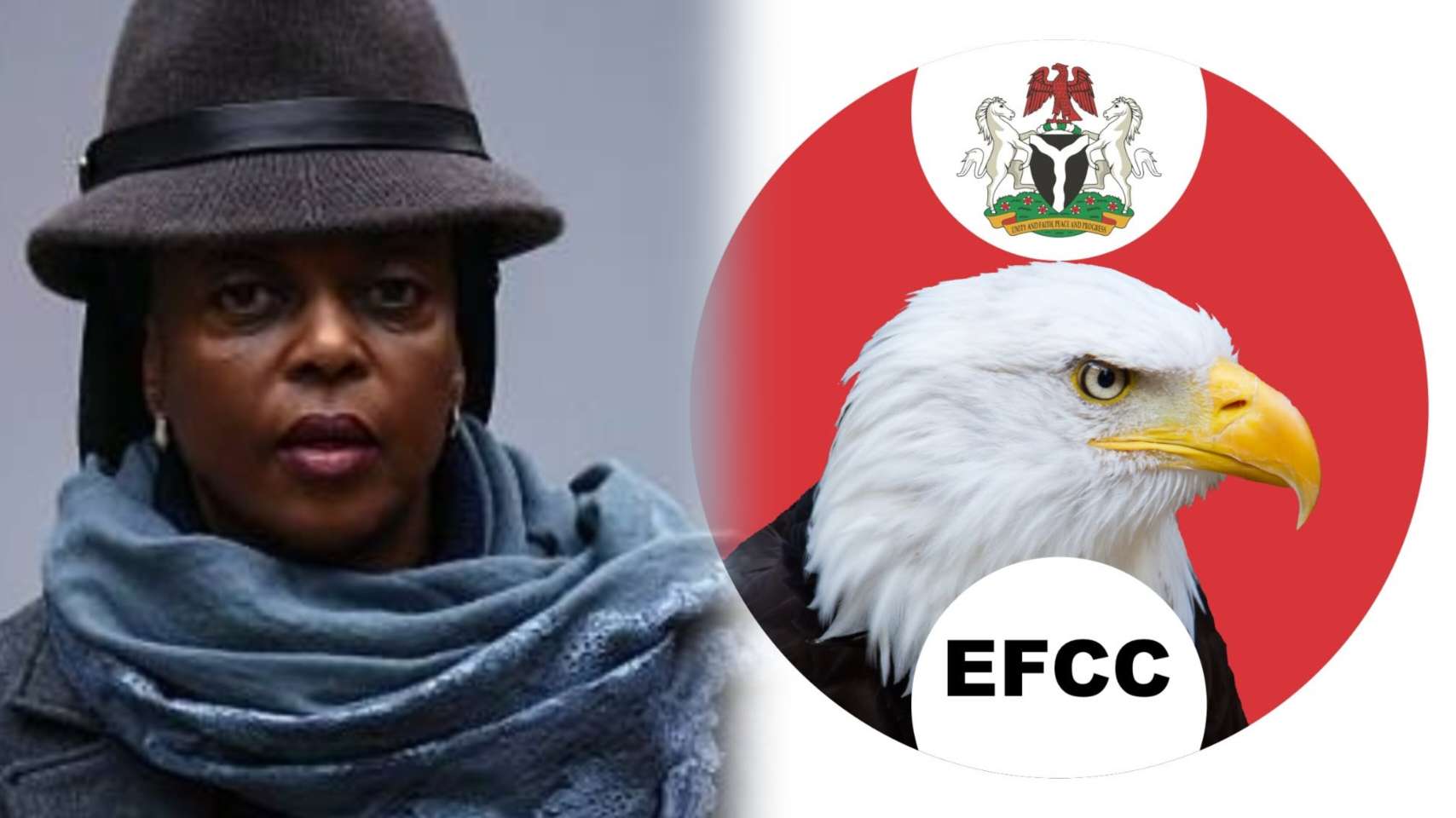
The Economic and Financial Crimes Commission (EFCC) has opposed former Minister of Petroleum Resources Diezani Alison-Madueke’s attempt to place before the Federal High Court in Abuja the judgment of a United Kingdom court that acquitted her of bribery charges.
The anti-graft agency urged Justice Inyang Ekwo to reject the former minister’s further and supplementary affidavit, insisting that the outcome of proceedings at the Southwark Crown Court in London has no bearing on the issues currently before the Nigerian court.
The EFCC’s position followed Alison-Madueke’s application to present evidence of her June 17, 2026 acquittal in the UK as part of her ongoing legal challenge concerning assets forfeited or targeted for forfeiture by the Nigerian authorities.
The former minister is challenging actions taken by the EFCC in relation to properties and personal effects linked to her in a suit marked FHC/ABJ/CS/21/2023, in which the EFCC is the sole respondent.
Justice Ekwo had earlier granted Alison-Madueke permission to file a further affidavit relating to her acquittal in the United Kingdom. At the time, the application was not opposed by the EFCC, which was represented by Mofesomo Oyetibo, SAN.
However, following the filing of the additional court process by Alison-Madueke’s legal team, the commission changed its position and filed a further counter-affidavit disputing the relevance of the UK judgment to the proceedings in Nigeria.
The fresh legal battle came to the fore during proceedings before Justice Ekwo on Tuesday, when Mrs Queen-Ubokutom Uwe, who represented Alison-Madueke, informed the court that the matter had been scheduled for the hearing of the EFCC’s preliminary objection and the substantive originating motion.
Uwe told the court that her team had been served with a fresh process by the commission shortly before the proceedings commenced. She identified the document as the EFCC’s further counter-affidavit filed in response to Alison-Madueke’s supplementary affidavit.
The lawyer also drew the court’s attention to a pending application by the former minister’s legal team seeking to regularise some of its processes.
EFCC counsel, Paul Mgbeoma, expressed surprise at the volume of processes being filed by Alison-Madueke’s lawyers.
Mgbeoma said the pattern of filing made the proceedings appear similar to an election petition matter, although he informed the court that he was ready to proceed with the hearing.
Justice Ekwo subsequently adjourned the matter until November 11 for the hearing of the pending motions. In its further counter-affidavit dated and filed on October 5, the EFCC maintained that the UK proceedings should not be allowed to shift the focus of the Nigerian case. The affidavit was deposed to by Oyakhilome Ekienabor, a litigation officer in the law firm of Oyetibo. The commission argued that Alison-Madueke’s acquittal in London arose from a separate criminal proceeding and was not a matter before the Nigerian court.
“The proceedings before the Southwark Crown Court, London, United Kingdom, and the purported acquittal of the applicant therein, are in respect of a proceeding that is not being prosecuted before any Nigerian court and have nothing to do with the substantive suit before this honourable court.”
The EFCC also challenged any suggestion that the properties identified in its public sale notice were necessarily owned by Alison-Madueke.
Ekienabor argued that nothing contained in the notice established that the properties listed for sale belonged to the former minister.
The commission further maintained that the forfeiture order forming part of the dispute before the court was narrow and specific.
“The order for forfeiture relates exclusively to items of jewellery and does not extend to any other category of assets or properties.”
According to the anti-graft agency, Alison-Madueke’s latest affidavit introduced issues outside the matters already submitted for determination by the court.
The EFCC argued that parties could not use fresh processes to expand the scope of a case by introducing matters that were irrelevant to the dispute.
“The applicant’s further/supplementary affidavit introduces irrelevant facts into this suit, thereby diverting attention from the core issues before this honourable court,” the EFCC stated.
The commission consequently asked Justice Ekwo to disregard the supplementary affidavit and the evidence relating to Alison-Madueke’s acquittal in the United Kingdom. The controversy over the relevance of the London judgment followed Alison-Madueke’s acquittal on six bribery-related charges at the Southwark Crown Court.
A jury found the former minister not guilty after a lengthy trial arising from allegations investigated by the UK’s National Crime Agency. The allegations related to events between 2011 and 2015, and Alison-Madueke had consistently denied wrongdoing.
Her acquittal subsequently became a significant development in her Nigerian legal battle because she is challenging the forfeiture and proposed sale of assets allegedly linked to her.
Her legal team, led by senior lawyer, Mike Ozekhome, SAN, had argued that the UK judgment was relevant to the Nigerian proceedings, particularly because Alison-Madueke was challenging what she described as the deprivation of her property rights without a criminal conviction and without proper adherence to due process.
Ozekhome maintained that the Federal High Court was not being invited to sit on appeal over the decision of the Southwark Crown Court.
Rather, he argued that the purpose of introducing the judgment was to bring a subsequent event to the attention of the Nigerian court because the acquittal occurred after earlier processes had already been filed in the case.
According to the senior lawyer, the development could assist the court in considering questions relating to conviction, fair hearing, due process and the legality of actions taken against Alison-Madueke’s assets.
“After the filing of the applicant’s processes and while this suit was still pending before this honourable court, a subsequent and material event occurred, to wit: the applicant was acquitted by the Southwark Crown Court, London, United Kingdom, on 17th June, 2026, of criminal allegations of bribery brought against her, a proceeding of obvious material relevance to the allegations repeatedly referenced in relation to the applicant.”
Ozekhome further argued that the acquittal could not have been contained in Alison-Madueke’s earlier court filings because the judgment had not occurred when those processes were prepared.
He stressed that admitting the additional evidence would not, in itself, determine the Nigerian case in favour of the former minister.
Instead, he argued, it would allow the court to consider a material development that occurred while the Nigerian proceedings remained pending.
The latest exchange has therefore placed the legal significance of Alison-Madueke’s London acquittal at the centre of the continuing proceedings, with the EFCC insisting that the UK judgment is legally separate from the asset-related issues before the Federal High Court, while the former minister’s legal team maintains that the development is material to the questions of due process and the treatment of her assets.
The court is now expected to consider the competing positions when the pending motions come up for hearing on November 11.