
NEWS
El-Rufai Kisses Wife in Court Before Judge Rejects No-Case Submission, Orders Him to Defend Himself in Ribadu Phone-Tapping Trial

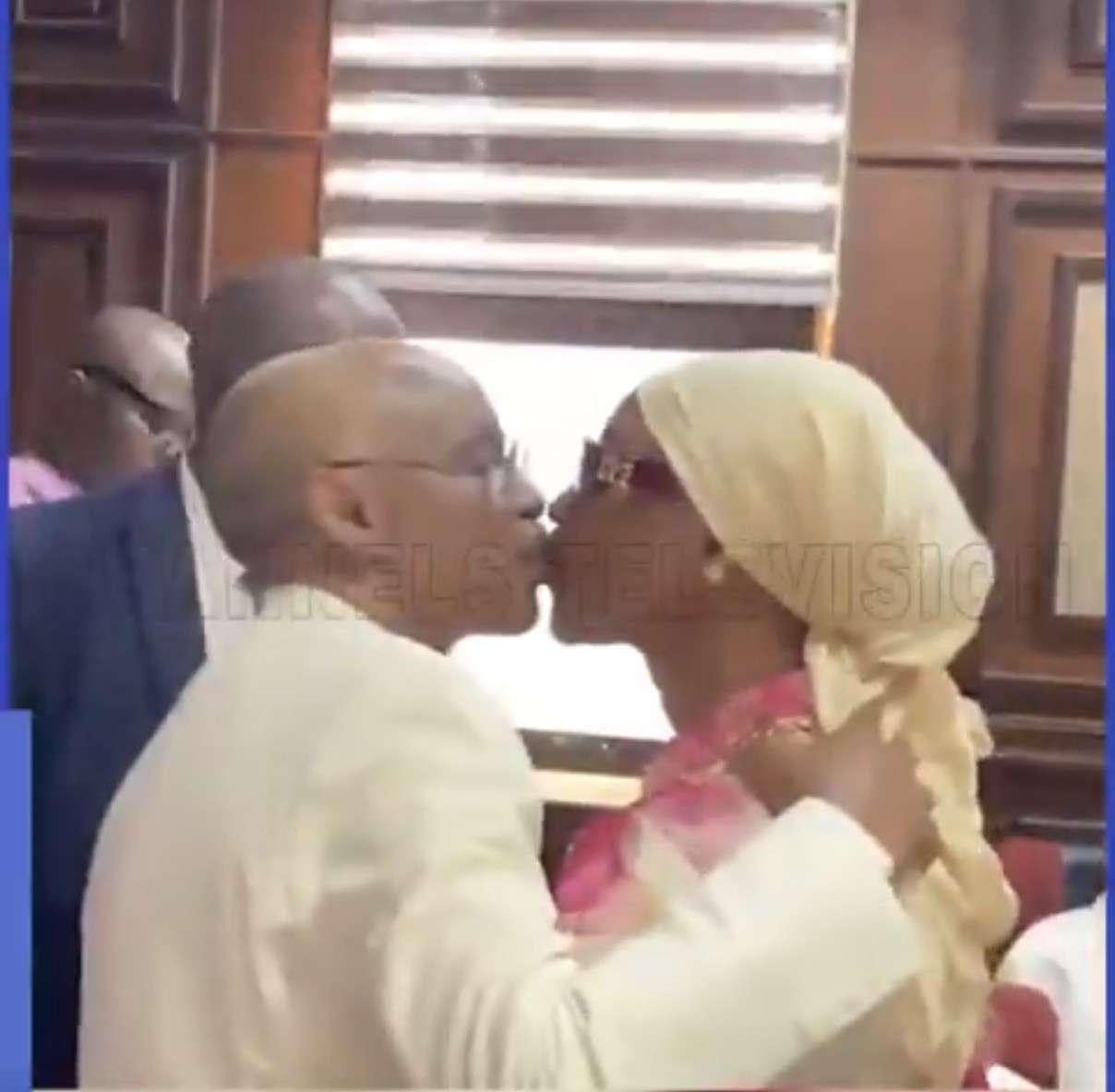
Former Kaduna State Governor Nasir El-Rufai attracted attention at the Federal High Court in Abuja after sharing a warm moment with his wife shortly before proceedings in his ongoing trial over the alleged interception of telephone conversations belonging to National Security Adviser Nuhu Ribadu.
The former governor was seen hugging and kissing his wife within the court premises before entering the courtroom, in a brief personal moment that caught the attention of lawyers, supporters and other individuals present.
However, the emotional reunion was followed by a major legal setback for El-Rufai as Justice Joyce Abdulmalik rejected his no-case submission and directed him to open his defence in the criminal proceedings. The ruling means the former governor must respond to the allegations against him after the Department of State Services (DSS) concluded its case with the testimony of two witnesses.
El-Rufai had approached the court seeking to be discharged, arguing through his counsel, Akinyemi Aremu, that the prosecution had failed to establish a case sufficiently strong to require him to enter a defence.
The defence maintained that the evidence presented by the DSS did not justify compelling the former governor to respond to the charge, urging the court to terminate the proceedings against him at that stage.
The prosecution, however, strongly opposed the application, insisting that the evidence already placed before the court was sufficient to require El-Rufai to defend himself against the allegations.
DSS counsel, Oluwole Aladedoye, a Senior Advocate of Nigeria (SAN), relied on the prosecution’s counter-affidavit and argued that the defence had failed to adequately address Exhibit B, which the prosecution said contained El-Rufai’s admission concerning the alleged tapping of Ribadu’s telephone.
Aladedoye urged the court to dismiss the no-case submission, maintaining that the prosecution had established a prima facie case against the former governor and that the legal threshold for requiring him to present a defence had been met. After considering the arguments from both sides, Justice Abdulmalik ruled against El-Rufai’s application, holding that the DSS had presented sufficient evidence to warrant his response to the charge.
The judge consequently directed the former governor to open his defence, moving the case into the next stage of proceedings.
A no-case submission is an application made by a defendant asking the court to discharge them without requiring a defence, usually on the grounds that the prosecution’s evidence has failed to establish a case that calls for an answer. The rejection of such an application does not, in itself, amount to a determination of guilt. Rather, it means the court considers the prosecution’s evidence sufficient for the defendant to be called upon to respond.
With the court’s decision, attention now shifts to El-Rufai’s defence as the legal battle over the alleged interception of the National Security Adviser’s telephone conversations continues.