
NEWS
Estimated Billing Relief in Sight as FG, Meter Manufacturers End Legal Battle, Clearing Path for 1.55 Million Smart Meters

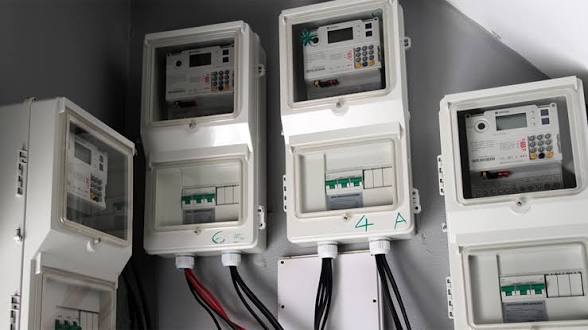
Millions of Nigerian electricity consumers may soon experience a major shift in the way they are billed for power following the resolution of a legal dispute that had stalled the rollout of over 1.55 million smart electricity meters across the country.
For years, estimated billing has remained one of the biggest sources of frustration for electricity consumers, with many households and businesses receiving monthly bills that often bear little resemblance to their actual power consumption. The situation has strained relationships between electricity distribution companies (DisCos) and customers, triggered countless complaints and undermined public confidence in Nigeria’s electricity supply industry.
That long-standing challenge may now be on the verge of significant improvement after the Association of Meter Manufacturers of Nigeria (AMMON) officially withdrew its lawsuit against the Federal Government, removing a major obstacle that had delayed several critical metering programmes.
The development clears the way for the procurement and deployment of 1.55 million smart electricity meters under key government-backed initiatives, including the Distribution Sector Recovery Programme (DISREP), the Meter Acquisition Fund Phase III (MAF 3) and the Presidential Metering Initiative (PMI).
Industry stakeholders believe the breakthrough will not only accelerate efforts to reduce Nigeria’s massive metering deficit but also strengthen transparency, eliminate arbitrary billing and improve revenue collection within the power sector.
The procurement process had been suspended after AMMON secured a court injunction in April 2026, arguing that the procurement framework failed to adequately protect indigenous meter manufacturers despite their growing production capacity and investments.
The injunction halted bidding processes under the three major metering programmes, creating months of uncertainty and delaying the government’s plans to bridge the country’s metering gap.
Following weeks of intensive negotiations spearheaded by the Minister of Power, Chief Joseph Tegbe, alongside the Bureau of Public Enterprises (BPE), the Transmission Company of Nigeria (TCN) and other key stakeholders, both parties eventually reached a compromise.
The agreement led AMMON to file a Notice of Discontinuance before the Federal High Court in Kano, officially ending the legal battle and allowing the procurement process to resume.
The settlement has been welcomed by consumer groups and industry experts, who describe smart metering as one of the most effective solutions to Nigeria’s estimated billing crisis.
Accurate metering enables customers to pay only for electricity actually consumed while giving DisCos better tools for revenue assurance, reducing commercial losses and improving operational efficiency.
President of the Nigeria Consumer Protection Network (NCPN), Kunle Olubiyo, described the resolution as a major step forward, noting that it creates an opportunity to fast-track meter deployment while strengthening Nigeria’s local manufacturing industry.
According to him, wider deployment of smart meters will significantly reduce estimated billing, improve transparency and ensure customers pay only for electricity they actually consume.
Olubiyo explained that electricity meters are far more than billing devices, describing them as essential revenue assurance tools that improve billing efficiency, strengthen collections and provide accurate data needed for cost recovery throughout the electricity value chain.
He added that improved metering and grid telemetry would provide more reliable measurement of electricity generated, transmitted and distributed, reducing disputes over market shortfalls while limiting opportunities for manipulation of industry data.
Industry observers say the decision to resolve the dispute through dialogue rather than prolonged litigation sends a positive signal to investors and international development partners supporting Nigeria’s electricity reforms.
The Federal Ministry of Power described the settlement as one that successfully balances Nigeria’s industrial policy with its international procurement obligations, preserving financing arrangements while ensuring increased participation for indigenous manufacturers.
The resolution also aligns with the administration of President Bola Ahmed Tinubu’s broader “Nigeria First” industrial policy, aimed at boosting local manufacturing, creating jobs and reducing dependence on imports without disrupting ongoing infrastructure programmes.
AMMON President, Durosola Omogbenigun, confirmed that the association agreed to withdraw the lawsuit after securing commitments from the Federal Government to strengthen local meter manufacturing.
According to him, the decision was taken in the national interest following assurances that government would increase patronage of locally manufactured meters and establish a joint working group to expand production capacity and deepen backward integration, ultimately reducing dependence on imported components.
While welcoming the agreement, Olubiyo stressed that government commitments must be backed by practical financial support.
He urged the Federal Government, the Bank of Industry and commercial banks to establish dedicated financing windows for indigenous meter manufacturers, noting that many local firms struggle to satisfy the collateral requirements attached to international competitive bidding.
According to him, Nigeria should adopt deliberate local content policies similar to those that transformed the cement industry and are now being implemented in the downstream petroleum sector.
He argued that stronger support for local manufacturers would create thousands of jobs, encourage technology transfer and reduce Nigeria’s reliance on imported electricity meters.
Olubiyo further maintained that government-funded metering projects, including those financed by international development partners, should deliberately prioritise Nigerian manufacturers so that borrowed funds stimulate domestic economic growth rather than encouraging capital flight.
Nigeria’s indigenous meter manufacturing industry has expanded significantly over the past few years, with companies investing heavily in production facilities, technology transfer and workforce development.
Among manufacturers certified by the Nigerian Electricity Regulatory Commission (NERC) are Mojec International Limited, Holley Metering Limited, Smart Meters Company Limited, MBH Power Limited, Amal Technologies Limited, Unistar Hi-Tech Systems Limited, Crestflow Energy Limited and several others.
The manufacturers have consistently maintained that Nigerian factories possess enough production capacity to supply a substantial portion of the country’s meter requirements if procurement policies provide adequate support.
Industry leaders believe increased local production would conserve foreign exchange, strengthen Nigeria’s technical expertise and expose local engineers to advanced smart metering technologies, while improving maintenance and after-sales services.
Minister of Power, Chief Joseph Tegbe, has repeatedly described widespread metering as critical to restoring the financial health of Nigeria’s electricity sector.
According to him, the metering deficit remains one of the major factors contributing to the liquidity challenges affecting the industry.
He noted that the withdrawal of AMMON’s lawsuit has removed a significant barrier to faster deployment of electricity meters nationwide and commended AMMON, NERC, BPE, meter providers and other stakeholders for embracing dialogue instead of prolonged court battles.
His position reflects a growing consensus among industry experts that closing the metering gap is essential to achieving broader reforms within Nigeria’s electricity market.
Every additional prepaid or smart meter installed reduces disputes over estimated billing, improves energy accounting and enables electricity distribution companies to collect revenue more efficiently.
Across the country, many Nigerians have welcomed the settlement but insist that the real measure of success will be the speed of implementation.
“For years, we have complained about estimated billing. If this decision truly means more meters will be installed quickly, it will restore confidence in the power sector. Nigerians are tired of paying for electricity they did not consume,” said Aisha Idris, a trader in Kano.
In Abuja, civil servant Samson Dare urged government and electricity distribution companies to move quickly from promises to action.
“The important thing now is execution. Government and the DisCos should ensure the meters actually reach consumers. Once people have prepaid meters, many of the arguments over electricity bills will reduce,” he said.
Small business owner Chinonso Ezeugwu in Enugu also welcomed the development.
“A transparent billing system is good for businesses. We need electricity providers to focus on delivering meters as quickly as possible so customers can pay for exactly what they use,” he said.
The programmes set to resume represent some of the Federal Government’s largest metering interventions in recent years.
The World Bank-supported Distribution Sector Recovery Programme (DISREP) is designed to strengthen Nigeria’s electricity distribution network while improving commercial performance through mass metering.
The Meter Acquisition Fund provides financial support for meter deployment, while the Presidential Metering Initiative seeks to accelerate universal metering across the country.
Together, the programmes are expected to deliver millions of electricity meters over the coming years, significantly reducing Nigeria’s longstanding metering deficit.
Although Olubiyo acknowledged that deploying approximately 1.5 million meters will not completely eliminate the country’s metering gap, he believes the initiative will substantially narrow the deficit, create employment opportunities, improve service delivery and restore greater confidence in Nigeria’s electricity market.
He also praised Minister Tegbe for facilitating the out-of-court settlement through alternative dispute resolution, describing the move as evidence of government’s willingness to engage stakeholders constructively.
Analysts say successful implementation will strengthen the financial health of electricity distribution companies by reducing commercial losses associated with unmetered customers while improving liquidity across the entire electricity value chain.
For millions of Nigerians, however, the success of the agreement will ultimately be judged not by court filings or policy announcements, but by the number of smart meters installed in homes and businesses across the country.
If procurement resumes as expected and installations proceed without further delays, the settlement could mark a turning point in Nigeria’s electricity sector, bringing an end to years of estimated billing disputes, strengthening indigenous manufacturing and delivering a more transparent, efficient and financially sustainable power industry.