
NEWS
FEC Approves Bank of Industry Headquarters in Eko Atlantic, 200 Electric Buses, Nigeria Industrial Policy 2025, and Lekki Medical Tourism Infrastructure in Bold Push for Industrial Growth and Economic Diversification

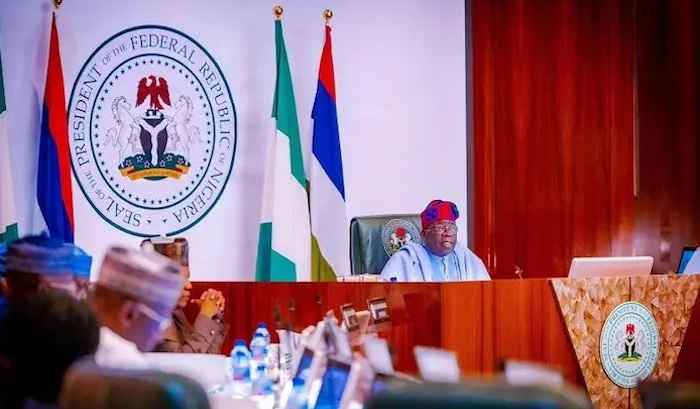
The Federal Executive Council (FEC) has taken decisive steps to advance Nigeria’s industrial, financial, and trade infrastructure with the approval of a new headquarters for the Bank of Industry (BoI) at Eko Atlantic City, Lagos, signaling a major stride in the Federal Government’s agenda to reposition the nation’s industrial and financial sectors.
The announcement was made on Wednesday by the Minister of State for Industry, Trade and Investment, Senator John Enoh, during a briefing with State House correspondents following the FEC meeting presided over by President Bola Tinubu in Abuja.
Senator Enoh confirmed that the council formally approved the design and construction of the BoI headquarters.
“Council approved the award of contract for the design and build of the Bank of Industry headquarters in Eko Atlantic City,” he stated.
The new BoI headquarters is envisioned as a central hub to facilitate the bank’s expanded role in financing industrial growth, supporting small and medium-scale enterprises (SMEs), and promoting export-oriented manufacturing across the country.
In a move aimed at strengthening Nigeria’s automotive sector and promoting cleaner energy solutions, the council also approved the procurement of 200 electric buses for the National Automotive Design and Development Council (NADDC).
“The first memo that was considered and approved was the award of a contract for the supply of 200 units of electric buses at the cost of ₦58 billion for the National Automotive Design and Development Council,” Enoh said.
The project aligns with the administration’s strategy to advance Nigeria’s automotive ecosystem while supporting sustainable industrial growth.
Describing it as the most consequential outcome of the FEC meeting, Enoh confirmed the approval of the Nigeria Industrial Policy 2025.
“The Nigeria Industrial Policy 2025 was finally approved today, and it provides the framework that will guide industrial growth and development,” he said.
Highlighting the significance of the policy, Enoh explained, “Many of our development partners would not even listen to us because there was no industrial policy, so this approval is extremely significant.”
He noted that the policy will serve as a cornerstone for President Tinubu’s economic diversification agenda under the administration’s eight-point policy framework.
On trade and investment matters, Enoh disclosed that FEC approved the construction of internal and access roads within the Lekki Medical Tourism Park in Lagos.
“The approval for the construction of internal and access roads within the Lekki Medical Tourism Park was granted,” he said.
Additionally, the council was briefed on Nigeria’s successful bid to host the Intra-African Trade Fair (IATF).
“Nigeria has officially been selected to host the Intra-African Trade Fair after a competitive bidding process,” Enoh confirmed.
According to the minister, Lagos will serve as the host city for the trade fair, with the Lagos Creative and Cultural Centre (former National Arts Theatre) designated as the main venue. Hosting the IATF positions Nigeria strategically within the African Continental Free Trade Area (AfCFTA) framework and complements ongoing industrialisation programmes implemented in partnership with the United Nations Industrial Development Organisation (UNIDO).
The FEC continues to signal fiscal prudence and strategic planning. Last week, the council approved the 2026–2028 Medium-Term Expenditure Framework (MTEF), which outlines Nigeria’s revenue projections, macroeconomic assumptions, and expenditure priorities for the next three years.
The Minister of Budget and Economic Planning, Senator Atiku Bagudu, said the Federal Government projects a total revenue inflow of ₦34.33 trillion in 2026, including ₦4.98 trillion expected from government-owned enterprises.
These approvals collectively underscore the Federal Government’s commitment to industrialisation, trade facilitation, and sustainable economic development, positioning Nigeria as a hub for industrial growth and regional commerce in Africa.