
HEALTH
NEWLY-QUALIFIED DOCTORS IN ENGLAND VOTE FOR STRIKE ACTION OVER JOB SHORTAGES AND TRAINING CRISIS

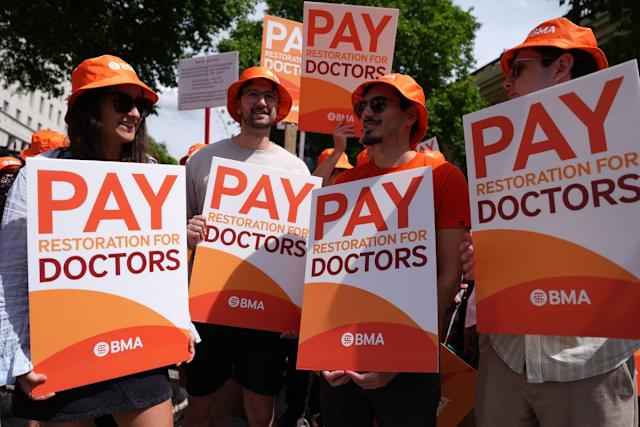
A fresh wave of industrial unrest is brewing across England’s healthcare system as newly-qualified doctors in their first year of medical practice have overwhelmingly voted in favour of strike action amid growing frustration over the shortage of available training positions.
The ballot, organized by the British Medical Association (BMA), revealed a striking 97% support for industrial action on a 65% voter turnout, a clear signal of mounting discontent within the medical workforce.
At the heart of the crisis lies a severe mismatch between the number of available training posts and the volume of qualified doctors seeking them.
According to figures released by the BMA, only 10,000 specialty training positions were available this year for nearly 30,000 candidates, including both UK and international graduates. This shortage has left thousands of young doctors uncertain about their future in medicine.
The issue of limited training opportunities has long been a point of contention between the BMA and the UK government. Talks had already been underway following a previous pay dispute in July, but the new strike mandate adds fresh urgency and potential disruption to an already strained National Health Service (NHS).
Dr Jack Fletcher, Chair of the BMA’s Resident Doctors Committee, emphasized the gravity of the situation, warning that the system is forcing young doctors into career insecurity despite the soaring demand for healthcare professionals across the country. He highlighted shocking statistics, noting that more than 10,000 doctors applied this year to become psychiatrists, yet fewer than 500 were successful, a stark contradiction at a time when patients are facing long waits for mental health services.
The situation is equally dire in general practice. With five applicants vying for every GP training slot, thousands of capable doctors are left without placements even as patient demand continues to surge. The BMA insists this paradox, an oversupply of qualified doctors unable to find work in an understaffed system exposes deep-rooted flaws in NHS workforce planning.
While the government has promised to create an additional 1,000 training places under its 10-year NHS plan, the BMA has dismissed the measure as woefully inadequate. The union attributes the shortage to years of poor strategic planning including an expansion of university medical school admissions without a corresponding increase in NHS training capacity.
By linking both pay and job availability disputes, the BMA says it hopes to push the government into developing a long-term, sustainable workforce plan that guarantees stable career progression for new doctors while ensuring the NHS has enough staff to meet patient needs.
The government, however, remains cautious. Health Secretary Wes Streeting has ruled out reopening negotiations on pay, focusing instead on improving working conditions, exam fees, rotas, and career pathways. His stance comes despite resident doctors already receiving a cumulative 22% pay rise over the last two years, with an additional 5.4% increase this year. Yet, the BMA argues that pay remains roughly 20% lower than in 2008 when adjusted for inflation.
Health Minister Stephen Kinnock acknowledged that training bottlenecks are a genuine concern and reiterated that the government is working on various initiatives to address them. These include the creation of more training positions and policies aimed at prioritizing UK medical graduates for posts.
He expressed optimism that current foundation doctors would soon enter a restructured and more balanced professional landscape, but for now, anxiety persists among the nation’s newest doctors, many of whom fear being locked out of the very careers they have spent years preparing for.
As tensions escalate, the looming strike could become one of the most consequential in recent NHS history, underscoring the 
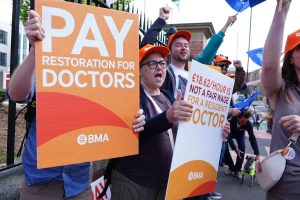 urgent need for a comprehensive reform of medical workforce planning to secure the future of both the profession and patient care in England.