
NEWS
Nigerian Senate Takes Bold Step Toward Clean Energy Future as Electric Vehicle Transition Bill Scales Second Reading

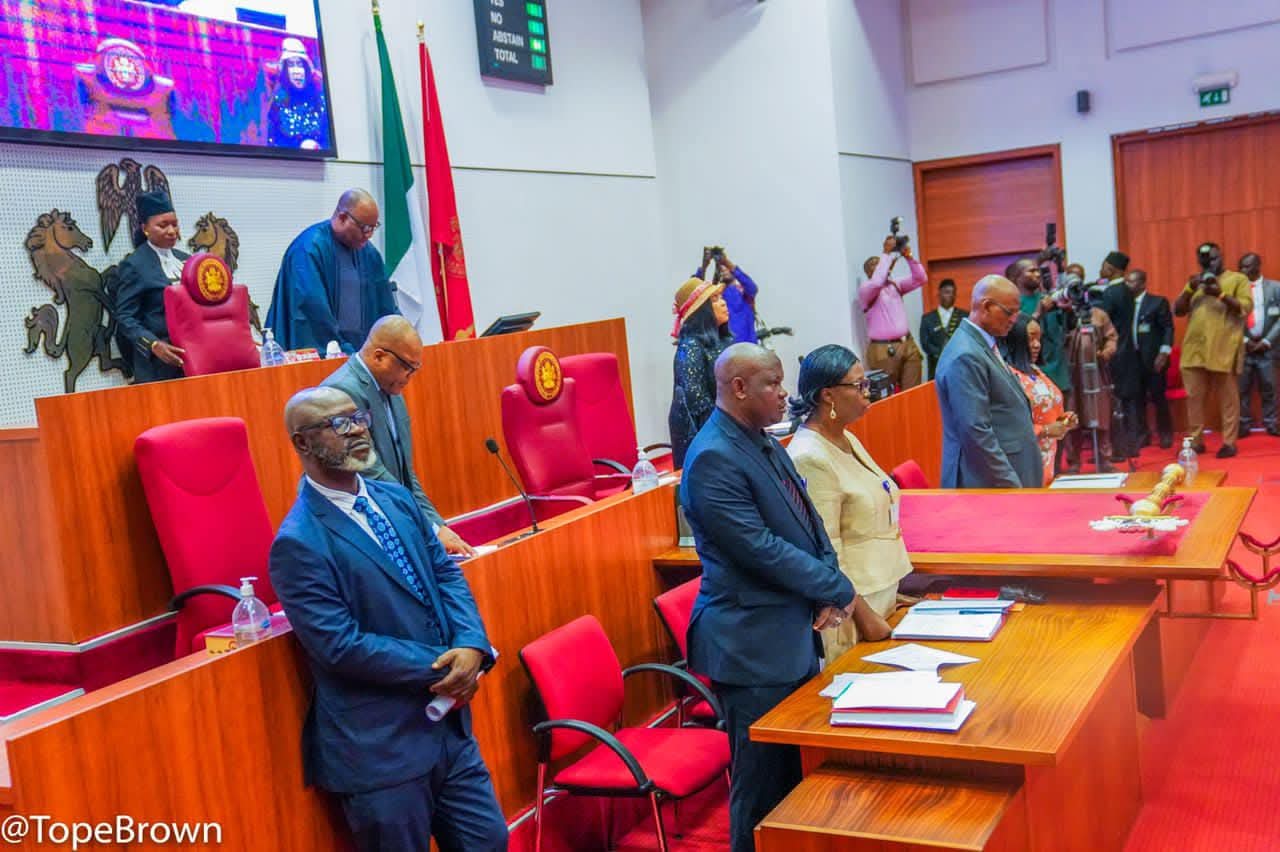
The Nigerian Senate has inched closer to a groundbreaking shift toward sustainable transportation as a bill seeking to phase out petrol-powered vehicles and promote the adoption of electric vehicles (EVs) scaled its second reading on Tuesday.
The proposed legislation, sponsored by Senator Orji Uzor Kalu, marks a significant step toward reducing Nigeria’s dependence on fossil fuels and aligning with global climate action initiatives. The bill aims to establish the legal and policy framework necessary to guide the nation’s transition from petrol-powered mobility to electric-powered alternatives.
According to Kalu, the bill is designed to “provide the legal and policy framework for Nigeria’s transition from fossil fuel dependence to electric mobility.” He emphasized that the measure would help lower the country’s carbon emissions, encourage local automobile production, and integrate Nigeria into the global movement for sustainable transport.
Highlighting the urgency of the shift, Kalu noted that the transport sector accounts for between 20 and 30 percent of Nigeria’s total greenhouse gas emissions.
“This bill seeks to establish a comprehensive legal and institutional framework to guide Nigeria’s gradual move from petrol-powered vehicles to cleaner, energy-efficient, and environmentally friendly alternatives,” he said.
A key component of the bill is the creation of a National Electric Vehicle Development and Promotion Council, which will be responsible for coordinating policy implementation across all tiers of government to ensure a smooth transition to electric mobility.
Supporting the bill, Senator Adamu Aliero (Kebbi Central) described it as “timely and forward-looking,” citing that African nations such as Kenya and South Africa are already advancing in electric vehicle adoption. He noted that embracing EVs in Nigeria would significantly reduce harmful emissions in major cities like Lagos and Kano, improve air quality, safeguard public health, and create new employment opportunities in the renewable energy and automotive sectors.
Senator Osita Ngwu (Enugu West) echoed this sentiment, emphasizing that Nigeria’s vast population places it in a crucial position to influence global climate change mitigation efforts.
Similarly, Senator Titus Zam (Benue North-West) underscored the environmental and health benefits of transitioning from petrol-powered cars to cleaner alternatives.
In his remarks, Senate President Godswill Akpabio commended Senator Kalu for the initiative, describing the bill as a “very good innovation” and expressing confidence in its capacity to transform Nigeria’s transportation landscape.
Following deliberations, the bill was referred to the Senate Committee on Industries for further legislative scrutiny, with a report expected within four weeks.
If passed into law, the legislation could position Nigeria as a regional leader in clean energy transportation, ushering in a new era of innovation, environmental consciousness, and economic opportunity.