
NEWS
“Nigerians Are Hungry; Leave Igbo Presidency Matter” — NDC Chieftain, Agubuzu Fires Back at Deputy Speaker, Benjamin Kalu

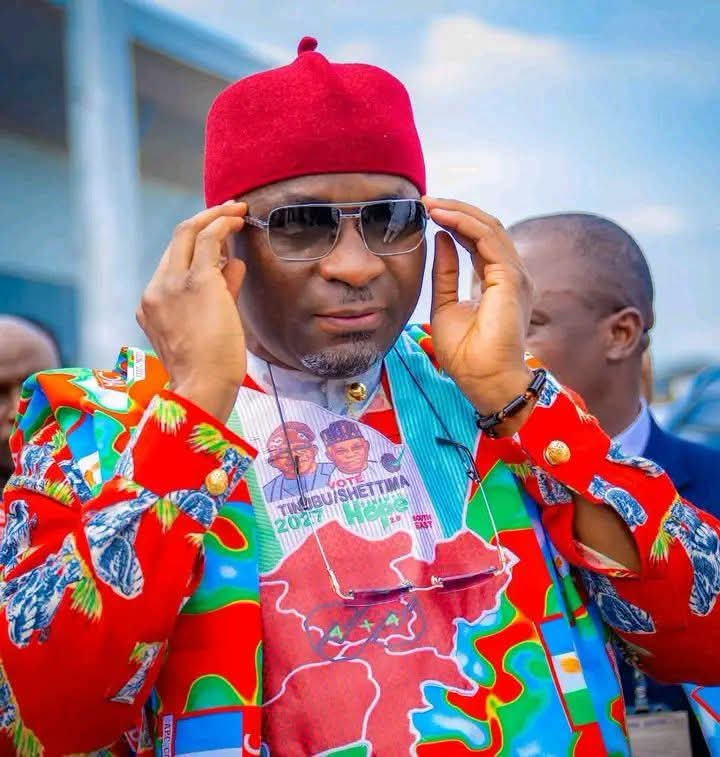
A lawyer and chieftain of the Nigeria Democratic Congress (NDC), Peter Agubuzu, has criticised the Deputy Speaker of the House of Representatives, Rt. Hon. Benjamin Okezie Kalu, over his controversial remarks that the South-East cannot afford to wait 60 years for a four-year Igbo presidency.
Agubuzu described Kalu’s position as misplaced, arguing that the debate over the timing and duration of an Igbo presidency should not overshadow the more pressing economic challenges confronting Nigerians, including hunger, poverty, rising living costs and widespread hardship.
The NDC chieftain’s reaction comes amid renewed political conversations about the South-East’s quest for greater inclusion in Nigeria’s highest political office ahead of the 2027 general elections.
It was reported that Kalu, while responding to calls by South-East stakeholders advocating a single four-year presidential term for an Igbo candidate, questioned the practicality of the proposal, arguing that the region could not afford to wait 60 years for just four years in power.
However, reacting on Sunday, November 1, 2026, Agubuzu challenged the Deputy Speaker’s position, insisting that the immediate concern of political leaders should be how to address the worsening economic conditions affecting citizens across the country.
According to him, Nigerians are more concerned about their daily survival than political calculations surrounding the presidency, particularly at a time when many households are struggling to afford basic necessities.
“Nigerians are hungry; leave Igbo presidency matter. While Nigerians across the country are shouting ‘Tinubu Must Go’ because of hardship and fear that things will get worse if Tinubu is re-elected, our brother, who is Deputy Speaker, is talking about 60 years.
“He forgot that Obi’s main goal is to change Nigeria from consumption to production so that millions of people can come out of poverty. That is why Nigerians are saying Tinubu Must Go,” Agubuzu said.
The lawyer’s remarks underscore the growing tension between debates about regional representation and the demand for practical solutions to Nigeria’s economic difficulties.
For Agubuzu, the fundamental question is not merely when an Igbo person will become president or how long such a presidency would last, but what political leadership can do to improve living standards, create jobs, stimulate production and lift millions of Nigerians out of poverty.
His comments also reflect the economic transformation agenda associated with Peter Obi, whose political message has consistently emphasised moving Nigeria away from excessive dependence on consumption and imports towards domestic production, industrial growth and job creation.
The argument is that a productive economy could generate more employment opportunities, strengthen local industries, reduce poverty and improve the purchasing power of ordinary citizens.
Agubuzu’s intervention therefore shifts the conversation from the duration of a potential Igbo presidency to the broader question of what Nigerians expect from whoever occupies the presidential seat.
Beyond the immediate disagreement with Kalu, the NDC chieftain also maintained that the proposal for a single four-year presidential term for the South-East should be considered within the broader principles of zoning, equity, national unity and political inclusion.
These issues remain central to Nigeria’s continuing debate over the distribution of political power among its geopolitical zones, particularly as political parties and stakeholders begin positioning themselves for the 2027 elections.
Advocates of greater South-East representation argue that equitable access to the presidency would help address longstanding concerns about the region’s place in Nigeria’s political structure and strengthen the sense of belonging among its people.
At the same time, questions about zoning arrangements, presidential tenure and the practical implications of a single-term proposal continue to generate differing opinions among political leaders and stakeholders.
Agubuzu’s position suggests that these questions should not be treated in isolation from the economic realities confronting the country. In his view, political inclusion and economic development should go hand in hand, with leadership judged not only by regional representation but also by its capacity to improve the lives of citizens.
As political discussions ahead of 2027 gather momentum, the exchange between Agubuzu and Kalu highlights two important dimensions of Nigeria’s national conversation: the South-East’s aspiration for greater representation at the highest level of government and the urgent demand for leadership capable of tackling hunger, hardship and poverty.
For Agubuzu, addressing the economic concerns of Nigerians must remain a priority, even as the country continues to debate the principles of zoning, fairness and inclusion in the struggle for presidential power.