
BUSINESS
PRESIDENT TINUBU COMMISSIONS $400 MILLION GEIL CRUDE OIL EXPORT TERMINAL IN RIVERS, FIRST INDIGENOUSLY BUILT FACILITY IN OVER 50 YEARS

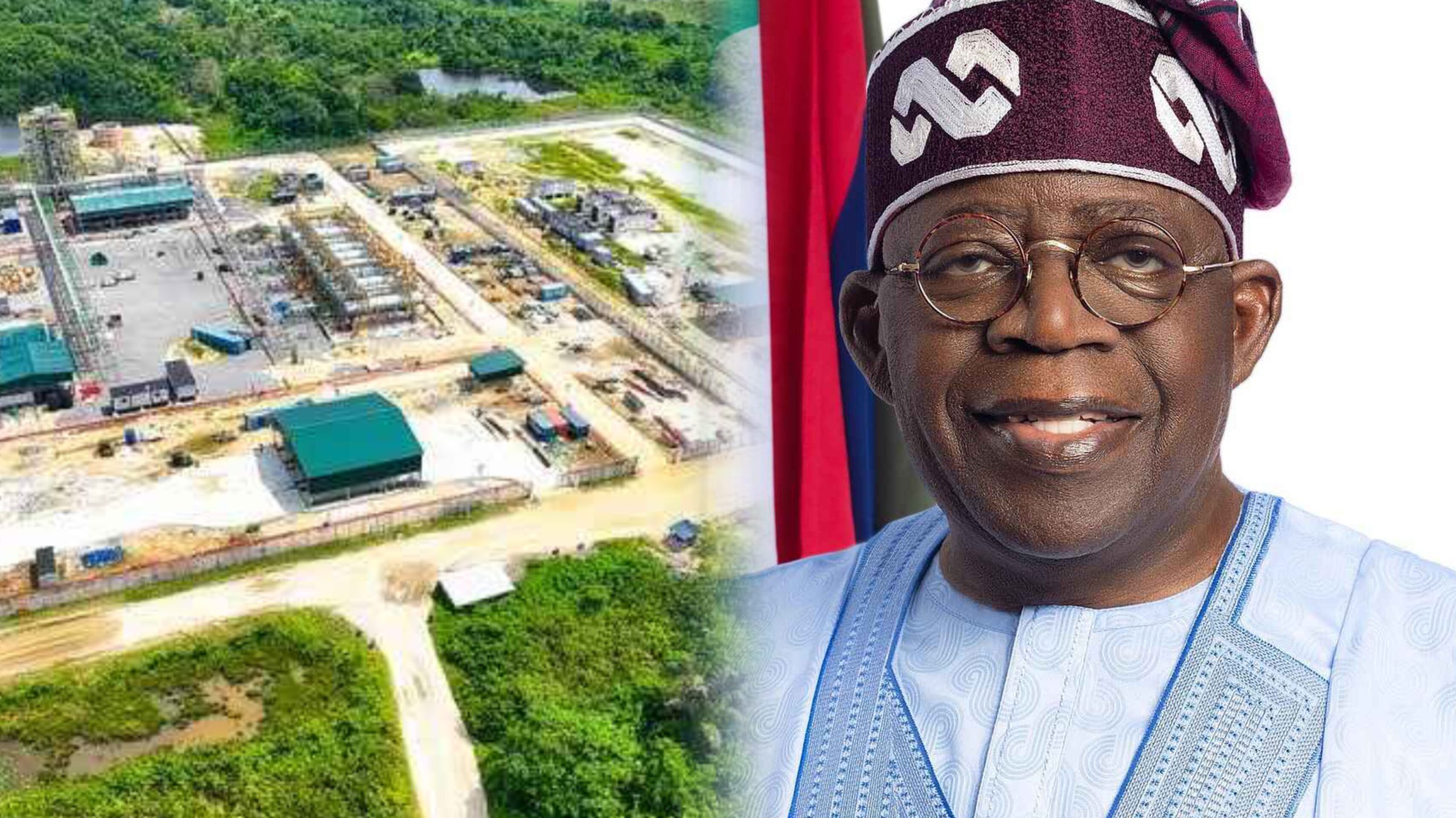
— A Landmark Achievement in Nigeria’s Energy Sector, Aligning with the Renewed Hope Agenda
President Bola Ahmed Tinubu on Thursday commissioned the $400 million Green Energy International Limited (GEIL) Crude Oil Export Terminal located at Otakikpo, Ikuru Town, Andoni Local Government Area of Rivers State, a historic milestone as the first crude oil export terminal developed by a wholly Nigerian company and the only one built in the country in over five decades.
The landmark facility, built and operated by Green Energy International Limited (GEIL), marks a significant leap forward for indigenous participation in the nation’s oil and gas sector. It underscores the Federal Government’s drive to strengthen local capacity, expand energy infrastructure, and secure sustainable economic growth under the Renewed Hope Agenda of President Tinubu’s administration.
Represented by the Minister of State for Petroleum Resources (Oil), Senator Heineken Lokpobiri, President Tinubu described the Otakikpo Terminal as a monumental stride that addresses one of the industry’s biggest challenges—evacuation of crude oil.
“This project is very significant because one of the biggest challenges we face in the oil and gas industry is evacuation.
“This terminal will not only serve Green Energy but also other operators in this region. It aligns perfectly with our objective to ramp up production and showcase the capacity of indigenous companies,” the president said.
Tinubu emphasized that despite the global transition toward renewable energy, oil and gas would continue to play a critical role in Nigeria’s development and global energy balance.
According to him, “Oil and gas will never go away. The International Energy Agency has now admitted that the world must invest over $540 billion yearly in the upstream sector to avoid an energy crisis. We cannot abandon our God-given resources.”
The president further revealed that the Federal Government was in advanced talks with Ogoni leaders to address long-standing disputes that have hindered oil production in their communities.
“Once the Ogoni issue is resolved, this terminal will serve as a key evacuation point for crude produced there,” he added.
Highlighting new financing opportunities, Tinubu disclosed that the African Energy Bank, to be hosted by Nigeria, would soon become operational to provide capital for energy projects across the continent, noting that Nigeria had met all legal and financial requirements to host the institution.
He also appealed to Niger Delta communities to sustain peace and cooperation with industry players, stressing that oil and gas only create value when production thrives.
In his remarks, the Chief Executive Officer of the Nigerian Upstream Petroleum Regulatory Commission (NUPRC), Engr. Gbenga Komolafe, hailed the Otakikpo Terminal as “a turning point in Nigeria’s upstream oil landscape.”
Komolafe explained that the terminal with an initial storage capacity of 750,000 barrels, expandable to three million barrels would improve export efficiency, ease pressure on aging infrastructure, and empower indigenous operators to compete on a global scale.
“For over half a century, our crude export infrastructure has been dominated by Bonny, Escravos, Forcados, Qua Iboe, and Brass terminals, all built by international oil companies. The commissioning of the Otakikpo Terminal today changes that story and marks the dawn of a new era of indigenous participation,” he stated.
Earlier, the Chairman and Chief Executive Officer of GEIL, Professor Anthony Adegbulugbe, described the commissioning as “a historic day that showcases Nigeria’s capacity to deliver world-class oil and gas infrastructure.”
He noted that the terminal was designed and executed entirely by Nigerian professionals and completed in less than two years, ahead of schedule, a testament to the country’s growing technical expertise and local content development.
Adegbulugbe further stated that the facility would unlock over 40 stranded oil fields in the Niger Delta, with estimated reserves exceeding three billion barrels of crude, adding that these could collectively contribute more than 200,000 barrels per day to Nigeria’s production capacity.
“For over fifty years, Nigeria has relied on only five major onshore crude export terminals. With the commissioning of the Otakikpo Onshore Terminal, that story changes. This is the first new onshore terminal in over half a century, and the only one conceived, built, and operated by an indigenous exploration and production company,” he said.
The commissioning of the Otakikpo Crude Oil Export Terminal thus stands as a symbol of national pride and industrial self-reliance, signaling a new era of indigenous leadership in Nigeria’s oil and gas sector and reaffirming President Tinubu’s commitment to achieving energy security, economic diversifica tion, and sustainable national growth.