
NEWS
President Tinubu Seeks Senate Approval for $7.7 Billion External Loan to Finance 2026 Budget, Strengthen Naira and Boost Key Sectors

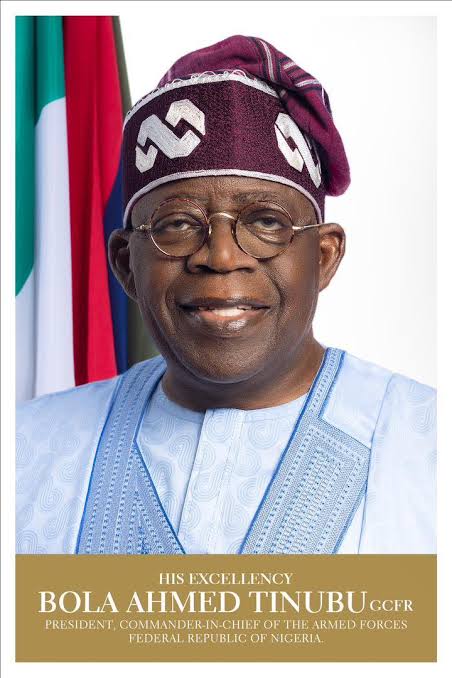
President Bola Ahmed Tinubu has formally approached the Nigerian Senate for approval to secure an external loan of $7.7 billion, equivalent to approximately ₦10.79 trillion, as part of the Federal Government’s financing strategy for the 2026 fiscal year.
The proposed borrowing, which forms part of the government’s broader ₦29.2 trillion borrowing plan for the 2026 national budget, is expected to support critical infrastructure projects, economic programmes and interventions across strategic sectors of the Nigerian economy.
The President’s request was conveyed in a letter dated October 26, which was read by Senate President Godswill Akpabio during plenary on Wednesday, November 4.
In the correspondence, Tinubu explained that the proposed external borrowing was designed to finance part of the country’s budget deficit and support the implementation of projects and programmes captured in the 2026 Appropriation framework. The overall borrowing plan, which amounts to ₦29.2 trillion, is divided into two major components: ₦18.4 trillion in domestic borrowing and ₦10.79 trillion in external borrowing. The $7.7 billion external loan represents the foreign financing component of the government’s proposed borrowing arrangement and is expected to provide additional resources for the execution of its development priorities.
According to the President, the funds would be directed towards several critical sectors, including defence and national security, transportation, agriculture, power, education and healthcare. These sectors are considered central to the government’s broader economic recovery and development objectives, particularly amid persistent security challenges, infrastructure deficits, rising public expenditure and the need to stimulate productivity across the country.
Tinubu further explained that the proposed external borrowing would help strengthen Nigeria’s external reserves and provide additional support for the naira as the country continues to navigate prevailing economic challenges. The administration’s position is that access to external financing would provide the government with additional fiscal capacity to execute essential projects while supporting broader macroeconomic stability. Following the presentation of the presidential letter, Senate President Godswill Akpabio referred the request to the Senate Committee on Local and Foreign Debts for detailed legislative scrutiny. The committee is expected to examine the borrowing proposal, assess its implications and submit its recommendations to the Senate for further consideration and possible approval.
Akpabio also indicated that the latest $7.7 billion borrowing request appeared to supersede an earlier external borrowing proposal involving $20.52 billion and €1.045 billion, which had been presented to the National Assembly the previous week. The development raises fresh questions about the Federal Government’s external financing strategy, particularly the relationship between the different borrowing proposals and the country’s overall debt management framework.
The Senate’s consideration will therefore be significant in determining the extent of legislative approval for the proposed foreign borrowing and the government’s ability to proceed with its 2026 financing arrangements. The latest borrowing request comes at a time when the National Assembly is also advancing significant constitutional and security reforms, particularly the proposed establishment of state police across the federation.
In a related development, the Deputy Speaker of the House of Representatives, Rt. Hon. Benjamin Kalu, announced on Wednesday that the State Police Bill had secured the endorsement of 29 state Houses of Assembly, moving the country closer to a major restructuring of its policing system.
Kalu made the disclosure while presiding over plenary at the House of Representatives, describing the development as a significant milestone in Nigeria’s ongoing efforts to reform its security architecture.
“The State Police Bill has received the backing of 29 State Assemblies. Later today, the Clerk to the National Assembly will transmit it to the President for assent,” he said.
The endorsement by 29 state legislatures exceeds the constitutional requirement of 24 state Houses of Assembly, representing two-thirds of the 36 states, for the passage of constitutional amendments.
The proposed amendment is designed to empower state governments to establish and operate their own police formations, complementing the existing Nigeria Police Force and creating a more decentralised approach to internal security management.
Nigeria has operated a centralised policing structure in which the administration, command and control of the police are largely vested in the Federal Government.
However, proponents of state police have consistently argued that the current arrangement limits the ability of security agencies to respond adequately to the peculiar security challenges confronting different communities and geographical areas. They believe that allowing individual states to establish their own police formations would improve intelligence gathering, strengthen community-based security operations and enable faster responses to criminal activities, kidnapping, terrorism and other threats.
Despite the growing support for the reform, concerns remain over the potential for political interference, inadequate funding, accountability mechanisms and the protection of citizens’ fundamental human rights under a decentralised policing arrangement.
With the external borrowing proposal now before the Senate’s debt committee and the State Police Bill advancing through the constitutional amendment process, the Federal Government and the National Assembly are facing two major policy questions: how to finance the country’s development priorities and how to strengthen the institutional framework for national security.
Both developments are expected to attract considerable legislative attention as Nigeria continues to navigate its economic and security challenges.