
NEWS
Trump Announces Plan to End $4 Billion Annual US Aid to Israel, Says Netanyahu Has Agreed to Deal

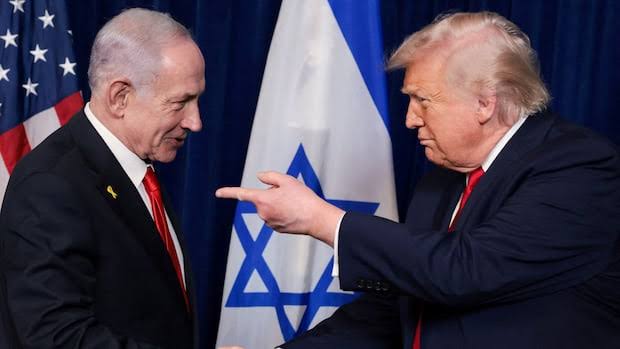
United States President Donald Trump has announced a major shift in Washington’s longstanding financial relationship with Israel, declaring that his administration will stop providing the country with approximately $4 billion in annual funding by the end of 2026.
Trump disclosed the development on Tuesday during an appearance on Fox News’ Fox & Friends, where he revealed that he had reached an agreement with Israeli Prime Minister Benjamin Netanyahu months ago to discontinue the financial arrangement.
According to the US president, Israel no longer needs the annual American financial assistance and should increasingly rely on its own resources to meet its defence and security needs.
“Now, as far as paying Israel, Bibi Netanyahu and I have made a deal that we give Israel $4 billion a year, and we made a deal months ago that we’re stopping,“ Trump told Fox News’ Fox and Friends.
He further disclosed that the agreement would take effect before the end of the year, although Washington would not completely abandon Israel if the country encountered serious security challenges in the future.
“We’ve already agreed that by the end of this year we won’t be paying Israel. Now we’ll help Israel if they need it,“ he said.
The announcement represents a potentially significant development in the decades-long military and financial partnership between the United States and Israel, raising questions about the future of American assistance to one of Washington’s closest allies in the Middle East.
Israeli Finance Ministry Reportedly Taken by Surprise:
Trump’s declaration has reportedly caught officials in Israel off guard, with reports indicating that the Israeli Finance Ministry was unaware that the American president was preparing to announce the suspension of the financial assistance.
The assessment within Israel is that Trump was referring to the termination of the existing Memorandum of Understanding (MOU), which governs American military assistance to the country. Under the current security agreement, Israel receives approximately $3.8 billion annually from the United States. The arrangement, which was signed in 2016, covers a 10-year period and is scheduled to expire at the end of 2028.
Although discussions have been ongoing about the future of American military assistance beyond the current agreement, Trump’s announcement appears to suggest that Washington could be preparing to end the existing financial arrangement earlier than previously anticipated.
However, it remains unclear whether the president was referring to an entirely new agreement, an accelerated termination of the existing MOU or a broader restructuring of American military support. There was no immediate response from Netanyahu’s office following Trump’s remarks.
Trump Says Israel Can Purchase Its Own Weapons:
Explaining his position, Trump suggested that Israel was financially capable of acquiring whatever military equipment it required without depending on annual American financial assistance. He also pointed out that European countries could independently purchase American-made military equipment, stressing the quality of the United States defence industry.
“They can buy whatever they want. They can buy whatever they want. So can Europe. We make the greatest weapons in the world,“ Trump added on Tuesday.
The president also argued that the annual financial assistance had become a political weapon in the hands of his critics, particularly Democrats and left-wing politicians who have increasingly questioned Washington’s support for Israel.
“The left uses the $4 billion payment that everybody knows about, well it’s no secret, as a signal of unfairness, and we can’t allow that to happen,“ Trump said.
He reiterated that the funding would be discontinued because Israel was no longer dependent on the assistance.
“We were giving them 4 billion, we are, but it gets cut off at the end of the year. Why? Because they don’t need it,“ he said.
Netanyahu Had Earlier Expressed Desire to Reduce Dependence on US Aid:
Interestingly, Trump’s announcement comes months after Netanyahu publicly indicated that Israel wanted to gradually reduce its dependence on American military assistance.
In a May interview with CBS, the Israeli prime minister expressed his desire to wean his country off US military support within the next decade.
Similarly, in a June letter to an American congressman, Netanyahu argued that the relationship between both countries should evolve beyond the traditional donor-recipient arrangement.
He wrote that the time had come for Israel “to move from aid recipient to partner.”
Netanyahu’s position suggests that the Israeli government has also been considering a future in which the country assumes greater responsibility for financing its own defence infrastructure and military procurement.
Nevertheless, the timing and circumstances surrounding Trump’s latest announcement have introduced fresh uncertainty into the relationship, particularly given Israel’s continuing security challenges across the Middle East.
Growing Opposition to US Support for Israel:
Trump’s decision also comes against the backdrop of declining public support for Israel among Americans, particularly within the Democratic Party, following the outbreak of the Gaza war in 2023. Public opinion surveys have increasingly reflected growing dissatisfaction with Washington’s financial and diplomatic backing of the Israeli government.
A June poll conducted by Quinnipiac University found that 48 per cent of American voters and 66 per cent of Democratic voters believed the United States was too supportive of Israel. The figures represent a significant increase from 2017, when only 16 per cent of voters and 20 per cent of Democrats held the same position. The shift in public opinion has also begun influencing American electoral politics, with candidates openly critical of Israel gaining ground in Democratic primaries.
Even moderate Democratic lawmakers, who traditionally supported close American-Israeli relations, have become increasingly willing to question the scale of Washington’s military and financial commitments. Against this political background, Trump’s announcement could have implications beyond the financial arrangement itself, potentially reshaping the debate over America’s role in supporting Israel. While the United States president insists that Israel no longer needs the annual assistance, the precise details of the proposed termination remain unclear.
What is increasingly evident, however, is that the future of the decades-old American-Israeli military assistance framework is becoming a subject of renewed political and diplomatic scrutiny, with Trump’s declaration potentially marking the beginning of a new chapter in relations between Washington and Jerusalem