
NEWS
Senate Leader, Sen. Bamidele, Pushes Single Six-Year Tenure for President, Governors, Demands Transparency on Public Officials’ Salaries

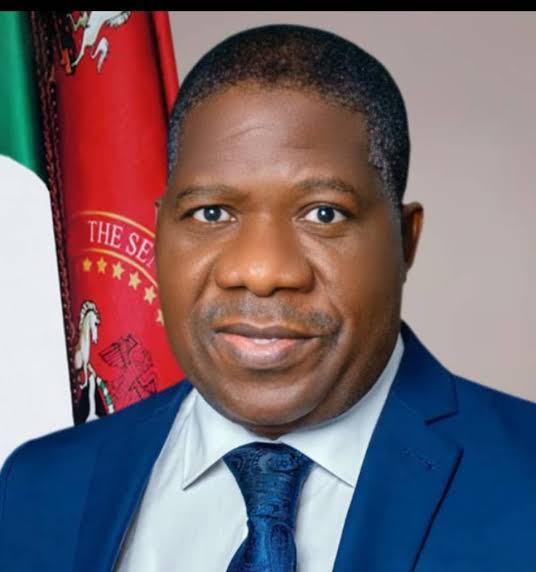
Senate Leader, Senator Opeyemi Bamidele, has revealed plans to sponsor a constitutional amendment bill in the 11th National Assembly aimed at replacing Nigeria’s current two-term tenure arrangement for presidents and governors with a single six-year term.
The proposed legislation, which is expected to be part of a wider package of constitutional and political reforms, is designed to improve governance, promote policy continuity and eliminate distractions associated with re-election campaigns.
Bamidele made the disclosure during an extensive interview in Abuja, where he addressed a broad range of national issues, including constitutional reforms, insecurity, anti-terrorism measures, legislative transparency, and the performance of the 10th Senate.
The Senate Leader explained that the proposed single-term arrangement would enable elected leaders to focus fully on governance and service delivery without the pressure of seeking a second mandate. The initiative, he noted, forms part of ongoing efforts to strengthen Nigeria’s democratic institutions and improve the effectiveness of public administration.
In a separate but equally significant proposal, Bamidele challenged the Revenue Mobilisation Allocation and Fiscal Commission (RMAFC) to immediately publish the salaries, allowances and benefits of all public office holders across the country.
According to him, public misconceptions regarding the earnings of lawmakers and other government officials have persisted largely because of insufficient transparency from the commission constitutionally empowered to determine their remuneration.
The Senate Leader stressed that legislators neither determine their salaries nor fix their allowances, insisting that making the information publicly available would help correct widespread assumptions about the financial privileges of political office holders.
“All allowances received by parliamentarians at both the federal and state levels should be published fully and publicly. Legislators do not determine their remuneration. The Revenue Mobilisation and Fiscal Commission is responsible for that.
“The commission should publish comprehensively what every category of public office holder earns. These includes members of the National Assembly, state assembly members, ministers and others. Once that is done, many of the misconceptions surrounding legislative remuneration will disappear,” Bamidele said.
He further clarified that vehicles allocated to senators and members of the House of Representatives are official government assets intended for legislative assignments and constituency engagements, rather than personal property belonging to lawmakers.
Addressing the country’s security challenges, Bamidele defended the Senate’s decision to reject a motion seeking the establishment of a special committee to investigate all funds released to the military for the prosecution of the war against insurgency and terrorism.
He argued that launching a public investigation into military expenditure while troops remain actively engaged in combat operations could undermine ongoing efforts and amount to placing the armed forces on trial in the middle of a war.
According to the Senate Leader, Nigeria’s military personnel continue to make enormous sacrifices under difficult and dangerous conditions while confronting insurgents who have increasingly adopted guerrilla warfare tactics.
He explained that the Senate considered it more appropriate for its existing oversight committees on Defence, Army, Navy and Air Force to continue carrying out their constitutional responsibilities of monitoring military spending, procurement processes and operational accountability.
Bamidele disclosed that lawmakers regularly inspect military equipment acquisitions both within and outside Nigeria and participate in oversight activities aimed at ensuring transparency and accountability in defence procurement.
He added that many aspects of military operations and acquisitions cannot be publicly discussed due to national security concerns.
Despite growing public concern over renewed attacks in several parts of the country, Bamidele maintained that substantial gains were being recorded in the fight against terrorism and insurgency.
He attributed the recent wave of attacks partly to increased pressure being mounted on terrorist groups through intensified military operations and international counter-terrorism collaborations.
According to him, insurgent groups are increasingly resorting to retaliatory attacks in a bid to undermine public confidence in the military and create the impression that security efforts are failing.
“We must not allow political interests or propaganda to weaken public support for our military. Significant progress is being made, even if much of it cannot be discussed openly,” he said.
On efforts to strengthen Nigeria’s legal framework against violent crimes, Bamidele reaffirmed his support for the death penalty for convicted kidnappers.
He also disclosed that the anti-terrorism bill he sponsored is approaching final legislative approval and would further strengthen the country’s legal response to terrorism and related crimes.
The Senate Leader noted that recent court judgments imposing death sentences on convicted kidnappers reflect a growing national consensus that stronger punitive measures are necessary to combat the escalating menace of kidnapping and violent criminality.
Bamidele also dismissed allegations that the 10th Senate operates as a rubber stamp institution for the executive arm of government.
According to him, the National Assembly has deliberately adopted a model of constructive engagement with the Presidency and government agencies rather than pursuing unnecessary public confrontations.
He explained that numerous disagreements between the legislature and executive are often resolved through consultations and negotiations before bills and nominations are formally presented on the Senate floor.
The Senate Leader argued that this approach has helped prevent avoidable institutional conflicts while ensuring that legislative concerns are adequately addressed.
Using the administration’s tax reform programme as an example, he noted that lawmakers engaged extensively with government officials and stakeholders before the relevant bills were eventually passed.
He maintained that cooperation between the executive and legislative arms should not be interpreted as a lack of independence, stressing that effective governance often requires dialogue and consensus-building.
Reflecting on the activities of the 10th Senate, Bamidele identified the controversy surrounding the suspension of a female senator as one of the institution’s most challenging moments.
According to him, the incident created a public perception of division within the Senate and overshadowed several important legislative initiatives being pursued at the time.
Nevertheless, he expressed confidence that the Assembly’s achievements in economic reform, taxation, agriculture, education and institutional development would have lasting positive impacts on the country.
He noted that the Senate has worked closely with the executive arm to enact laws aimed at stabilising the economy, improving access to education, attracting investment, strengthening non-oil revenue generation and supporting national development.
Bamidele ultimately expressed optimism that the reforms already enacted by the National Assembly would yield significant long-term benefits, contribute to economic growth and improve the welfare and living conditions of Nigerians across the country.