
NEWS
“The Lady Pharmacist’s Account… Remains the True Position” – Former DSS Director, Dennis Amachree Reopens Debate on Sani Abacha’s Death

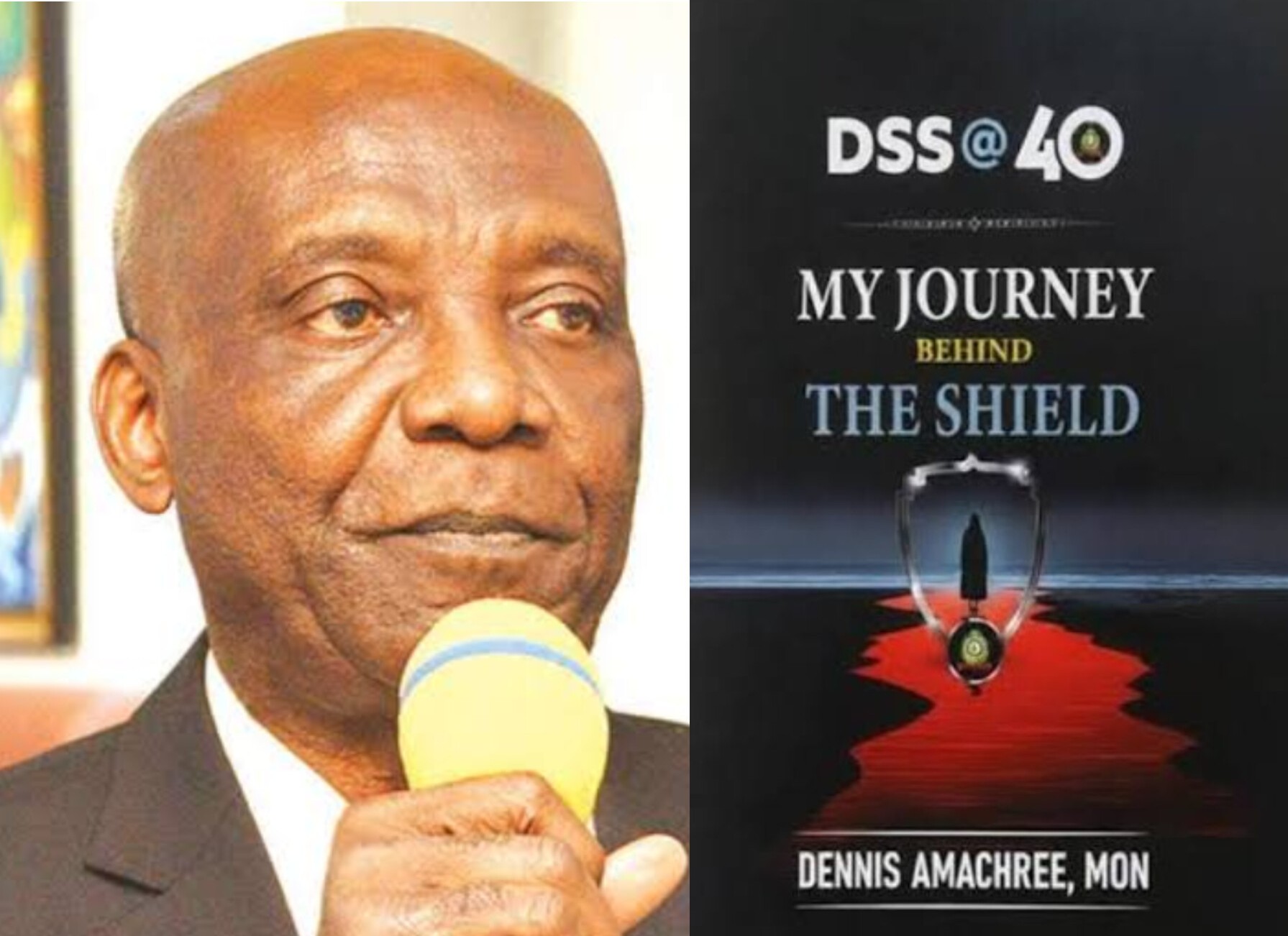
Nearly three decades after the sudden death of Nigeria’s former military Head of State, General Sani Abacha, retired Department of State Services (DSS) officer Dennis Amachree has offered a detailed account of what he insists are the true circumstances surrounding the late ruler’s final hours.
In his newly released 348-page book, DSS @40: My Journey Behind the Shield, Amachree rejected the numerous conspiracy theories that have circulated since Abacha’s death on June 8, 1998, maintaining that the former military leader suffered a cardiac arrest while in the company of a young pharmacist inside the Aso Rock Presidential Villa.
According to Amachree, the woman, whom he identified only as an Igbo pharmacist, later confessed during interrogation that she did not harm Abacha.
“The lady pharmacist’s account, on whom Abacha apparently had a coitus-induced cardiac arrest, remains the true position, and puts an end to the conspiracy theories and half-truths that have gone viral,” he stated.
Amachree explained that Abacha died at approximately 4:05 a.m. on June 8, 1998, while he was with the woman during an intimate encounter inside the Presidential Villa in Abuja.
Abacha ruled Nigeria as military Head of State from November 1993 until his sudden death in June 1998 at the age of 54. His unexpected passing sparked widespread speculation, with numerous theories emerging over the years, including allegations of poisoning, foreign intelligence involvement, and the use of illicit substances.
The retired DSS officer, who served as Assistant Director of Operations and Intelligence at the Lagos State State Security Service (SSS) Command at the time, insisted that the official version he has presented is based on firsthand involvement in the investigation.
He maintained that “any other narrative is an act of deceit and a disservice to our countrymen and women.”
Amachree disclosed that after witnessing Abacha’s death, the pharmacist immediately boarded the first available flight to Lagos.
According to him, his team tracked her down shortly after receiving instructions from the SSS headquarters.
Describing the interrogation, he recalled:
“A team located and brought her to my office. I interrogated her myself. The first thing she said to me was: ‘I did not kill him, he died on top of me.’ After her detailed account, I called the Director in Abuja, and she was immediately flown back.“
He narrated in his book that shortly after General Jeremiah Useni left Abacha’s residence around 2:40 a.m., Abacha’s girlfriend arrived at the Aso Rock Guest House from the Nicon Noga Hilton Hotel accompanied by her younger sister, who was attending a pharmacists’ conference in Abuja.
According to the account, Abacha had recently purchased a new SUV for his girlfriend, prompting the visit to express appreciation.
Amachree wrote that after some time, the girlfriend returned to her hotel, leaving her younger sister alone with the Head of State.
He claimed that around 4:05 a.m., while they were together, the pharmacist suddenly realized Abacha had stopped responding.
She reportedly checked his pulse and found none before leaving the Guest House in panic.
The retired DSS officer further stated that the woman requested transportation back to her hotel, informing the soldier on duty that “Oga” had asked that she be taken back.
The soldier, unaware of what had happened inside, arranged the transport.
According to Amachree, after informing her sister of the incident, the pharmacist hurried to the Abuja Airport and boarded the 7:00 a.m. Okada Airline flight to Lagos.
He argued that this period represented the missing gap in the version of events presented by Abacha’s former Chief Security Officer, Major Hamza Al-Mustapha.
Amachree acknowledged that Abacha’s death has remained one of Nigeria’s most debated historical events because of conflicting narratives that have persisted for decades.
He specifically rejected accounts that alleged Abacha died from a poisoned apple, a mysterious handshake, imported Indian prostitutes, CIA involvement, or other foreign plots.
Reviewing several widely circulated narratives, he challenged the versions presented by Irish Times journalist David Orr, former U.S. National Security Adviser Susan Rice, Major Hamza Al-Mustapha, former military officer General Jeremiah Useni, Brigadier-General Oviemo Ovadje, and former Aviation Minister Femi Fani-Kayode.
Regarding those claims, Amachree said:
“These range from fictional stories of a poisoned apple from disaffected soldiers, to more sensational claims involving foreign intelligence agencies“
He added that while many of those accounts gained public attention, they lacked verifiable evidence.
Amachree said he decided to document his version of events because, as someone directly involved in the security investigation, he believed the historical record had become clouded by misinformation.
“As a security professional who was in the thick of it, I feel compelled to set the record straight and provide the true narrative for posterity,“ he wrote.
He also reflected on what he described as the broader lessons from the controversy surrounding Abacha’s death.
According to him, “The confusion surrounding Abacha’s death is a microcosm of a larger problem in Nigeria: a leadership culture steeped in falsehood and a lack of accountability.”
He further argued that “the deliberate suppression of facts and the promotion of misinformation by those who should be held to a higher standard have kept the country in a retrogressive circle.”
Amachree concluded that Abacha’s death demonstrates the temporary nature of political power.
He noted that despite the extensive security surrounding the former military ruler, death came unexpectedly.
“Abacha, a military dictator who surrounded himself with a seemingly impenetrable security detail, thought he was invincible. Yet, in the end, death kept it’s appointment with him, rendering his concentric rings of security useless.
“The story is a poignant reminder that power is transient and that no amount of security can shield a leader from their ultimate fate.”
The retired DSS officer also questioned why senior military officers, politicians, and close associates allegedly promoted conflicting accounts of Abacha’s death over the years, insisting that historical truth should prevail.
He concluded with a warning against misinformation:
“While the truth may be suppressed temporarily, the forces of human curiosity and investigative inquiry will ultimately bring it to light.“