
NEWS
Tinubu’s US Lawyer, Oluwole Afolabi, Reveals FBI, DEA Released Redacted Documents in FOIA Case

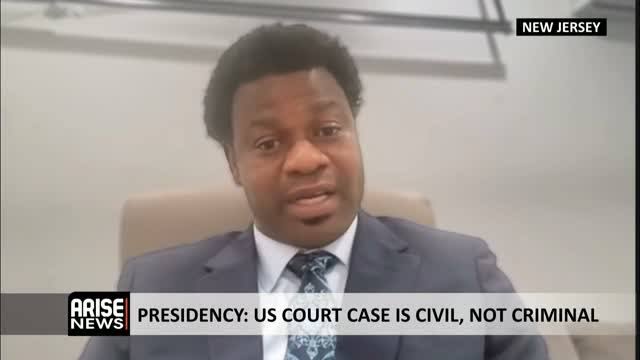
Oluwole Afolabi, the United States-based lawyer representing President Bola Ahmed Tinubu in an ongoing Freedom of Information Act (FOIA) case, has provided fresh details on the circumstances surrounding the release of documents by the Federal Bureau of Investigation (FBI) and the Drug Enforcement Administration (DEA).
Afolabi disclosed that the two US agencies were compelled by a federal court to produce documents sought in the FOIA proceedings after the judge ruled that they could not rely on the legal protection known as the Glomar defense.
The lawyer made the disclosure while appearing on Channels Television’s News Night, where he explained the different positions taken by US government agencies involved in the case.
According to him, several agencies initially named in the proceedings were able to successfully invoke the Glomar defense, a legal position that allows an agency to neither confirm nor deny the existence of records when doing so could reveal protected information.
However, Afolabi said the FBI and DEA were in a different position because of evidence contained in an earlier affidavit filed by an agent identified as Moss.
He explained that the affidavit had referred to investigations connected to certain assets, a development which, according to the lawyer, affected the ability of the two agencies to rely on the Glomar defense.
Afolabi said the trial judge consequently determined that the defense was not available to the FBI and DEA and ordered both agencies to produce the documents requested under the FOIA case.
He further disclosed that the agencies complied with the court order and released the documents, although portions were redacted.
The redactions, according to the lawyer, meant that some information contained in the records was withheld, apparently to protect information considered sensitive under applicable US laws.
The development provides additional insight into the FOIA proceedings, particularly the distinction between agencies that were permitted to decline to confirm or deny the existence of records and the FBI and DEA, which were ordered to produce documents because of the circumstances surrounding the earlier affidavit.
“As regards the FBI and the DEA, the trial judge held that the Glomar defense did not avail them because there was earlier someone named Agent Moss in an affidavit had stated that there were some investigations as regards some assets.
“And as such, they were ordered to produce them. The two agencies (FBI and DEA) produced the documents and they redacted some portions of the document,“ Afolabi said.
The disclosure is expected to further fuel attention around the FOIA proceedings and the documents released by the US agencies, as questions continue to focus on what information was contained in the records and the reasons certain portions were withheld.