
NEWS
U.S. SENATOR, JIM RISCH BLASTS TINUBU ADMINISTRATION AS GLOBAL OUTRAGE MOUNTS OVER KEBBI SCHOOLGIRLS’ ABDUCTION

…says Little Has Changed in Nigeria Concerning Terrorist Attacks
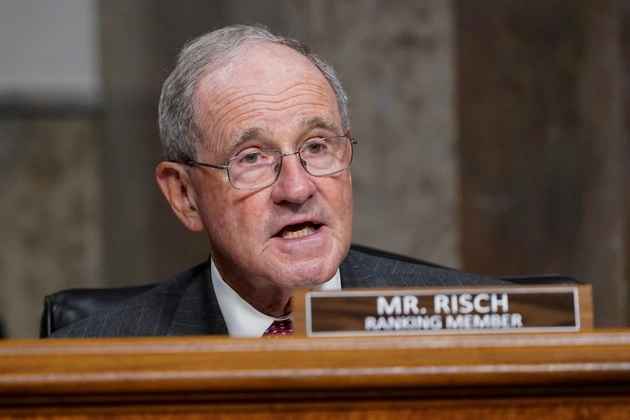
In another damning international rebuke of Nigeria’s worsening security crisis, United States Senator Jim Risch (R-Idaho) has fiercely criticised the administration of President Bola Ahmed Tinubu over what he described as its continued failure to protect schoolchildren and vulnerable citizens from relentless terrorist and criminal attacks.
His remarks followed the abduction of 25 schoolgirls from the Government Girls Comprehensive Secondary School (GGCSS) in Maga, Danko-Wasagu Local Government Area of Kebbi State, an attack that also claimed the life of the school’s vice-principal. The latest incident has once again thrown global attention on Nigeria’s decade-long battle with insurgency and mass kidnappings.
Risch, a senior Republican and Chairman of the U.S. Senate Foreign Relations Committee, issued a statement on his official X account condemning Nigeria’s persistent inability to safeguard its learning spaces. He stressed that the U.S. would hold the Nigerian government accountable as it continues to engage Abuja on issues of religious persecution, insecurity, and protection of vulnerable groups.
He warned that Nigerian schoolchildren, especially girls, remain prime targets for terrorist groups who abduct them for ransom, forced conversion, and other violent purposes. The senator’s comments mirror widespread frustration in the international community, with many expressing concern that despite repeated assurances of sweeping security reforms, attacks on schools continue unabated.
The abduction in Kebbi State adds to Nigeria’s grim catalogue of school kidnappings, a crisis that gained global notoriety after Boko Haram militants kidnapped 276 Chibok schoolgirls in 2014. Since then, large-scale student abductions have been carried out in Dapchi, Jangebe, Tegina, Kankara, Kuriga, and several other communities, instilling deep fear among parents and pushing thousands of children, particularly girls out of school.
Human rights organisations have repeatedly warned that the unending violence undermines the right to education, fuels gender inequality, and threatens the long-term socio-economic stability of Nigeria’s northern region. In many cases, abducted students have been forced into religious indoctrination, violence, or held in exchange for ransom payments that further empower armed groups.
Kebbi State itself bears a dark history of similar violence. In 2021, gunmen invaded the Federal Government College, Birnin Yauri, kidnapping more than 80 students, some of whom spent months in captivity. The reoccurrence of such incidents has prompted security analysts to warn that armed groups are increasingly exploiting weak security architecture in rural communities, launching attacks with minimal resistance.
While one of the abducted 25 schoolgirls has managed to escape and reunite with her family, the majority remain in captivity, prompting renewed calls for urgent action. The Nigerian military has since announced intensified search operations, and state authorities have pledged to secure the victims’ safe return. Yet families, activists, and security experts argue that reactive responses are no longer sufficient; Nigeria must adopt robust, proactive measures to prevent such tragedies.
Senator Risch’s latest critique reinforces longstanding international concerns that Nigeria’s security crisis is spiralling, and that the government must move beyond rhetoric to implement structural security reforms. With global attention refocused on the plight of abducted children, the pressure on the Tinubu administration to deliver tangible results continues to mount.
As outrage grows and the world watches closely, the abduction of the Kebbi schoolgirls has once again exposed the fragility of Nigeria’s internal security system, raising urgent questions about the government’s capacity to protect its most vulnerable citizens.