
DEVELOPMENT
House of Representatives Advances Bill to Split Oyo State Into Two, Proposing Creation of “Oyo State” and Renaming of Existing Territory as “Ibadan State”

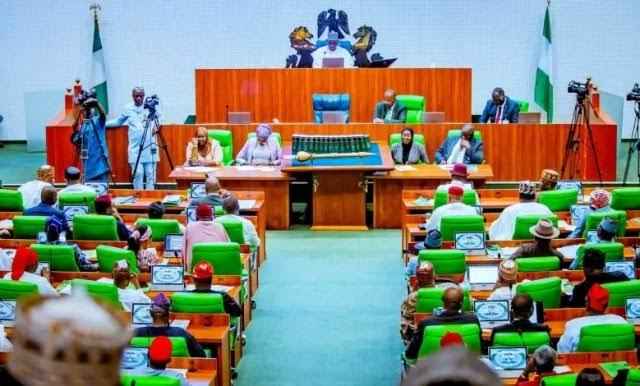
The House of Representatives has passed for second reading a constitutional amendment bill seeking to divide the present Oyo State into two distinct entities, a new Oyo State and a renamed Ibadan State.
Sponsored by Hon. Akeem Adeyemi (APC–Oyo) and six other lawmakers, the bill proposes that the new Oyo State should have Oyo town as its capital, while the remaining part of the current state would be renamed Ibadan State, with Ibadan City serving as its capital.
The bill, considered straightforward, was not subjected to debate during plenary.
Speaker of the House, Rt. Hon. Abbas Tajudeen, noted that the proposal was self-explanatory and subsequently referred it to the House Committee on Constitutional Review for further legislative scrutiny and necessary action.
Oyo State, one of Nigeria’s oldest states, was created on February 3, 1976, following the division of the former Western State under the military government of General Murtala Mohammed. Over the decades, there have been recurring agitations and legislative efforts to carve out additional states from its territory, aimed at addressing issues of representation, administrative efficiency, and equitable development.
Previous attempts to create new states, notably Oke-Ogun State and Ibadan State did not scale through legislative processes.
However, renewed agitation for state creation continues to feature prominently in the ongoing constitutional review exercise.
Notably, another related bill sponsored by Hon. Oluwole Oke (PDP–Osun) also seeks to establish Oke-Ogun State from parts of the current Oyo territory, highlighting the growing demand for administrative decentralization and regional autonomy in Nigeria’s southwest region.
The proposed division of Oyo State, if approved through the constitution amendment process, would mark a significant milestone in Nigeria’s political restructuring discourse, potentially redrawing the geopolitical map of the southwest and altering its socio-political dynamics.